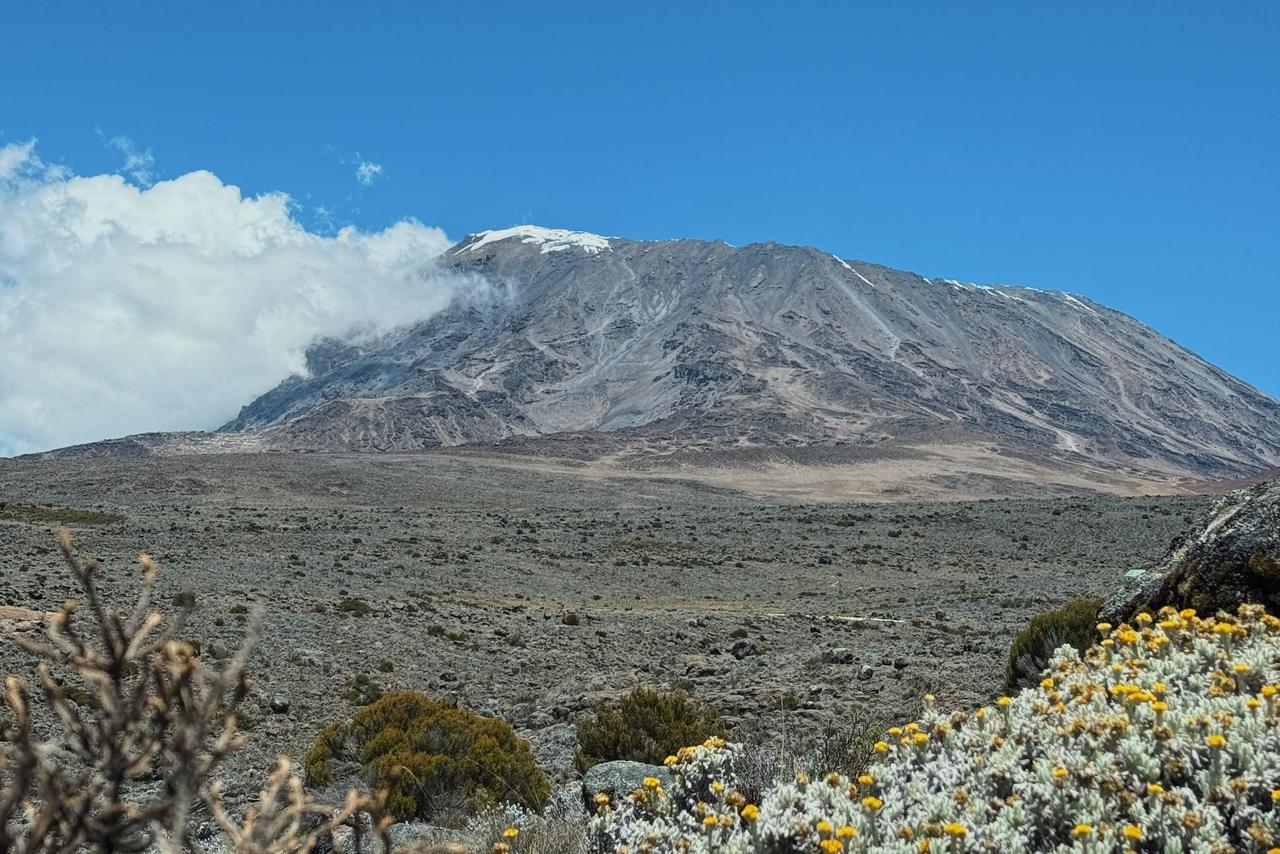
Kibo’s broad summit cone, with a thin line of snow along its rim and cloud drifting in from the left, above a wide plain of grey moorland, with silver-leaved everlasting flowers in yellow bloom in the foreground

Marangu Route: Hut to hut up Kilimanjaro

Nickname: Coca-Cola route

The Marangu route is Kilimanjaro’s oldest, nicknamed the Coca-Cola route, and the only one where you sleep in huts. In 6 days it covers 77 km on the south-east side, from rainforest across the Saddle to Uhuru Peak and back the same way. It is gentle underfoot but gains height quickly, so the acclimatization day at Horombo Huts matters.

Photo: Nikita Shelaikin / Pexels

Marangu at a glance

Days
6
5–6 days possible
Distance
77km
incl. acclimatization walk
Summit success
~55⁠–⁠65%
6-day · operator estimate
Difficulty
Crowds
Scenery

Start: Marangu Gate 1,860 mSummit: Uhuru Peak 5,895 mFinish: Marangu Gate 1,860 mNights in: Hutssame trail up and down

Route map: Marangu route map

The trail starts at Marangu Gate (1,860 m / 6,102 ft) on the south-east side of the mountain and climbs through rainforest to Mandara Huts, over moorland to Horombo Huts and across the Saddle, the stony desert between Kibo and Mawenzi, to Kibo Hut (4,720 m / 15,486 ft) at the foot of the summit cone. Summit night reaches the crater rim at Gilman’s Point and follows it past Stella Point to Uhuru Peak. Apart from a choice of two paths between Horombo Huts and Kibo Hut, you come down the way you went up, with one more night at Horombo Huts. Hut sites along this trail go back to the German colonial era.

Same trail up and downHutGateLandmarkSummitTrail © OpenStreetMap contributors (ODbL) · Relief: SRTMScale: 2 km

Elevation profile: Climb high, sleep low: the Marangu elevation profile

Every day of the climb on one scale. The line is the trail’s real elevation; the gold steps show where you sleep. The gap between them is what helps your body adapt.

  1. Day 1
  2. Day 2
  3. Day 3
  4. Day 4
  5. Day 5
  6. Day 6
Start
1,860m
Marangu Gate
Highest hut
4,720m
Kibo Hut
Summit
5,895m
Uhuru Peak
Total ascent
4,355m
  • Trail elevation
  • Where you sleep
  • High point of the day
Distance in km

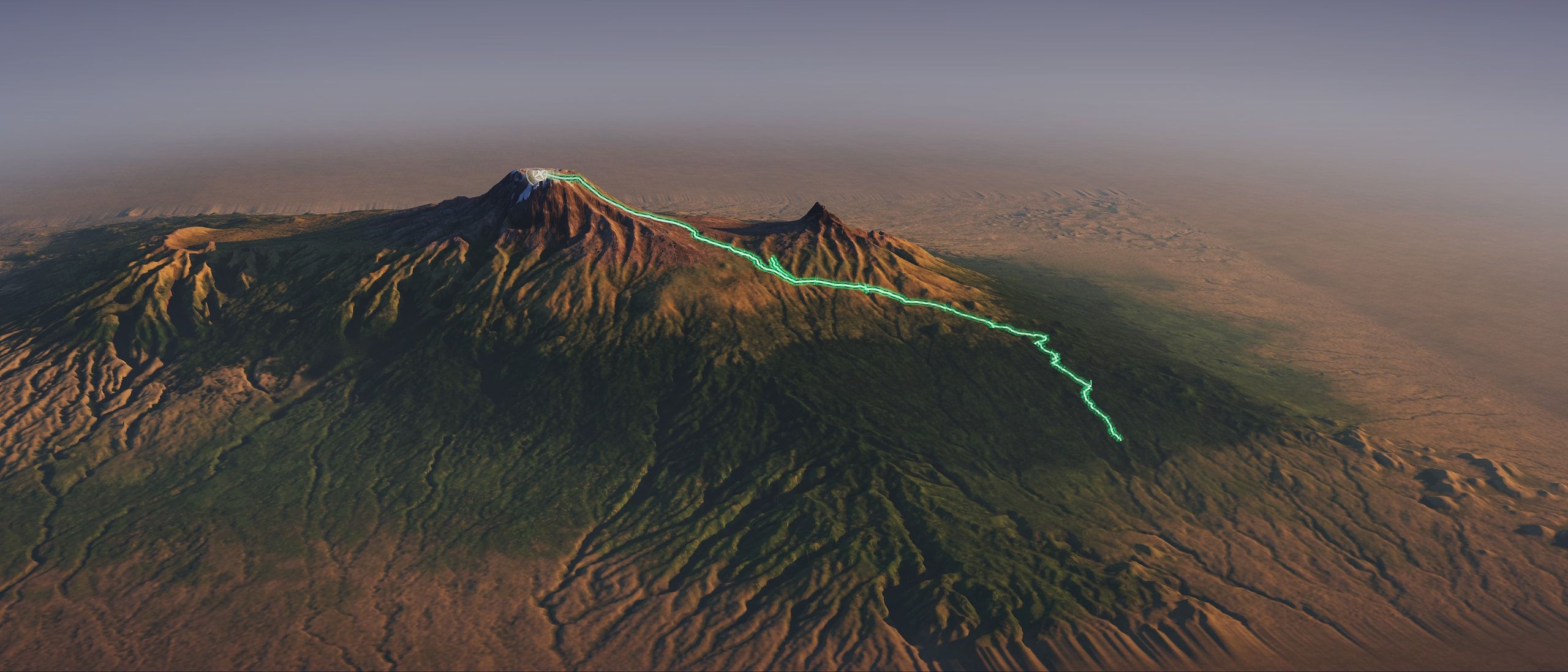
3D flight: Fly the Marangu route in 3D

The whole route on a 3D model of the mountain. Turn it, zoom into the valleys and follow the trail from gate to summit.

The Marangu route traced on a 3D model of Kilimanjaro

Itinerary: Marangu itinerary: 6 days, day by day

Every day at a glance: distance, walking time, height gained and lost, and where you sleep.

The Marangu route in 6 days: distance, walking time, height gained and lost, and where you sleep
DayStagekmHours↑ / ↓Sleep
1Marangu Gate → Mandara Huts84–5up 860 mdown 0 m2,720 m
2Mandara Huts → Horombo Huts126–8up 1,010 mdown 10 m3,720 m
3Acclimatization dayHorombo Huts → Zebra Rocks → Horombo Huts53–4up 300 mdown 300 m3,720 m
4Horombo Huts → Kibo Hut105–7up 1,000 mdown 0 m4,720 m
5Summit dayKibo Hut → Horombo Huts via Hans Meyer Cave, Gilman’s Point, Stella Point and Uhuru Peak2215–17up 1,175 mdown 2,175 m3,720 m
6Horombo Huts → Marangu Gate205–7up 10 mdown 1,870 m—
  1. Day 1: Marangu Gate → Mandara Huts

    Rainforest and the first huts

    Once you have registered at Marangu Gate, a broad, well-made path leads up through the montane rainforest, with a narrower nature trail alongside it for part of the way. Look out for blue monkeys and black-and-white colobus in the moss-hung trees. Mandara Huts, a cluster of wooden A-frame huts, stands in a clearing near the top of the forest, and in the afternoon a short walk to the rim of Maundi Crater gives you, on a clear day, a first view of Kibo.

    What to pack
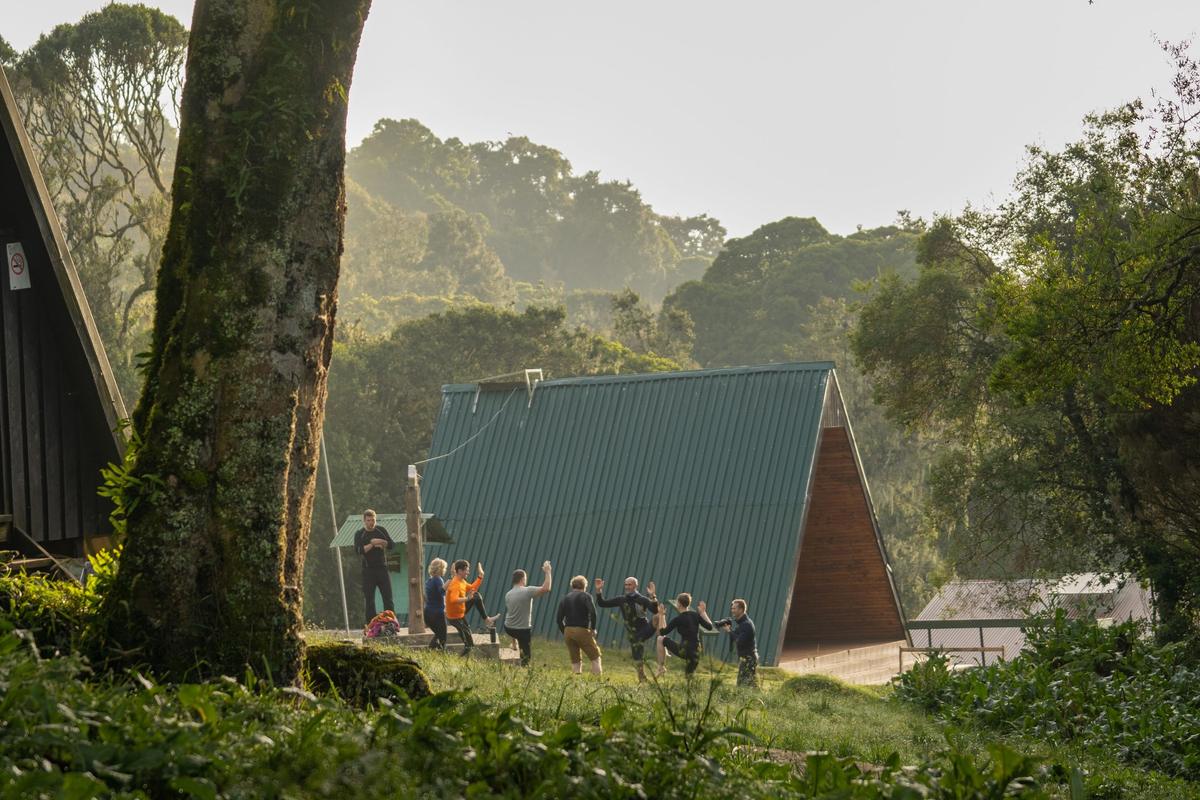
    Green-roofed wooden A-frame huts in a forest clearing at Mandara Huts, with trekkers stretching on the grass in hazy sunlight
    Mandara Huts
  2. Day 2: Mandara Huts → Horombo Huts

    Onto the moorland

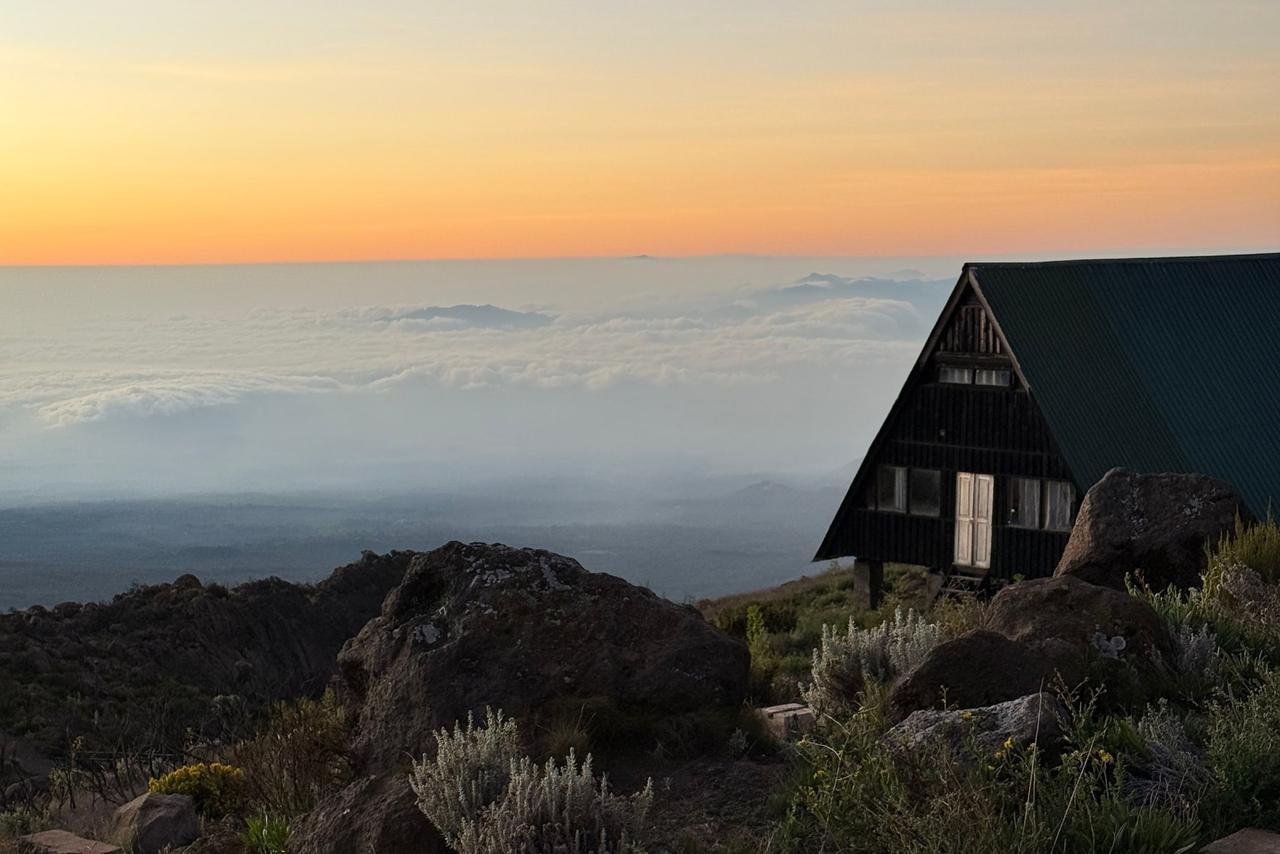
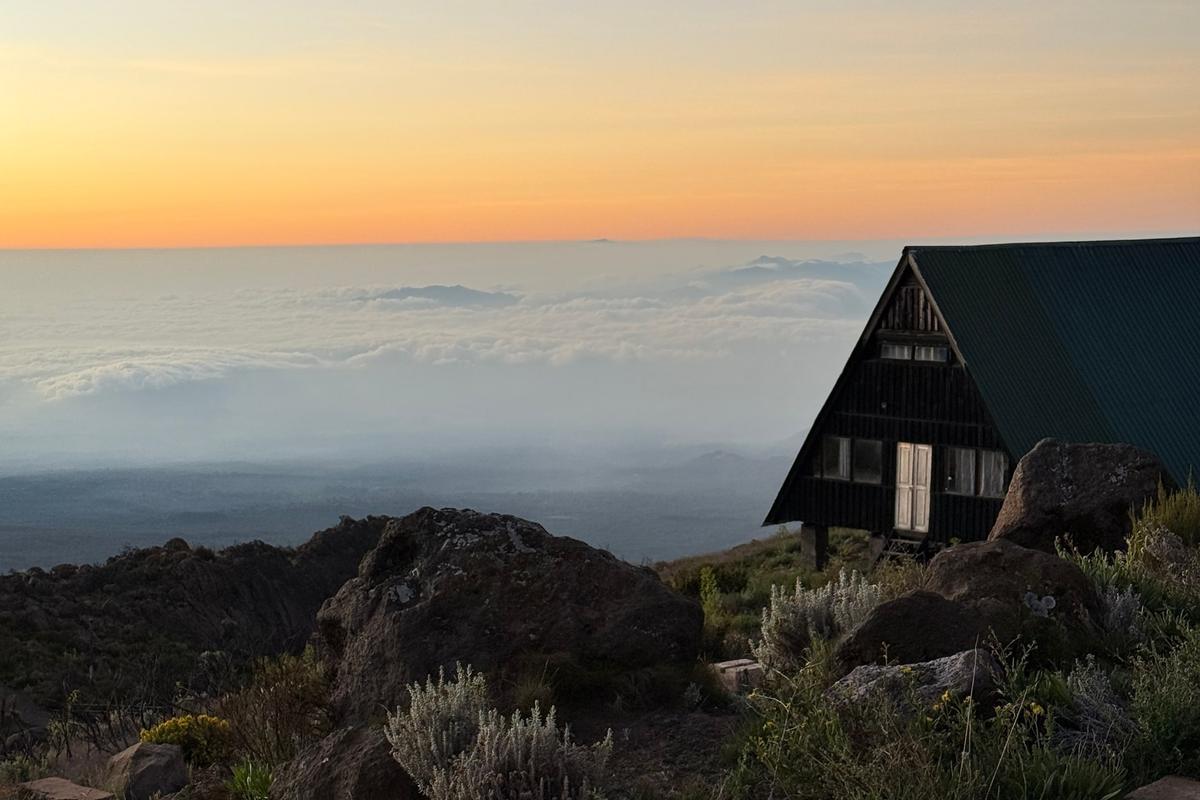
    The longest walk before summit night. The forest thins into giant heather, then opens onto moorland where giant groundsels and lobelias stand among the boulders, with the jagged peaks of Mawenzi and the dome of Kibo ahead. Your sleeping height rises from 2,720 m (8,924 ft) to 3,720 m (12,205 ft) today, so keep the pace slow and drink often. Horombo Huts, the largest hut site on the mountain, often sits above the clouds, and you share it with groups on their way down from the summit.

    A dark wooden A-frame hut at Horombo Huts among boulders and silver everlasting flowers, above a sea of cloud at sunset
    Horombo Huts
  3. Day 3: Horombo Huts → Zebra Rocks → Horombo Huts

    Up to Zebra Rocks and backAcclimatization day

    The day the 5-day plan leaves out. An unhurried walk along the upper path toward Kibo takes you up to Zebra Rocks (4,020 m / 13,189 ft), a cliff striped black and white, and back to Horombo Huts for lunch and a restful afternoon; some groups go farther up toward Mawenzi. Climbing 300 m above where you sleep and coming back down helps your body adapt before the next big gain, to Kibo Hut.

    Altitude sickness: the signs and what to do
  4. Day 4: Horombo Huts → Kibo Hut

    • 5⁠–⁠7 h
    • 10 km
    • up 1,000 mdown 0 m
    • Sleep 4,720 m
    • Alpine desert

    Into the alpine desert

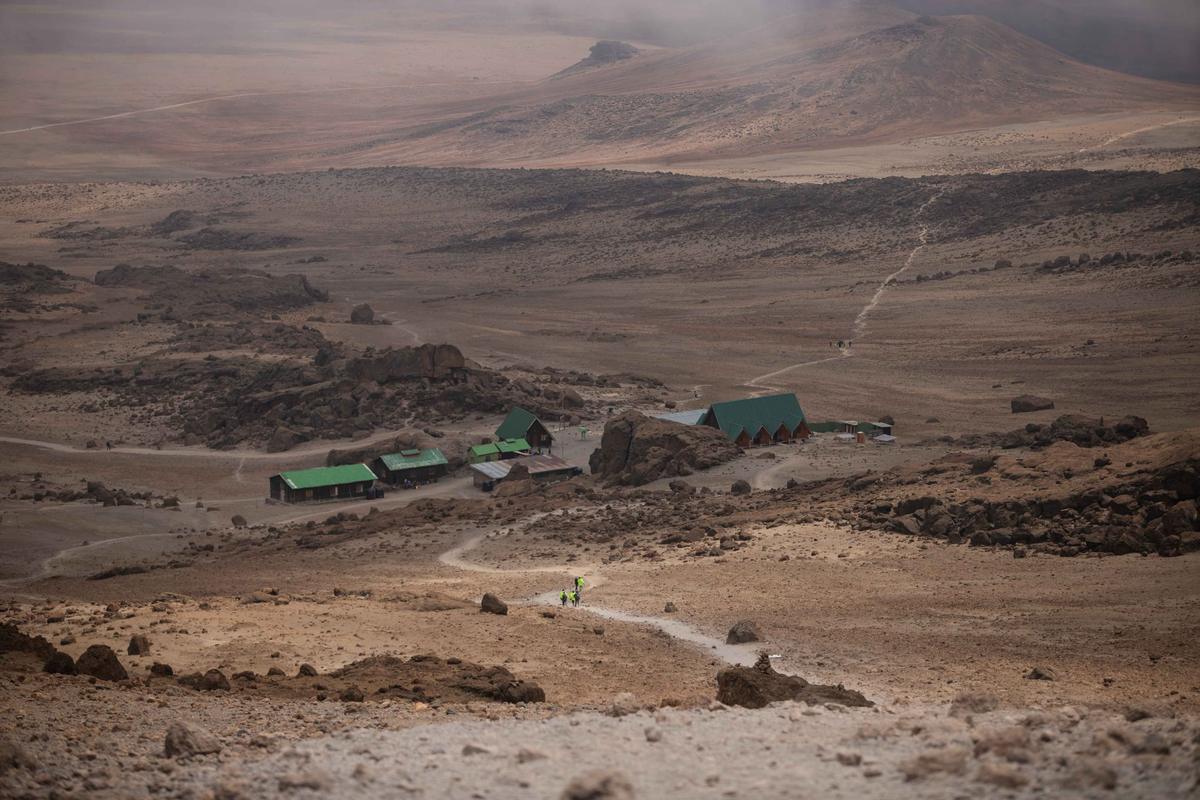
    Most groups take the lower of the two paths toward Kibo, past the Last Water Point, where you fill your bottles for the last time on the way up, then out across the Saddle: a wide, stony desert between Mawenzi and Kibo where almost nothing grows. The going is easy, but the air thins with every hour. Kibo Hut is a stone bunkhouse with dormitories at the foot of the summit cone, and there is no running water: porters bring it up from below. By early evening you have eaten and are in your sleeping bag, because the wake-up call comes before midnight.

    The green-roofed buildings of Kibo Hut seen from the slope above, in the brown, stony alpine desert of the Saddle, with trekkers on the path
    Kibo Hut
  5. Day 5: Kibo Hut → Horombo Huts via Hans Meyer Cave, Gilman’s Point, Stella Point and Uhuru Peak

    • 15⁠–⁠17 h
    • 22 km
    • up 1,175 mdown 2,175 m
    • Sleep 3,720 m
    • Arctic summit

    Summit night

    1. Wake-up at Kibo Hut
    2. Gilman’s Point on the crater rim
    3. Uhuru Peak
    What summit night is really like

    Sunrise on the crater rim

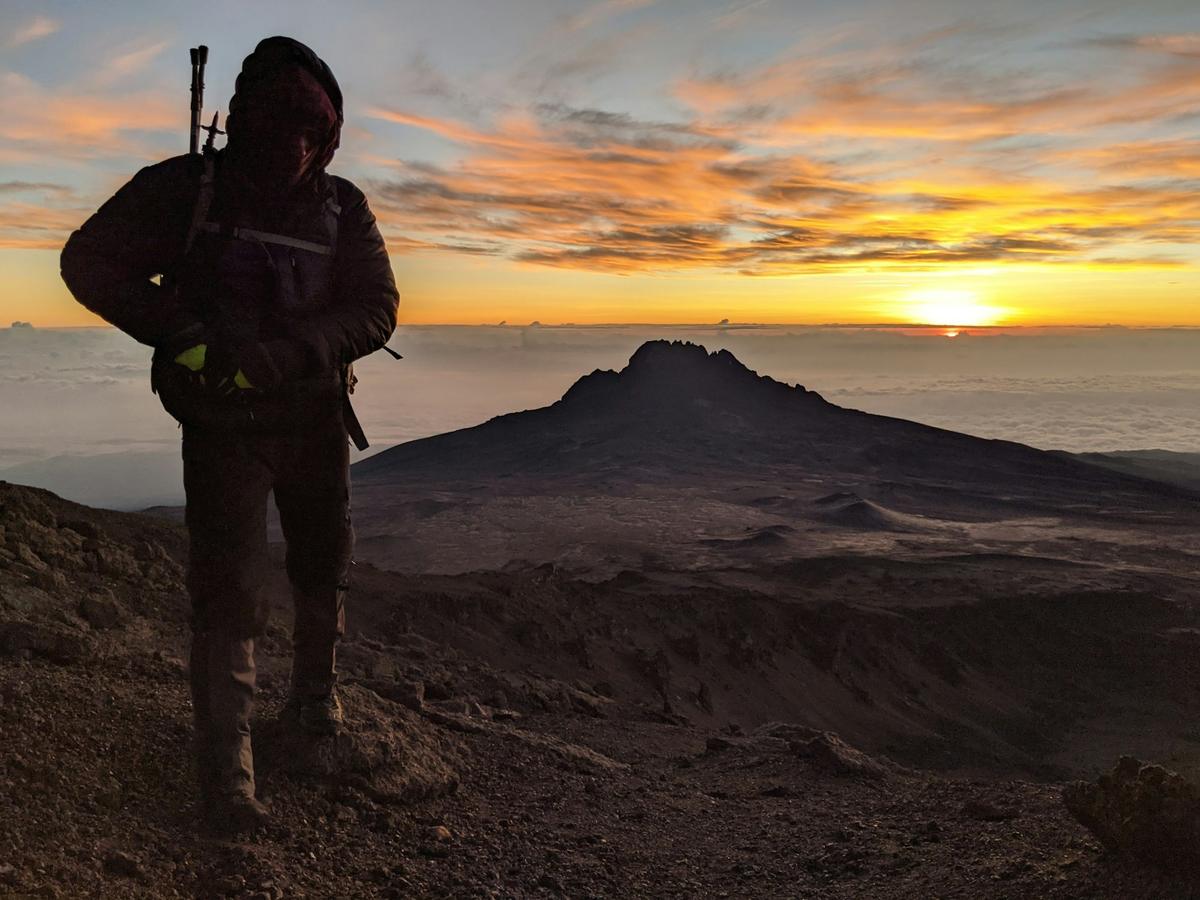
    You leave Kibo Hut around midnight and climb by headlamp up long scree zigzags, past Hans Meyer Cave, named after the leader of the first recorded ascent, to Gilman’s Point on the crater rim, usually before dawn. As the sun comes up behind Mawenzi, the rim path leads on past Stella Point to Uhuru Peak, which most groups reach soon after sunrise. Then you go back down to Kibo Hut for a rest and a meal, and on down to Horombo Huts: 1,175 m up and 2,175 m down in one long day.

    A climber in silhouette on the crater rim at sunrise, with Mawenzi’s peak above a sea of clouds
    Uhuru Peak
  6. Day 6: Horombo Huts → Marangu Gate

    Back through the forest

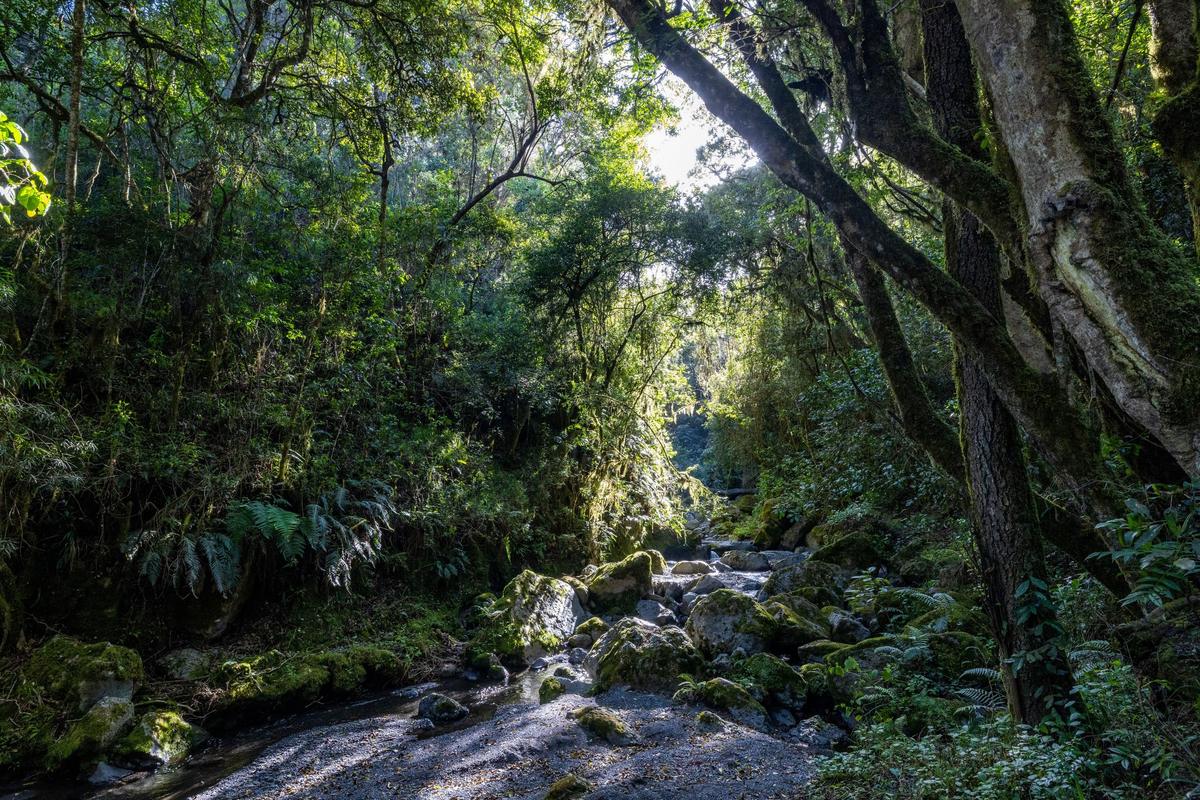
    The long walk out, on the trail you came up: across the moorland, past Mandara Huts and down through the forest to the gate. The path is easy to follow but hard on tired knees, so keep your poles out and take the steps slowly. At Marangu Gate you sign out and receive your certificate, green for Gilman’s Point and gold for Uhuru Peak, and say goodbye to your crew.

    Tipping your crew
    A stream running over moss-covered boulders in the montane rainforest, with ferns along its banks under a sunlit canopy
    On the way to Marangu Gate

Photos: Dmitry Limonov, Nikita Shelaikin, Penfran Tanzania and Balazs Simon / Pexels; David Magalhães / Unsplash

Difficulty: How hard is the Marangu route?

Not technical, and gentle underfoot: there is no scrambling, and the path is wide and well graded nearly all the way. What makes Marangu hard is the altitude. Your sleeping height jumps from 2,720 m (8,924 ft) to 3,720 m (12,205 ft) and later to 4,720 m (15,486 ft), faster than altitude-medicine guidelines advise, and summit night begins only hours after you reach Kibo Hut.

2 of 5 · gentle trail, fast ascent

  1. Up to Kibo Hut

    +1,000 m in 10 km

    5⁠–⁠7 hDay 4

    Your second big jump in sleeping height, and the one that ends highest: a long, easy desert path up to 4,720 m (15,486 ft), where every step costs more breath. Walk slower than feels necessary and keep drinking.

  2. Steepest climb

    +965 m in 4 km

    Kibo Hut → Gilman’s Point5⁠–⁠6 hDay 5

    In darkness and deep cold, tight zigzags on loose scree lead past Hans Meyer Cave to the crater rim. After a wake-up at about 11:00 PM, most climbers reach Gilman’s Point around 5:15 AM. A slow, steady rhythm with short steps gets you there.

  3. Summit night

    +1,175 m / −2,175 m

    22 km15⁠–⁠17 hDay 5

    After the rim and Uhuru Peak, the day is far from over: you walk all the way down to Horombo Huts, 2,175 m below the top, on legs that have been going since midnight. Keep something in reserve for the descent.

Day options: 5 or 6 days on the Marangu route?

The 5-day plan leaves out day 3, the acclimatization day: no walk up to Zebra Rocks and no second night at Horombo Huts. You go on to Kibo Hut the morning after you reach Horombo Huts, so you sleep at 2,720 m (8,924 ft), 3,720 m (12,205 ft) and 4,720 m (15,486 ft) on consecutive nights, with one night fewer at 3,500 m (11,483 ft) or higher to adapt before summit night. In return it saves about $150 in park fees ($720 instead of $870) and shortens the walk to 72 km.

6 days

  • Mandara Huts2,720 m
  • Horombo Huts3,720 m
  • Horombo Huts3,720 m
  • Kibo Hut4,720 m
  • Horombo Huts3,720 m

5 days

  • Mandara Huts2,720 m
  • Horombo Huts3,720 m
  • skippedHorombo Huts3,720 m
  • Kibo Hut4,720 m
  • Horombo Huts3,720 m

3,500 m

The 5-day and 6-day plans compared
6 days5 days
Days on the mountain65
Acclimatization days10
Nights at 3,500 m or higher before summit night32
Park fees (approx.)$870$720

Choose 6 days. The extra day is the only real pause this route gives your body before summit night, and summit-success estimates for the 5-day plan are far lower.

Is it for you?: Is the Marangu route right for you?

The bottom line

If you want a roof over your head every night and a gentle, well-made trail, Marangu is the natural choice, and usually one of the most affordable ways up. Its weakness is speed. Book the 6-day plan with the walk to Zebra Rocks, keep the pace slow, and don’t mistake the huts for an easy summit.

Choose the 6-day version

A great fit if…

  • You would rather sleep in a hut than in a tent
  • You want a gentle, well-made trail with no scrambling
  • You are climbing in the rainy months, when a dry bed counts for a lot
  • You want a quicker, more affordable climb and can still give it six days

Look elsewhere if…

  • You are unsure how your body copes with altitude: a longer, more gradual route gives your body far more timeTry Lemosho
  • You would rather camp: a camping route just as gentle underfoot joins this trail at Kibo HutTry Rongai
  • You want new scenery every day and a different trail on the way downTry Machame
  • You want far fewer people around you: here groups pass in both directions every dayTry Northern Circuit
  • You expect the huts to make the climb easy: summit night from Kibo Hut is as long, steep and cold as on any route

Pros

  • The only route with huts: a bunk and a mattress every night
  • One of the gentlest, best-made trails, with no scrambling
  • A roof and a dining hall in the rainy months
  • Usually among the most affordable climbs: fewer days and a smaller crew

Cons

  • A fast ascent, with little time to acclimatize
  • The same trail up and down
  • Busy in both directions, and shared huts can be noisy

Crowds and the best time to go

Crowds

Marangu is one of the busiest routes on the mountain, and the traffic runs both ways: groups on their way down pass you every day, and Horombo Huts fills with climbers going up and coming down. From Kibo Hut, Rongai groups join the trail for summit night and the descent. The number of beds limits how many people sleep at each hut, and your operator has to book yours in advance, as the park requires.

The best time to climb Kilimanjaro

Compare: Marangu vs Machame, Rongai and Lemosho

How the Marangu route differs from its closest alternatives, and how it ranks among all seven routes.

  • Machame

    Whiskey route

    • 1 more day
    • 15 km shorter
    • Busier
    • Harder
    • Gentler acclimatization
    • Tents, not huts

    The camping classic: about a week on the mountain, with a climb-high, sleep-low day at Lava Tower, more varied scenery and a different trail down. It gives your body more time to adapt, but the days are steeper and the camps busier.

    About the Machame route
  • Rongai

    • 1 more day
    • 3 km shorter
    • Fewer groups
    • Gentler acclimatization
    • Tents, not huts

    Joins Marangu at Kibo Hut

    Shares summit night from Kibo Hut and the whole way down, but you camp, and the climb starts on the drier north side of the mountain. It usually takes a day longer, with gentler gains in sleeping height and fewer people until the trails meet.

    About the Rongai route
  • Lemosho

    • 2 more days
    • 10 km shorter
    • Fewer groups
    • Harder
    • Gentler acclimatization
    • Tents, not huts

    Far more time to adapt: a long, gradual climb from the far west, with one of the best acclimatization profiles on the mountain. In return it costs more, you camp all the way, and the Barranco Wall adds a hands-on scramble.

    About the Lemosho route
All seven routes compared
RouteDaysDistanceSummit successDifficultyCrowdsAcclimatizationNights in
Maranguthis page677 km~55⁠–⁠65%Huts
Machame762 km~80⁠–⁠85%Camping
Lemosho867 km~85⁠–⁠90%Camping
Rongai774 km~70⁠–⁠80%Camping
Northern Circuit988 km~85⁠–⁠90%Camping
Umbwe653 km~50⁠–⁠65%Camping
Shira757 km~70⁠–⁠80%Camping

Summit success: operator-reported ranges for each route’s standard length. There is no official per-route statistic.

FAQ: Marangu route: frequently asked questions

Short answers to what people ask most before they book.

All Kilimanjaro questions

How long is the Marangu route?

About 77 km over 6 days, counting the acclimatization walk from Horombo Huts; the 5-day plan, without it, comes to 72 km. Groups that walk farther up toward Mawenzi on that day cover a few kilometres more. You start and finish at Marangu Gate on the south-east side of the mountain, going up and coming down by essentially the same trail. Operators sell 5 or 6 days on the mountain; packages that add hotel nights are often advertised as longer trips, so always compare the mountain days.

Should I do the Marangu route in 5 or 6 days?

Take 6. The 5-day plan drops the acclimatization day: no walk up to Zebra Rocks and no second night at Horombo Huts, so you reach Kibo Hut (4,720 m / 15,486 ft) a day sooner and start summit night less adapted. The extra day adds about $150 in park fees, and on a route that gains height this fast, few things do more for your chances.

Is the Marangu route the easiest way up Kilimanjaro?

Not quite. Underfoot it is one of the gentlest routes, rated 2 of 5, with a wide, well-made path, no scrambling and a bed every night. But it gains height quickly, and summit night is no easier than on other routes: steep scree from Kibo Hut to Gilman’s Point on the crater rim, on to Uhuru Peak, then all the way down to Horombo Huts, 1,175 m up and 2,175 m down in 15⁠–⁠17 h. First-timers should take the 6-day plan. If you are unsure how you handle altitude, a longer route such as Lemosho gives your body more time.

What is the success rate on the Marangu route?

There is no official figure: Kilimanjaro National Park has not published success rates by route since the mid-2000s. Operators estimate ~55⁠–⁠65% for the 6-day version and far less for 5 days, because the fast ascent leaves little time to adapt. Some report higher numbers for their own groups: Altezza Travel, for example, gives 86.6% for 6 days. The number of days, your pace and your guide count for more than the route itself.

What are the huts like on the Marangu route?

Mandara Huts and Horombo Huts are clusters of small wooden A-frame huts, each sleeping a small group on bunk beds; Kibo Hut is a stone building with larger dormitories. Every bunk has a mattress and a pillow, but bring your own warm sleeping bag: the huts are unheated, and nights at Kibo Hut drop below freezing. Each hut site has a dining hall and solar lighting, but don’t count on a socket: bring a power bank. The lower huts have cold running water and flush toilets; at Kibo Hut the toilets are long drops and all water is carried up by porters. A hut night costs $60 in park fees against $50 for a campsite (both plus VAT), and your operator books the beds in advance, as the park requires.

Why is it called the Coca-Cola route?

It is guide folklore: the name comes from the soft drinks sold at the huts and from the route’s reputation as the comfortable way up. Machame, the steeper camping route, became the “Whiskey route” in contrast. The name sells it short: the huts make the nights more comfortable, not the summit any easier.

Marangu or Machame: which should I choose?

Choose Marangu if you want a bed in a hut, a gentle trail and a quicker, cheaper climb, with park fees of about $870 for 6 days. Choose Machame if you can spare a week: you camp and the days are steeper, but it has a climb-high, sleep-low day at Lava Tower, more varied scenery and a different trail down. If you are unsure how you handle altitude, Machame’s extra day and better profile make it the safer of the two.

A dark wooden A-frame hut at Horombo Huts among boulders and silver everlasting flowers, above a sea of cloud at sunset

Photo: Nikita Shelaikin / Pexels

Sources

Updated

Why numbers differ between sources

Distances and walking times are the figures the park and operators publish for each day; the 77 km total includes the acclimatization walk.

Elevations along the route are the commonly published values, checked against GPS readings and the park’s own signboards.

Summit success rates are estimates reported by operators. The park has published no per-route statistics since the mid-2000s, so read every figure as a range, not a promise.