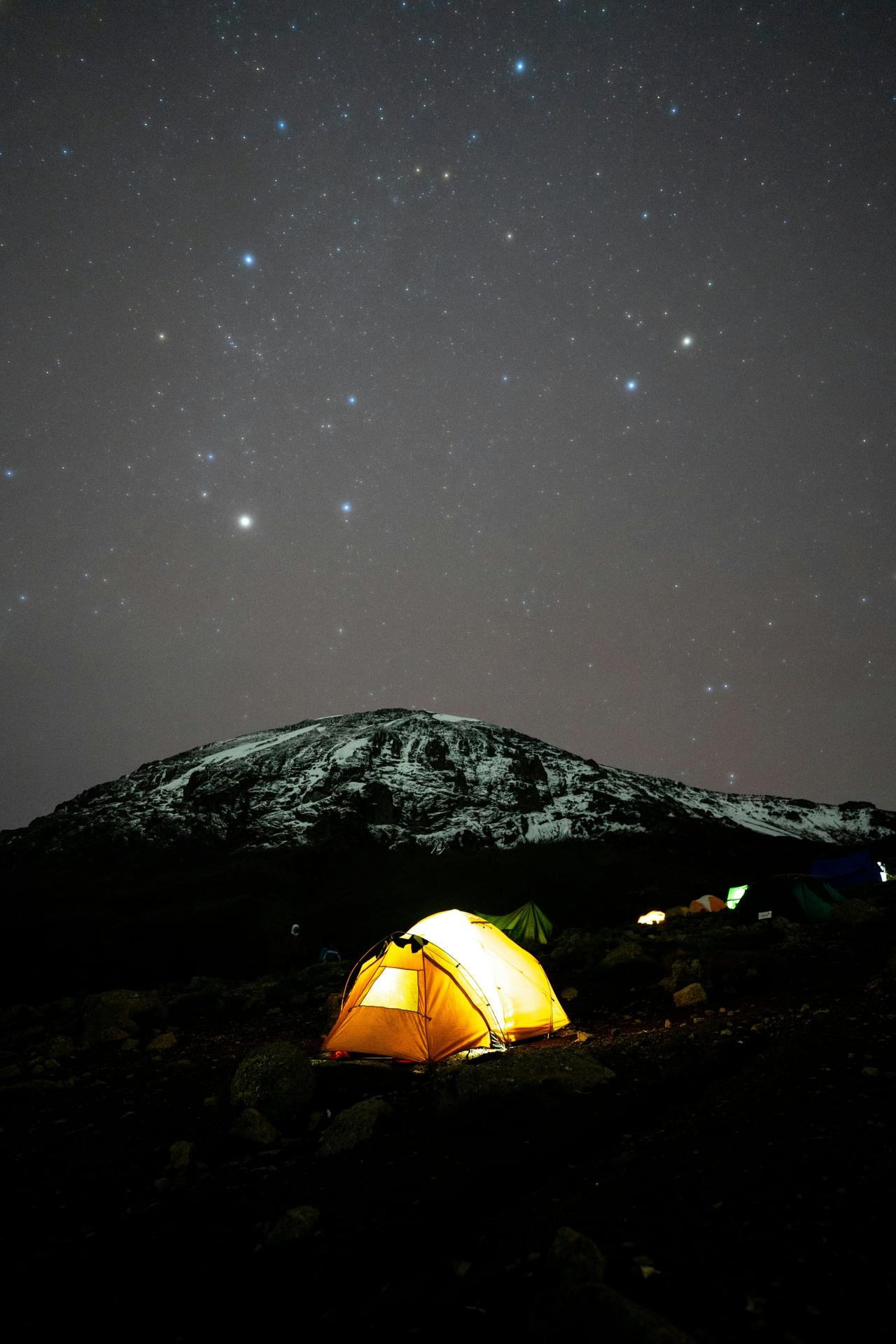
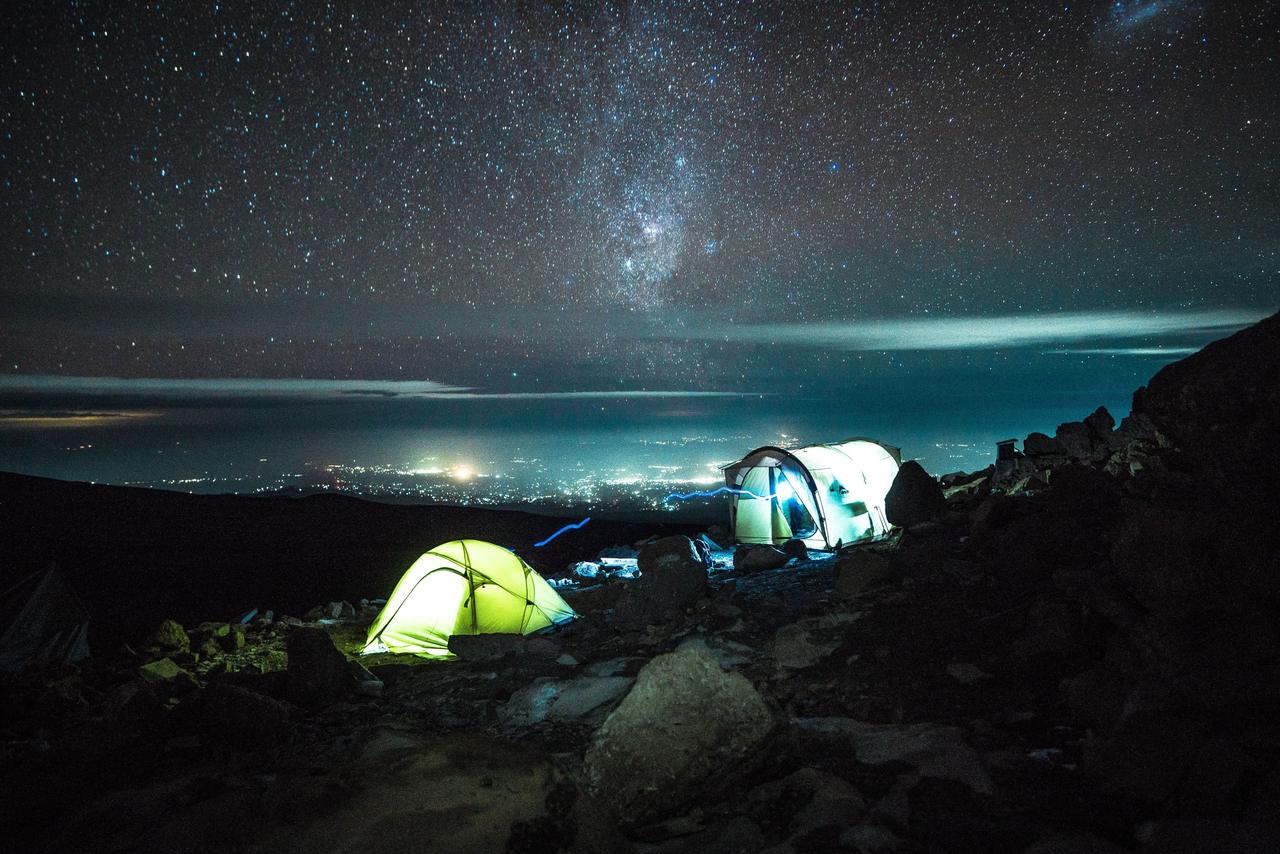
Two tents glowing at a high camp on Kilimanjaro under the Milky Way, the lights of the towns far below

Kilimanjaro packing list: Pack for five climates

In a week you walk from warm farmland and dripping rainforest to a summit where the night air sits around −8 °C. Pack layers, not bulk. A porter carries your duffel, 15 kg at most; you carry a daypack of 7–9 kg with water, rain gear and a warm layer. Your crew brings the tents, the meals and the drinking water.

What you wear: From rainforest to summit night

The same clothes, layered four ways. You start in a T-shirt in the forest and add a layer as you climb. On summit night you wear almost everything you brought: 18 pieces from head to toe.

  1. Forest days

    Rainforest, around 2,300 m

    9⁠–⁠15 °Cnight to day

    Head
    • Sun hat
    Upper body
    • T-shirt
    HandsNothing needed
    Legs
    • Trekking trousers
    Feet
    • Wool socks
    • Hiking boots

    Warm and humid, often a shower in the afternoon. The rain jacket rides in your daypack.

  2. Moorland

    Heath, around 3,600 m

    3⁠–⁠14 °Cnight to day

    Head
    • Sun hat
    • Buff
    Upper body
    • Base layer top
    • Fleece
    Hands
    • Liner gloves
    Legs
    • Trekking trousers
    Feet
    • Wool socks
    • Hiking boots

    Strong sun by day, cold as soon as it sets. The fleece goes on at camp.

  3. High camp

    Alpine desert, around 4,700 m

    −2 to 5 °Cnight to day

    Head
    • Warm hat
    • Buff
    Upper body
    • Base layer top
    • Fleece
    • Down jacket
    Hands
    • Liner gloves
    Legs
    • Thermal leggings
    • Trekking trousers
    Feet
    • Wool socks
    • Camp shoes

    Below freezing at night. The down jacket and the thermal leggings come out at camp.

  4. Summit night

    From the high camp to 5,895 m

    −8 °Cfeels like −16 to −20 °C in the wind

    Head
    • Warm hat
    • Balaclava
    • Headlamp
    Upper body
    • Base layer top
    • Fleece
    • Second fleece or softshell
    • Down jacket
    • Rain jacket
    Hands
    • Liner gloves
    • Insulated mittens
    • Hand warmers
    Legs
    • Thermal leggings
    • Insulated trousers
    • Rain trousers
    Feet
    • Liner socks
    • Wool socks
    • Hiking boots
    • Gaiters

    A whole night of climbing in the dark, often into the wind. Snacks and a spare pair of gloves go in an inside pocket.

  • Base layer
  • Mid layer
  • Insulation
  • Waterproof shell
  • Footwear and kit
The five climate zones, from rainforest to ice
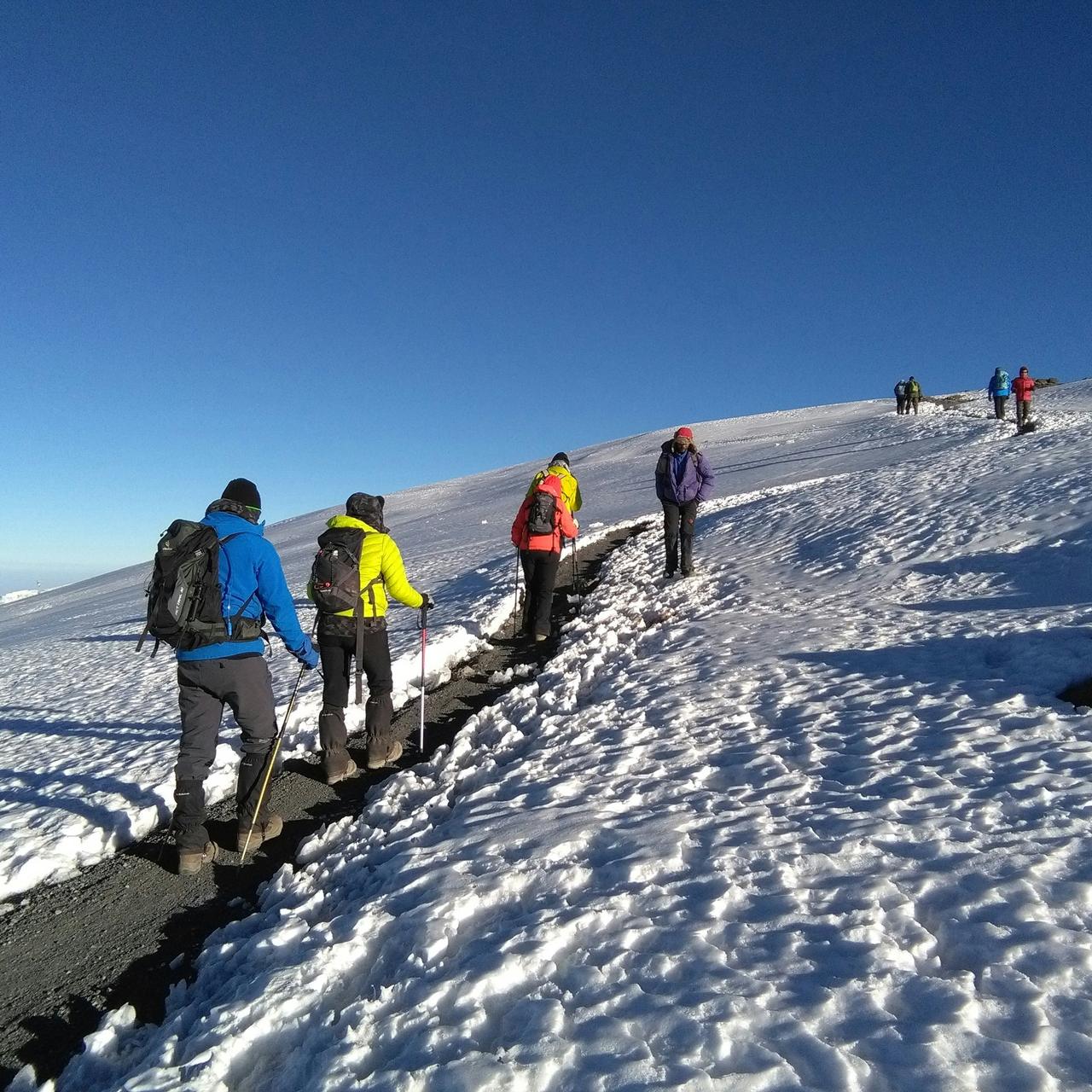
Climbers in layered jackets and warm hats walking up a path through the snow near Kilimanjaro’s summit

Photo: Twende Africa Tours / Unsplash

Three rules of layering

  1. No cotton next to your skin

    Cotton holds sweat and rain and chills you as soon as you stop. Merino wool and synthetic fabrics dry fast and stay warm when damp.

  2. Change layers before you need to

    Take a layer off before you start to sweat, and put one on as soon as you stop. Damp clothes are what make the cold dangerous.

  3. Keep one set dry for the night

    A dry base layer and dry socks that never leave the tent are what you sleep in, and what you climb in on summit night.

The checklist: Everything you need, ticked off

Tick things off as you pack; your ticks stay on this device, so you can come back over several evenings. Filter for the essentials, what you can rent or what rides in your daypack, then print the list or save it as a PDF.

  • Essential
  • Can be rented in Moshi or Arusha
  • In your daypack
  • Worn or carried on summit night

Upper body7

Legs4

Head and hands7

Feet5

Sleeping4

Bags and water7

Gear and electronics7

Health and hygiene16

Documents and money6

Food and comforts4

Two bags: What you carry, what the porters carry

Everything goes into two bags. A porter carries your duffel from camp to camp and usually walks ahead, so you won’t see it until the afternoon. Whatever you may need on the trail goes in your daypack.

Your daypack

30–35 L, on your back

7.5 kgpacked, with 3 L of water

What climbers usually carry: 7–9 kg

  • Water and bottles3.3 kg
  • Clothing1.4 kg
  • The bag itself1.2 kg
  • Snacks and extras0.3 kg
  • Wash kit, first aid and electronics1.2 kg

Water, rain gear, a warm layer, sun protection, snacks and the small things you need during the day. Keep it light: every kilo counts at 5,000 m.

  • Fleece jacket
  • Waterproof rain jacket
  • Waterproof over-trousers
  • Sun hat with a brim
  • Warm hat
  • Buff or neck gaiter
  • Liner gloves
  • Daypack, 30–35 L
  • Rain cover for the daypack
  • Water bottles or a bladder, 3 L in all
  • Headlamp, 200 lm or brighter
  • Power bank
  • Phone or camera
  • Sunscreen, SPF 50
  • Lip balm with SPF
  • Personal first-aid kit
  • Hand sanitiser
  • Toilet paper
  • Passport
  • Snacks you like

The duffel

70–90 L, carried by a porter

12.5 kgpacked, with 2.5 kg to spare

Most operators’ limit: 15 kg, sleeping bag included

  • Clothing5.3 kg
  • Sleeping bag and liner2 kg
  • The bag itself1.7 kg
  • Snacks and extras1.9 kg
  • Wash kit, first aid and electronics1.7 kg

Everything else: the sleeping bag, spare clothes, the down jacket, the wash kit and the rest of the snacks. Bags are weighed at the gate, and a heavier one needs an extra porter.

Packed bottom to top

  1. At the bottomThe sleeping bag, in its own dry bag.
  2. In the middleSpare clothes in dry bags, sorted so you can find them in a dim tent.
  3. On topWhat you want first in camp: the down jacket, camp shoes and the wash kit.
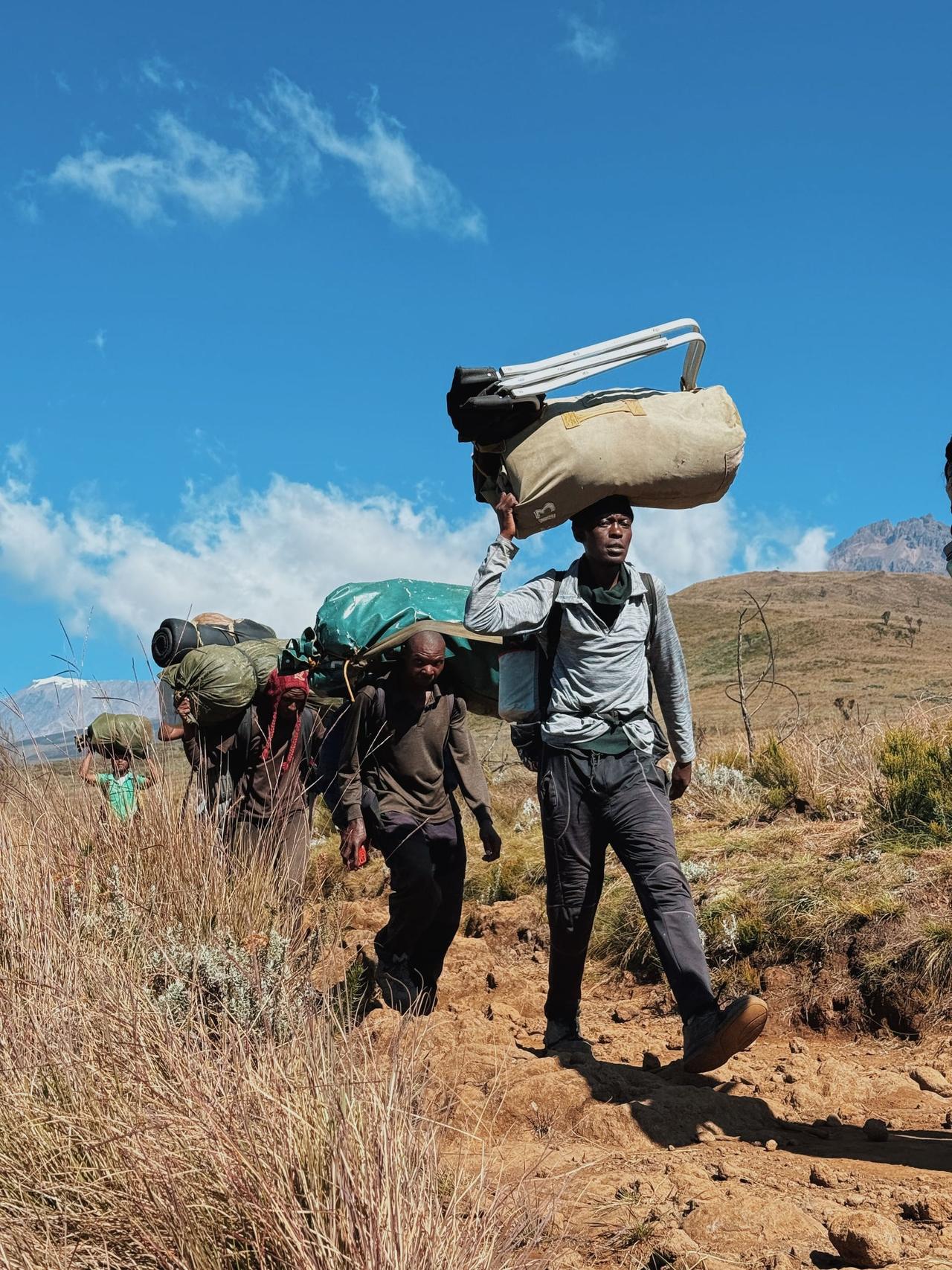
Porters on a heath path below Kibo, the first carrying a climber’s duffel on his head

Photo: Nikita Shelaikin / Pexels

  • Soft bags only

    Porters carry the duffel on their head or back, so suitcases, wheels and hard frames don’t work.

  • Everything in dry bags

    The duffel walks through rain and sits on wet ground. Pack the sleeping bag and clothes in dry bags inside it.

  • Leave the rest in town

    Hotels in Moshi and Arusha store your travel clothes and other luggage while you climb.

  • Think of your porter

    The park caps a porter’s load at 25 kg, their own kit included, and the porters’ welfare guideline at 20 kg of the climb’s gear. A light bag keeps it there.

A lit tent at a high camp below Kibo’s snow-streaked dome under a starry sky

Photo: David Phan / Unsplash

Summit night: Dressed for −8 °C

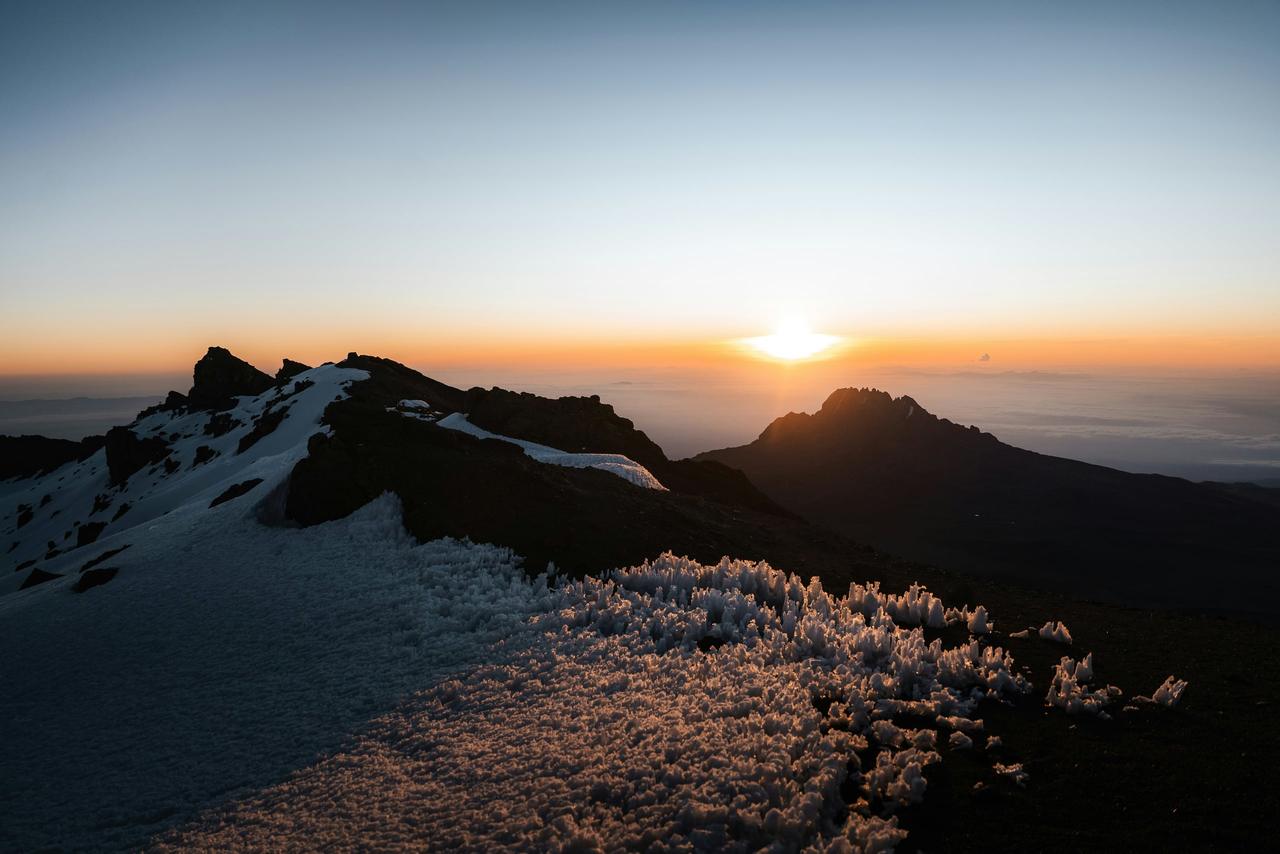
You leave the high camp around midnight and climb through the coldest hours of the climb to reach the crater rim around sunrise. The air at the top sits around −8 °C all night, and the wind makes it feel like −16 to −20 °C.

air at the top, midnight to sunrise
−8 °C
what the wind makes it feel like
−16 to −20 °C
at the high camp when you set off
−1 to −2 °C
  1. Keep your water liquid

    Fill your bottles with hot water at camp, put them in insulated covers and carry them upside down: water freezes from the top. A drinking tube freezes fast; blow the water back after each sip, or leave the bladder in camp.

  2. Keep batteries warm

    Cold drains batteries fast. Put fresh lithium batteries in your headlamp, carry spares, and keep your phone in an inside pocket.

  3. Hands and feet first

    Liner gloves under mittens, warmers in the mittens if your hands get cold easily, and the dry pair of socks you saved for tonight.

  4. Lay it out before you sleep

    You get up around 11 p.m. after a few hours’ rest. Lay the night’s clothes out beforehand, and sleep in your base layers.

  5. Snacks in an inside pocket

    Chocolate and bars go rock-hard in the cold. Keep a few close to your body and eat a little every hour, even without appetite.

  6. Sunglasses for the way down

    The sun rises fast and the snow and glaciers dazzle. Have sunglasses and sunscreen ready for the descent.

On you or in your daypack tonight

  • Long-sleeved base layer tops
  • Fleece jacket
  • Second fleece or softshell
  • Down or synthetic insulated jacket
  • Waterproof rain jacket
  • Trekking trousers
  • Thermal leggings
  • Waterproof over-trousers
  • Insulated or fleece trousers
  • Warm hat
  • Buff or neck gaiter
  • Balaclava
  • Liner gloves
  • Insulated mittens
  • Waterproof hiking boots
  • Wool hiking socks
  • Gaiters
  • Water bottles or a bladder, 3 L in all
  • Insulated bottle cover
  • Trekking poles
  • Headlamp, 200 lm or brighter
  • Spare batteries for the headlamp
  • Phone or camera
  • Chemical hand and toe warmers
  • Snacks you like

Rent or buy: Rent the bulky things, bring what touches your skin

Operators and outdoor shops in Moshi and Arusha rent most of the heavy gear for the length of a climb. Climbers who rent usually spend about $100⁠–⁠$200; buying the same gear new costs about $400⁠–⁠$1,000.

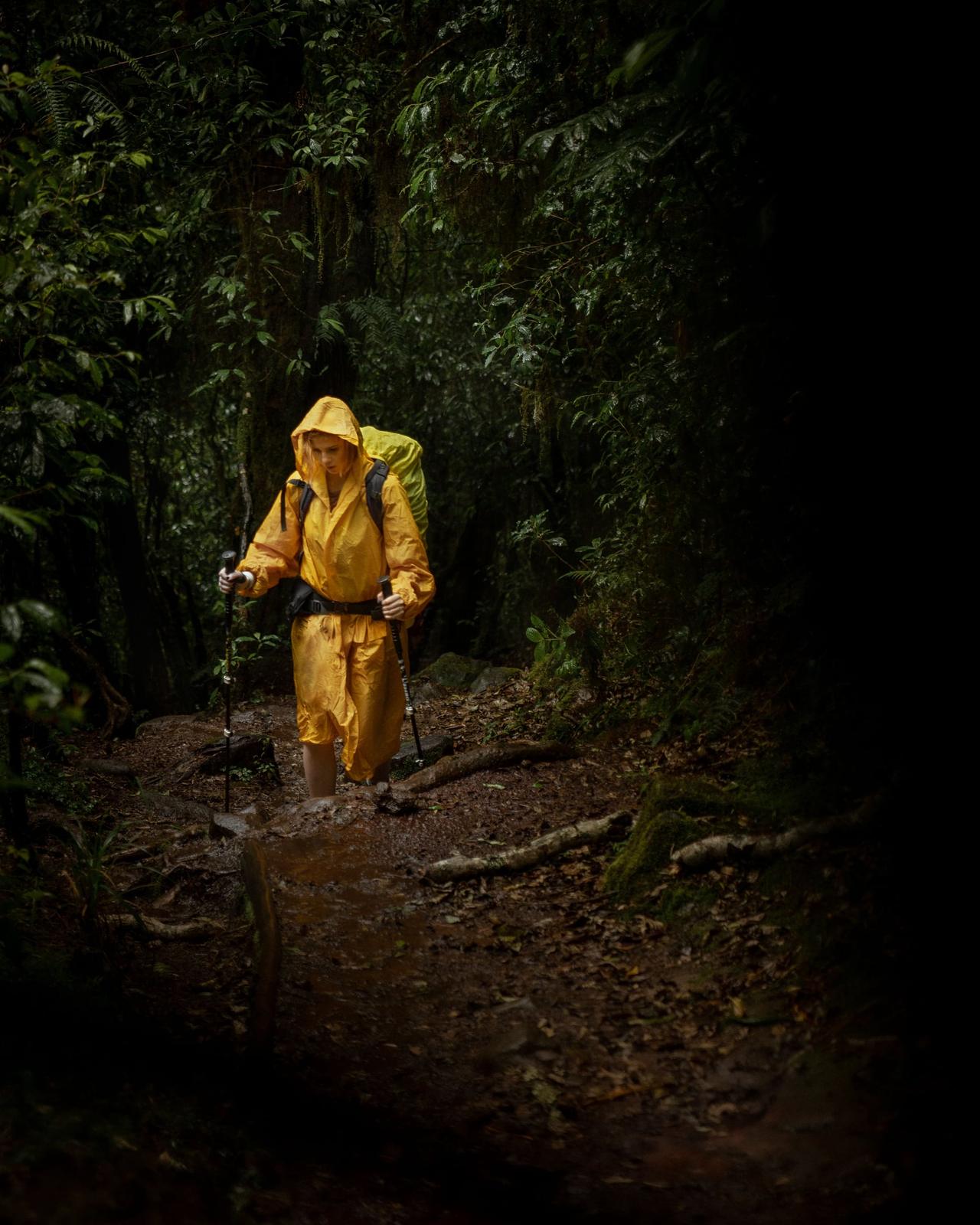
A hiker in a yellow rain poncho, poles in hand, on a muddy path through the rainforest

Photo: Dmitry Limonov / Pexels

Easy to rent

ItemPer climb
Sleeping bag$20⁠–⁠$55
Down or summit jacket$20⁠–⁠$60
Trekking poles$10⁠–⁠$30
Rain jacket$15⁠–⁠$30
Rain trousers$10⁠–⁠$25
Insulated mittens$10⁠–⁠$20
Gaiters$10
Duffel bag$20⁠–⁠$40

Typical prices per climb from operators’ rental lists, paid on arrival. Ask early for a sleeping bag in the busy months.

Better to bring your own

  • Hiking bootsBreak them in for weeks on your own feet: new or borrowed boots mean blisters.
  • Socks and base layersThey sit on your skin all week. Rentals are rare and rarely pleasant.
  • DaypackYou carry it every day: it has to fit your back and hips.
  • Headlamp and sunglassesSmall, cheap, and your safety depends on them working.
  • Gloves and a hatRarely rented, and you will want them in camp from the first cold evening.
The whole kit, rented or bought new
Rented$100⁠–⁠$200
Bought new$400⁠–⁠$1,000

When you pick up rental gear

  • Do it the day before the climb, at the operator’s briefing, so there is time to swap.
  • Check the zips, the hood and the cuffs of jackets and trousers.
  • Ask for the sleeping bag’s comfort rating and lie in it: it should close around your shoulders.
  • Bring a liner for the sleeping bag, and test the poles’ locks.

Before you fly: Documents, the flight and what to leave at home

The last checks before you leave: the papers you carry, what goes where on the plane, and what stays at home.

Documents

  • PassportValid for six months after you arrive, with at least one blank page.
  • VisaApply online on the official e-visa site before you fly, and keep the approval on paper and on your phone.
  • Tanzania’s visitor insuranceSince October 1, 2026 every visitor must buy the government’s $44 policy. It does not replace your own.
  • Your own insuranceIt must cover trekking to 6,000 m and helicopter evacuation. Carry the policy number and the emergency phone number.
  • Yellow fever certificateOnly if you come from a country with yellow fever, or change planes there for more than 12 hours. Kenya and Ethiopia count, so a long stop in Nairobi or Addis Ababa does too.
  • CashUS dollars printed in 2013 or later, clean and untorn, many in small notes for tips. In town, pay in Tanzanian shillings.

On the plane

  • Wear your bootsAnd pack whatever you cannot rent in your cabin bag: medication, glasses, documents and a base layer. If your luggage is late, you can rent the rest.
  • Power banks in the cabinHand luggage only: at most two, up to 100 Wh each, and most airlines no longer let you use them on board. The same goes for spare lithium batteries.
  • Poles in the holdUK and many European airports do not allow trekking poles in the cabin, and US airports only blunt-tipped ones. Check them in.
  • No camping gasGas cartridges are not allowed on planes, and your crew does the cooking anyway.

Leave at home

  • Plastic bagsTanzania has banned plastic carrier bags since 2019, and arriving passengers hand them in at the airport. Zip bags for toiletries are allowed; pack everything else in dry bags or stuff sacks.
  • Cotton jeans and hoodiesHeavy, slow to dry, and cold once wet.
  • Brand-new bootsA week of walking in unbroken boots costs more than blisters.
  • A droneWithout permits from the aviation authority it is held at the airport, and flying in the national park needs the park’s permission too.
  • Jewellery and valuablesNothing you would hate to lose. Leave the rest in the hotel safe.
  • Too many clothesThere is no washing on the mountain, and nobody minds. Layers, not outfits.

Questions: What people ask about packing for Kilimanjaro

What should I pack for Kilimanjaro?

Layers for every climate from warm rainforest to a summit night around −8 °C: base layers, a fleece, a down jacket, waterproof jacket and trousers, warm hat, gloves and mittens; broken-in hiking boots and wool socks; a sleeping bag rated to −10 °C comfort; a 30–35 L daypack with 3 L of water; a headlamp, sunglasses, sunscreen and a small first-aid kit. The checklist above has all 67 items.

How much can my duffel bag weigh on Kilimanjaro?

Most operators set 15 kg for the duffel a porter carries, sleeping bag included; a heavier bag needs an extra porter. The limit protects the porters: the park caps a porter’s load at 25 kg, their own kit included. A typical packed duffel weighs about 12.5 kg.

What do you wear on Kilimanjaro summit night?

Almost everything: a base layer, a fleece, a second fleece or softshell, a down jacket and a windproof shell on top; thermal leggings, insulated trousers and rain trousers on your legs; a warm hat and balaclava, liner gloves under mittens, and fresh wool socks. The air is about −8 °C, and the wind makes it feel like −16 to −20 °C.

What sleeping bag do I need for Kilimanjaro?

One with a comfort rating of −10 °C or lower. The comfort rating is the temperature at which most people sleep warm; the lower "limit" and "extreme" figures are survival numbers, not comfortable nights. A liner adds a few degrees. Sleeping bags can be rented in Moshi or Arusha for about $20⁠–⁠$55.

Can I rent gear in Moshi or Arusha?

Yes. Operators and shops rent sleeping bags ($20⁠–⁠$55 per climb), down or summit jackets ($20⁠–⁠$60), trekking poles ($10⁠–⁠$30), gaiters, rain gear and duffels. Climbers who rent usually spend about $100⁠–⁠$200. Bring your own boots, socks, base layers and daypack.

Do I need hiking boots, or are trail shoes enough?

Waterproof hiking boots with ankle support are best: the forest is muddy, the scree loose, and the summit cold and sometimes snowy. Whatever you wear, break it in on long walks before you go.

Do I need crampons, microspikes or gaiters on Kilimanjaro?

Crampons, no: the standard routes are walking trails. After fresh snow, guides sometimes hand out microspikes for the last stretch to the summit; ask your operator whether they carry them. Gaiters are optional but useful: they keep mud, dust and scree out of your boots, above all on the way down.

What goes in my daypack?

Everything you need until the duffel reaches camp: 3 L of water, rain jacket and trousers, a fleece, hat and gloves, sunscreen and sunglasses, snacks, a headlamp, toilet paper, a small first-aid kit, your phone, passport and some cash. Packed, it weighs about 7.5 kg.

What should women add to a Kilimanjaro packing list?

Sports bras that sit comfortably under the daypack’s straps, enough period products for the whole trip with opaque bags to carry them out (there are no bins on the mountain), and, if you like, a pee funnel or a pee bottle for cold nights. Everything else on the list is the same.

How should I pack for the rainy season?

Bring a good waterproof jacket and trousers, a rain cover and a liner for your daypack, dry bags for everything in the duffel, and gaiters. Pack an extra base layer and more socks: nothing dries in the mist.

Can I bring plastic bags to Tanzania?

Not carrier bags: Tanzania has banned them since 2019, and arriving passengers hand them in at the airport. Zip bags for toiletries are allowed. Pack the rest in dry bags or stuff sacks, and carry all rubbish off the mountain.

How much cash should I bring for Kilimanjaro?

Enough US dollars for the crew’s tips, which most climbers pay in cash at the end. Bring notes printed in 2013 or later, clean and untorn, many of them small. In town, pay in Tanzanian shillings: cash machines in Moshi and Arusha give shillings.
Sources

Updated

Temperatures are measured at Kilimanjaro Airport and on the summit, with the heights between estimated. Bag weights add up typical weights for mid-range gear. Rules, prices and airline limits follow the official and operator sources below and change from time to time: check them again before you travel.