One more day
$250–$450
per person for a pair, typically about $350. $141.60 of it is park fees; the rest pays the crew and their food.
With a reputable operator, a guided climb costs about $2,200–$3,500 per person for seven or eight days, park fees included. About $956 of a seven-day climb is park fees, set by Tanzania National Parks. Flights, tips, visa and insurance bring most climbers to roughly $3,500–$5,500 in total.
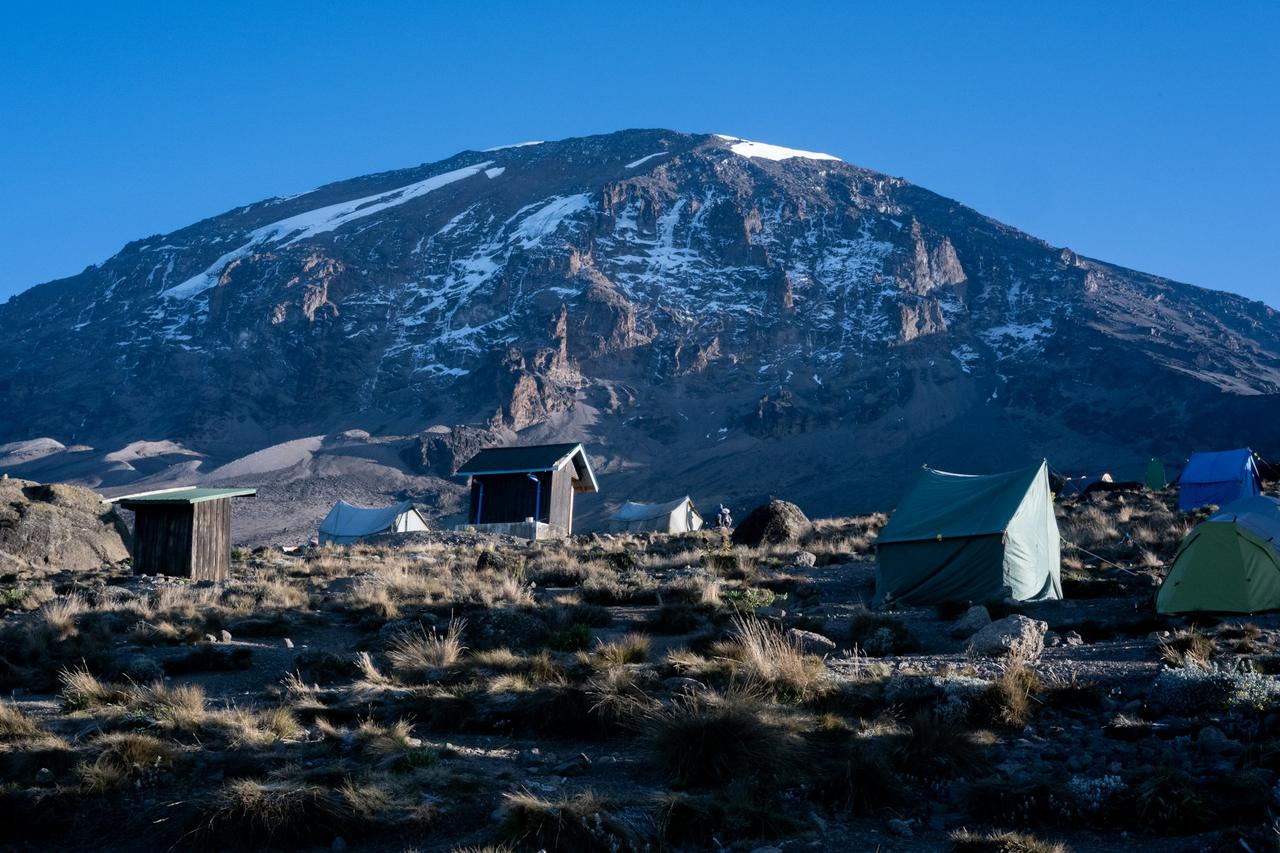
Photo: Daniel Vargas / Unsplash
The climb is the biggest cost, and park fees are the biggest part of the climb. This is what three typical seven-day trips cost per person, from the flight out to the last tip.
Park fees: 27% of the trip
Park fees: 18% of the trip
Park fees: 11% of the trip
Seven days on a camping route, flying from Europe or North America.
Your own numbersTanzania National Parks sets the fees, and your operator pays them for you at the gate. Every operator pays the same, so the fees put a floor under every price. This tariff runs from July 1, 2026 to June 30, 2027.
| Fee | Per | Tanzanian shillings | US dollars | With 18% VAT |
|---|---|---|---|---|
| Conservation fee | day | TZS 178,850 | $70 | $82.60 |
| Camping | night | TZS 127,750 | $50 | $59.00 |
| Huts (Marangu route) | night | TZS 153,300 | $60 | $70.80 |
| Rescue fee | climb | TZS 51,100 | $20 | $23.60 |
| Crater Camp or Upper Barafu | night | TZS 255,500 | $100 | $118.00 |
Children aged 5–15 pay $20 a day, $10 a night in a tent and $20 in a hut, plus VAT; under-fives go free. Children under 10 may not climb above 3,700 m.
Fees grow with every day on the mountain: $141.60 for a day and a night in a tent, $153.40 in the Marangu huts. Per climber, including VAT.
Most climbers
| Route | 5 days | 6 days | 7 days | 8 days | 9 days | 10 days |
|---|---|---|---|---|---|---|
| Machame | 6 days$814 | 7 days$956(Most climbers) | 8 days$1,097 | |||
| Lemosho | 6 days$814 | 7 days$956 | 8 days$1,097(Most climbers) | 9 days$1,239 | ||
| MaranguHuts | 5 days$720 | 6 days$873(Most climbers) | ||||
| Rongai | 6 days$814 | 7 days$956(Most climbers) | 8 days$1,097 | |||
| Northern Circuit | 8 days$1,097 | 9 days$1,239(Most climbers) | 10 days$1,381 | |||
| Umbwe | 6 days$814(Most climbers) | 7 days$956 | ||||
| Shira | 6 days$814 | 7 days$956(Most climbers) | 8 days$1,097 |
Without the crew’s fees and without optional Crater Camp nights ($118 each with VAT).
Find your routePer person for a seven- or eight-day climb, park fees included, from the published 2026/27 prices of 45 operators and marketplaces. Flights and tips come on top.
$1,500–$2,200
Local operators, mostly joining groups
$2,200–$3,500
Established local operators and the big adventure brands
$3,500–$6,000
Specialists and Western-led trips
$6,000+
Luxury series and US premium brands
Listings start at about $1,000. At that price, something is missing: see the price floor.
A solo climber still needs a guide, a cook and a mess tent, so fewer people share the crew. In the price grids of seven operators, one climber pays 24% more than each of two, and four pay about 10% less. Joining a group usually costs about the same as climbing as a pair.
Altezza Travel, Machame 7 days:Alone $4,266Two $3,351Four $3,010Six $2,821Eight or more $2,657
$250–$450
per person for a pair, typically about $350. $141.60 of it is park fees; the rest pays the crew and their food.
Matters little. Some operators take about $50 or up to 10% off in the rainy months (April, May and November); a few charge a little more for popular departures in the dry season and over the holidays.
Compared with a local operator, the same climb costs about 1.1–1.5 times as much with a large British adventure brand, and two to three times as much with a US premium company. Several of them work with local operators on the ground.
Every climb pays the same park fees and needs four or five crew members per climber. Add their pay, food and transport, and a seven-day climb for two costs about $1,600–$1,800 per climber before the operator pays for an office, licences and tax, or earns anything.
Operators that work with the Kilimanjaro Porters Assistance Project pay a porter at least TZS 25,000 a day ($9.50), a cook TZS 30,000 and a guide TZS 40,000. Membership is voluntary, not a licence.
Pick a route, a price level and where you fly from. Every line is per person, with a low and a high end.
Climb prices: estimates from published 2026/27 prices. Exchange rates: ECB, October 15, 2026.
Park fees are 17% of it.
Most climbs include two hotel nights and the transfers to the gates.
Compare quotes line by line: two prices that look $500 apart can include very different things.
Some European agencies show the park fees separately, at about €970–€1,000 for seven days, so their headline price looks that much lower than it is.
Tips are a big part of the crew’s income. You hand them over on the last day, usually at a short farewell. Operators suggest these amounts for the whole group:
| Lead guide | $20–$25 a day |
|---|---|
| Assistant guide | $12–$15 a day |
| Cook | $12–$15 a day |
| Each porter | $6–$10 a day |
About $2,200–$3,500 per person with a reputable operator for seven or eight days, park fees included. Budget operators start around $1,500; premium and luxury trips run to $12,000 and more. With flights, tips, visa and insurance, most climbers spend roughly $3,500–$5,500 in total.
The conservation fee is TZS 178,850 a day ($70), camping TZS 127,750 a night ($50), the Marangu huts TZS 153,300 a night ($60) and the rescue fee TZS 51,100 per climb ($20), all plus 18% VAT. A seven-day climb comes to about $956 per climber. The tariff runs from July 1, 2026 to June 30, 2027.
With almost every operator, yes: they pay the fees at the gate and include them in your price. A few European agencies list them separately, at about €970–€1,000 for seven days, so check that line before you compare quotes.
Three things set the price: park fees of $141.60 for every day on the mountain, a crew of four or five people per climber, and the number of days. For a seven-day climb for two, fees, crew pay, food and transport alone come to about $1,600–$1,800 per climber.
Join a group with an established local operator, rent the bulky gear in Moshi or Arusha and compare flights. The shortest climbs cost least, but they also give your body the least time to adjust to the altitude, so cutting days is the saving that costs most.
No. Park regulations require every climbing group to have a licensed guide, booked through a registered operator, so an independent climb is not allowed.
Usually about a quarter more: in published price grids a solo climber pays 13–31% more than each of two. Joining a scheduled group usually brings the price down to about the rate for a pair.
Operators suggest, per group and per day, about $20–$25 for the lead guide, $12–$15 for each assistant guide, $12–$15 for the cook and $6–$10 for each porter. For seven days that comes to about $230–$340 per climber in a group of four, or $450–$640 if you climb alone.
Roughly $300–$1,000: enough for the tips, any rentals and a little spending money. Bring US dollars printed in 2013 or later, in good condition; in town, pay in Tanzanian shillings or by card.
No. Since October 1, 2026, every visitor to mainland Tanzania must buy the government’s travel insurance ($44 per adult), but it does not replace your own policy. You still need cover for trekking to 6,000 m with helicopter evacuation, which can cost $3,000–$10,000 without insurance.
Yes. Children aged 5–15 pay $20 a day instead of $70, and less for camping and huts. Children under 10 may not climb above 3,700 m, so ten is the youngest age for a summit attempt.
Usually $250–$450 per person for a pair. About $141.60 of that is park fees; the rest pays the crew and their food. An extra day gives your body more time to adjust to the altitude.
Park fees come from the 2026/27 tariff of Tanzania National Parks and its reservation system. Climb prices are what operators publish for 2026 and 2027, read in October 2026. The floor, the group-size figures, the tips per climber and the budgets are calculated from these.