How hard is it to climb Kilimanjaro? Easy on technique, hard on your lungs
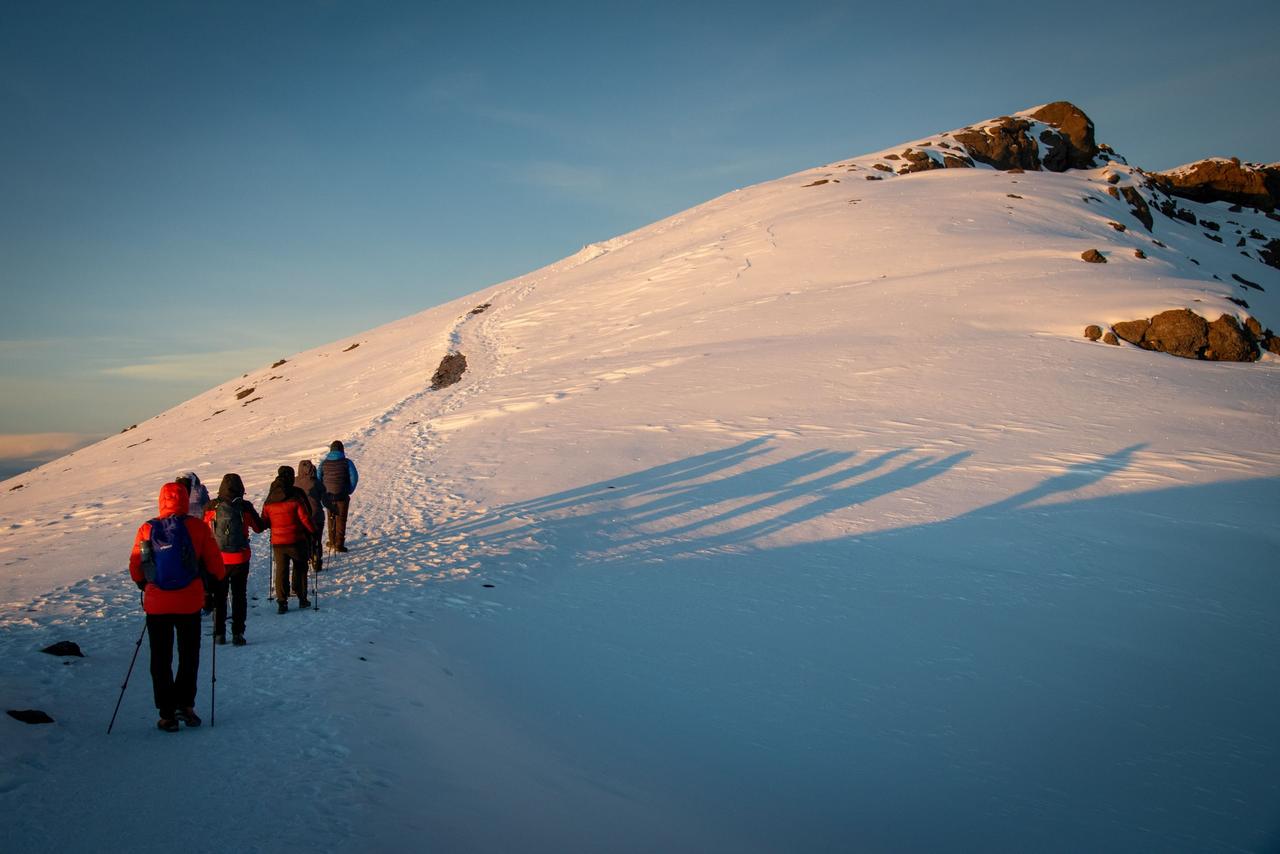
Hard, but not technical. Kilimanjaro is a walk on mountain trails with no ropes or crampons, and most days take 3–8 h at a slow pace. Two things make it hard: the thin air, with about half the oxygen of sea level in every breath at the top, and one summit day of 15–17 h that starts around midnight.
- 5,895 mUhuru Peak
- 6–9days on the mountain
- +1,095–1,222 mclimbed on summit night
- −10 °Con the summit at dawn
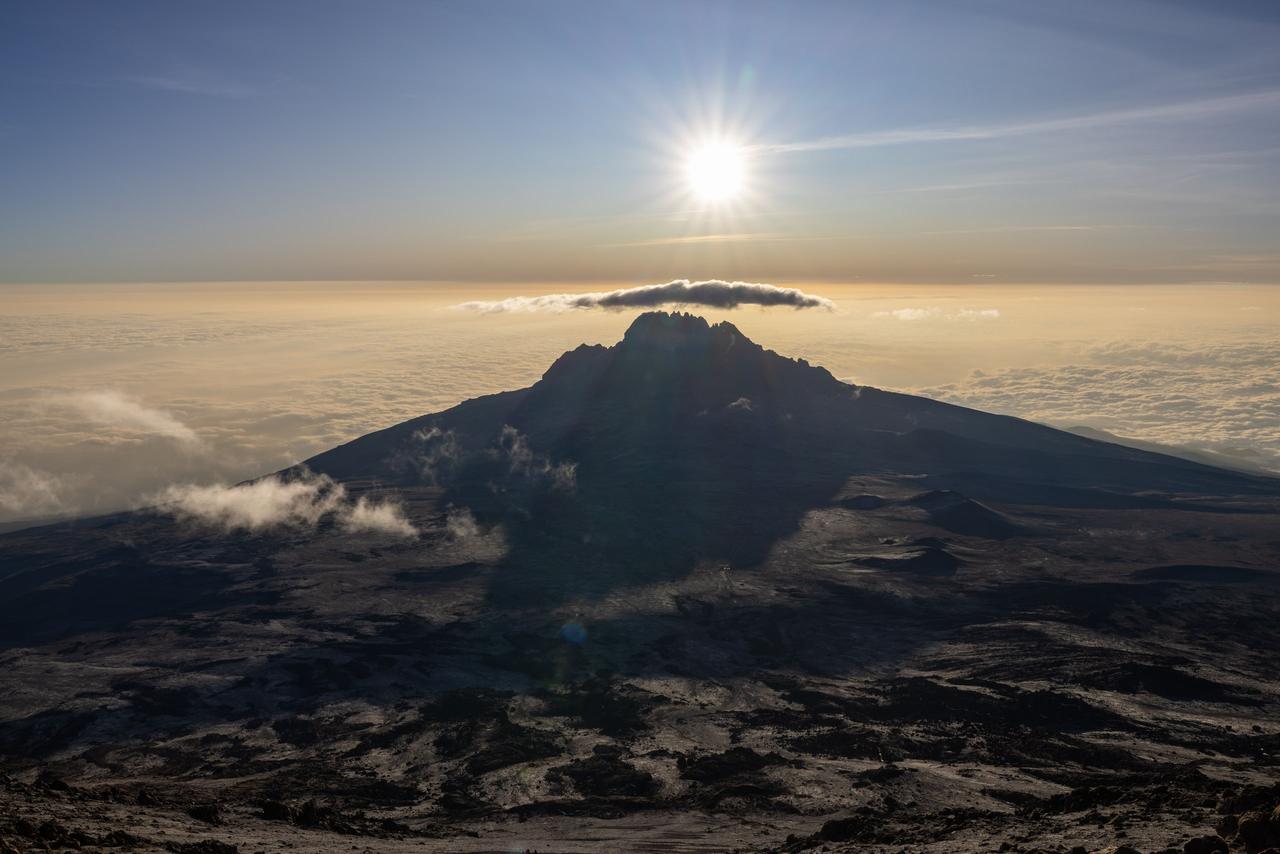
Photo: Paweł Kosmala / Pexels
The short answer: Three kinds of hard
Kilimanjaro is a walk, not a climb, but a long and very high one. The trails ask little of your technique, the days ask for stamina, and the height asks for time.
Technique: Easy
Swiss hiking scale (SAC)
- T1
- T2: trails
- T3: Barranco Wall
- T4
- T5
- T6
- No ropes
- No crampons
- No harness
Mountain trails all the way. The one hands-on stretch is the 257 m Barranco Wall on four routes, a scramble without ropes.
Stamina: Demanding
D1D2D3D4D5D6D7Most days take 3–8 h at a slow pace; summit day takes 15–17 h. Over a whole climb you walk for 34–62 hours.
Altitude: The real test
Air pressure compared with sea level
49%Uhuru Peak
Sea level100%
57–58%High camps
At the top, each breath holds about half the oxygen it would at sea level. Being fit does not lower your risk of altitude sickness; time on the mountain helps.
The German Alpine Club’s travel company rates its Kilimanjaro trips 2 of 5 for technique and 5 of 5 for fitness.
Hard and not so hard: What makes it hard, and what doesn’t
Kilimanjaro is hard in a few specific ways, and easier than its reputation in others.
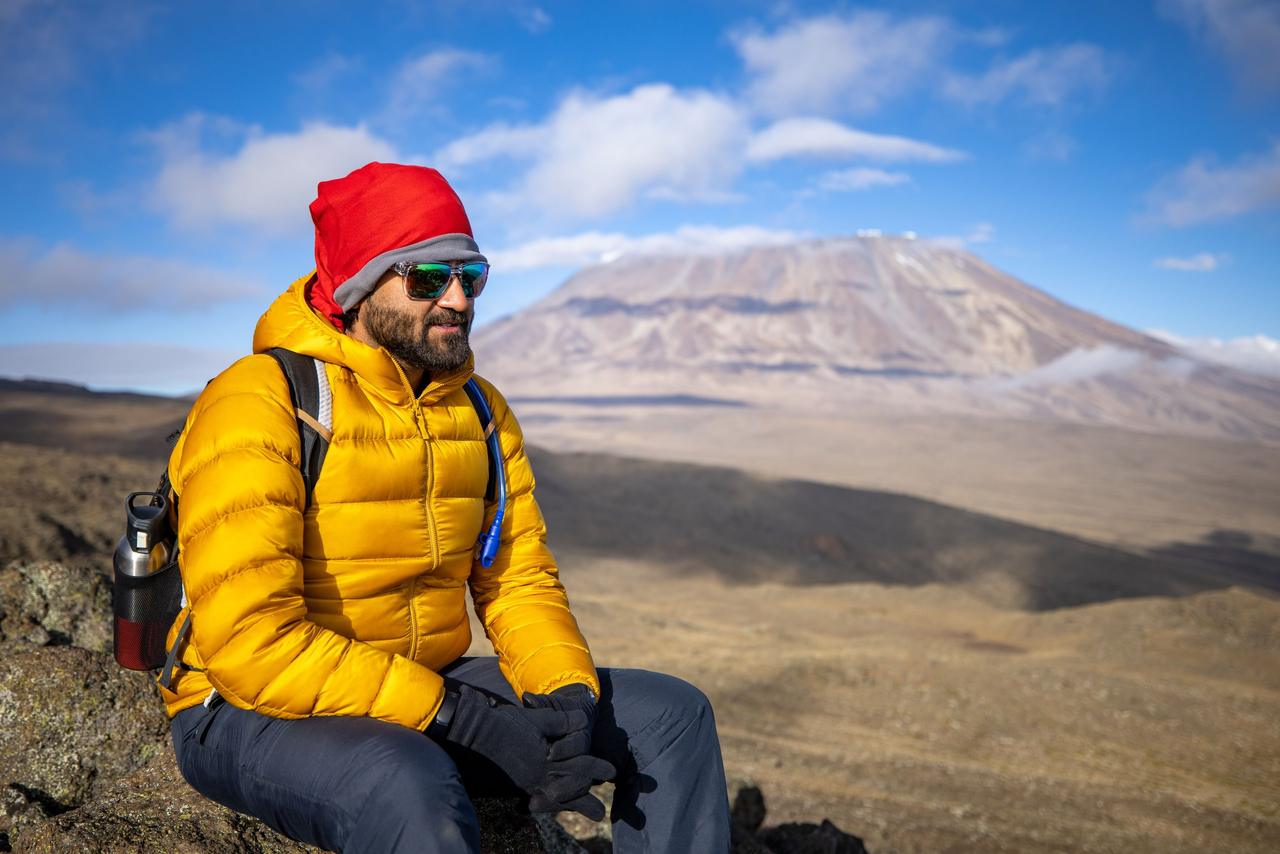
Photo: Balazs Simon / Pexels
Harder than it looks
- 3–6 nightsAbove 3,000 m on the way up. Sleep this high is often light and broken.
- +139–210 mLeft to climb from the crater rim to Uhuru Peak, starting at 50–51% of sea-level air pressure.
- −4,035–4,255 mDown to the gate over summit day and the day after, on legs tired from the night.
Easier than you might think
- NoneClimbing experience needed. Stamina for several long walking days in a row counts for more.
- Pole pole“Slowly, slowly” in Swahili: the pace you keep from the first day, slower than feels natural.
- 4–14 kmA normal day’s walk on the way up, with the afternoon in camp.
Day by day: Most days are moderate. One is not.
On every standard itinerary, every day but summit day takes 8 hours or less, and 27 of the 43 days off the summit take 5 hours or less. Summit day alone is 29–42% of a route’s walking.
- 27 of 43days off the summit take 5 hours or less
- 8 hthe longest day apart from summit day
- 29–42%of a route’s walking falls on summit day
- Walking hours
- Summit day
- Descent day
- Height gained or lost that day
Machame, walking hours per day: day 1: 5–7 h, +1,210 m, day 2: 4–6 h, +890 m, day 3: 6–8 h, +790 m, day 4: 4–5 h, +375 m, day 5: 3–5 h, +678 m, day 6, summit day: 15–17 h, +1,222 m and day 7: 3–4 h, −1,460 m.
Lemosho, walking hours per day: day 1: 3–4 h, +415 m, day 2: 5–6 h, +840 m, day 3: 3–5 h, +360 m, day 4: 6–8 h, +790 m, day 5: 4–5 h, +375 m, day 6: 3–5 h, +678 m, day 7, summit day: 15–17 h, +1,222 m and day 8: 3–4 h, −1,460 m.
Marangu, walking hours per day: day 1: 4–5 h, +860 m, day 2: 6–8 h, +1,010 m, day 3: 3–4 h, +300 m, day 4: 5–7 h, +1,000 m, day 5, summit day: 15–17 h, +1,175 m and day 6: 5–7 h, −1,870 m.
Rongai, walking hours per day: day 1: 3–4 h, +721 m, day 2: 3–4 h, +779 m, day 3: 3–4 h, +210 m, day 4: 3–4 h, +715 m, day 5: 5–6 h, +545 m, day 6, summit day: 15–17 h, +1,175 m and day 7: 5–7 h, −1,870 m.
Northern Circuit, walking hours per day: day 1: 3–4 h, +415 m, day 2: 5–6 h, +840 m, day 3: 3–5 h, +360 m, day 4: 5–7 h, +790 m, day 5: 5–7 h, +270 m, day 6: 5–7 h, +130 m, day 7: 4–5 h, +930 m, day 8, summit day: 15–17 h, +1,095 m and day 9: 3–4 h, −1,460 m.
Umbwe, walking hours per day: day 1: 5–7 h, +1,250 m, day 2: 4–5 h, +1,120 m, day 3: 4–5 h, +355 m, day 4: 3–5 h, +678 m, day 5, summit day: 15–17 h, +1,222 m and day 6: 3–4 h, −1,460 m.
Shira, walking hours per day: day 1: 1–2 h, +96 m, day 2: 3–5 h, +360 m, day 3: 6–8 h, +790 m, day 4: 4–5 h, +375 m, day 5: 3–5 h, +678 m, day 6, summit day: 15–17 h, +1,222 m and day 7: 3–4 h, −1,460 m.
Summit day: Up in the dark, then a long way down
Every route ends with the same kind of day. You leave the high camp around midnight and climb 1,095–1,222 m of steep scree in the dark, reaching the crater rim near dawn. Then comes the part people forget: 2,175–2,795 m down the same day, and the rest of the way to the gate the next morning.
- Midnightthe usual start from the high camp
- 4,035–4,255 mdown to the gate over summit day and the next morning
3,000 m3,500 m4,000 m4,500 m5,000 m5,500 m6,000 mBKSUhuru Peak 5,895 mStella Point 5,756 mCrater rimGilman’s Point 5,685 m
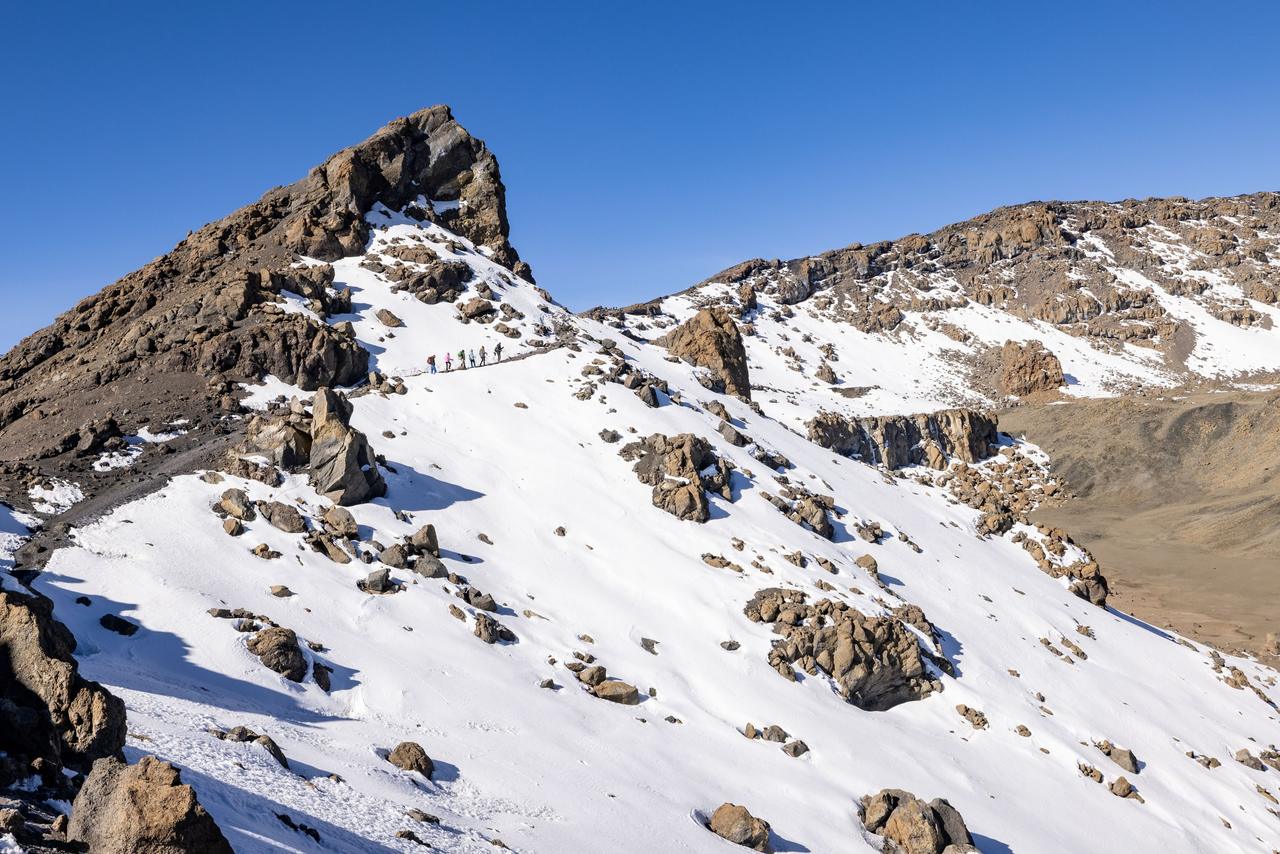
Photo: Balazs Simon / Pexels
Gilman’s Point and Stella Point are on the crater rim; Uhuru Peak, the summit, is 139–210 m higher along it.
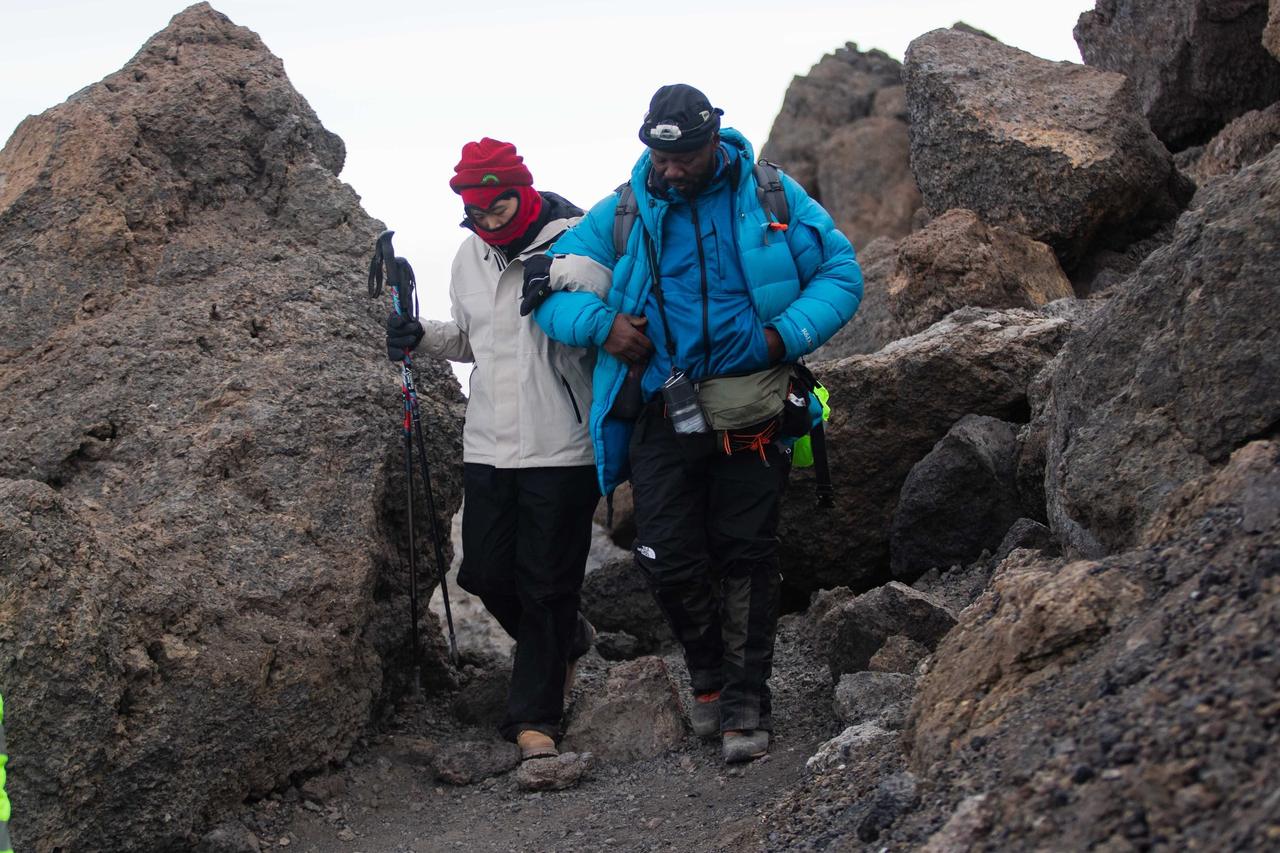
Photo: Penfran Tanzania / Pexels
Poles help on the way down: in a lab study, walking downhill with poles cut the forces on the knee by 12–25%.
Terrain: The steep days and the one scramble
The steepest days are short: 4–8 km that gain 678–1,110 m of sleeping height. The only hands-on stretch is the Barranco Wall, a 257 m scramble on a path with no rope work. If heights worry you, three routes never cross it.
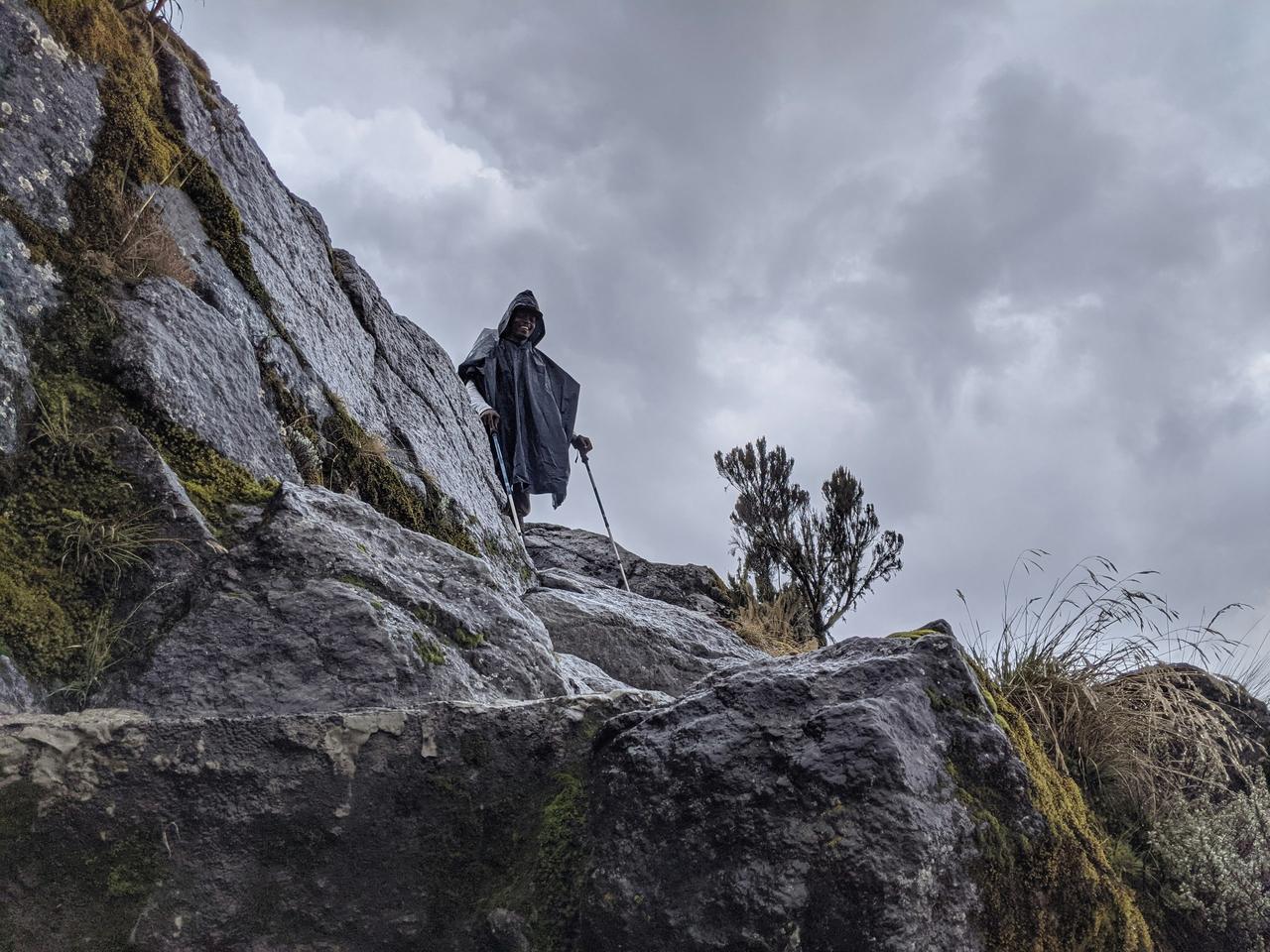
Photo: David Magalhães / Unsplash
Difficulty by route: How hard is each route?
Every route reaches the same summit by the same kind of night. They differ in how steep the days are, whether they cross the Barranco Wall, and how many days you climb before the top.
- Difficulty: our rating from 1 to 5, comparing the seven routes.
- Steepest day: the most sleeping height gained per kilometre before summit day.
| Route | Difficulty | Days | Distance | Hours on foot | Total climb | Biggest climb in a day | Steepest day | Barranco Wall | Summit daySummit day |
|---|---|---|---|---|---|---|---|---|---|
| Machame | 7days | 62 km | 40–52 h | 5,165 m | +1,210 mday 1 | 170 m/kmday 5 | Yes | from Barafu Camp (4,673 m) | |
| Lemosho | 8days | 67 km | 42–54 h | 4,680 m | +840 mday 2 | 170 m/kmday 6 | Yes | from Barafu Camp (4,673 m) | |
| Marangu | 6days | 77 km | 38–48 h | 4,355 m | +1,010 mday 2 | 108 m/kmday 1 | No | from Kibo Hut (4,720 m) | |
| Rongai | 7days | 74 km | 37–46 h | 4,155 m | +779 mday 2 | 143 m/kmday 4 | No | from Kibo Hut (4,720 m) | |
| Northern Circuit | 9days | 88 km | 48–62 h | 4,830 m | +930 mday 7 | 186 m/kmday 7 | No | from School Hut (4,800 m) | |
| Umbwe | 6days | 53 km | 34–43 h | 4,625 m | +1,250 mday 1 | 185 m/kmday 2 | Yes | from Barafu Camp (4,673 m) | |
| Shira | 7days | 57 km | 35–46 h | 3,521 m | +790 mday 3 | 170 m/kmday 5 | Yes | from Barafu Camp (4,673 m) |
Shira starts at 3,414 m, after a drive up to the plateau.
A gentler trail is not an easier climb: more days on the mountain give your body more time to adjust to the height.
Half the air, one breath at a time
Photo: Daniel Vargas / Unsplash
Thin air: Why the air is the real test
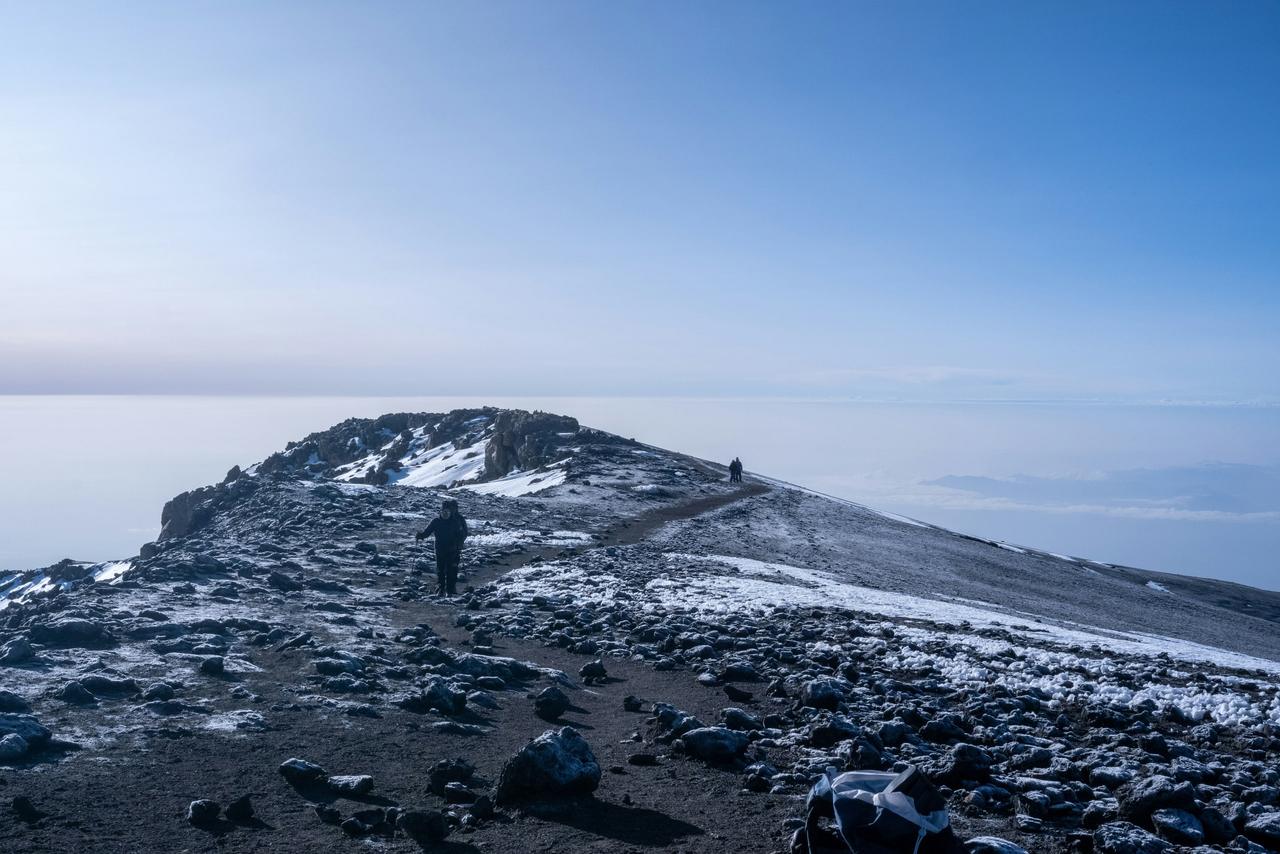
The air on Kilimanjaro is still about 21% oxygen, but its pressure falls as you climb, and with it the oxygen in each breath. At the high camps each breath brings in a little more than half the oxygen it would at sea level; at the summit, about half. Every camp on every route sits higher than an airliner cabin is allowed to feel.
The oxygen in ten breaths
Sea level
10 of 10Barafu Camp4,673 m
5.8 of 10Uhuru Peak5,895 m
4.9 of 10
Air pressure compared with sea level
- Uhuru Peak, 5,895 m: 49%
- Crater rim, 5,685–5,756 m: 50–51%
- High camps, 4,673–4,800 m: 57–58%
- Barranco Camp, 3,960 m: 63%
- Horombo Huts, 3,720 m: 65%
- Machame Camp, 3,010 m: 71%
- Simba Camp, 2,671 m: 74%
- Airliner cabin, at most 2,438 m: 76%
- Machame Gate, 1,800 m: 81%
- Sea level: 100%
Fitness helps your legs, not your lungs
Training and physical fitness do not change your risk of altitude illness.
In 44 trekkers going to 5,085 m, the fitter ones found the climb easier but had no less altitude sickness.
In 1,237 Kilimanjaro climbers, how fit people rated themselves made no difference to reaching the top.
What helps is time. Above 3,000 m, the medical advice is to sleep no more than 500 m higher each night, and no standard itinerary keeps to that every night. Each extra day on the mountain went with better odds of reaching Uhuru Peak.
Altitude sickness: symptoms and preventionCompared: Harder than Everest Base Camp, the Inca Trail or Mont Blanc?
Higher than everything here but Aconcagua, and no glacier gear needed: on Kilimanjaro, the height is the hard part.
Hiking trail
- Everest Base Camp
- Mount Whitney
- Inca Trail, Dead Woman’s Pass
- Ben Nevis
- Snowdon (Yr Wyddfa)
Trail with scrambling
- Aconcagua
- Kilimanjaro, Uhuru Peak
Only the Barranco Wall, on four of seven routes
Glacier: crampons, ice axe, rope
- Elbrus
- Mont Blanc
- AconcaguaHigh point: 6,961 m1,066 m higher than KilimanjaroAir pressure43%Typical timeabout 20 daysNormal route: Trail with scrambling
- Kilimanjaro, Uhuru PeakHigh point: 5,895 mAir pressure49%Typical time5–8 days up, 6–9 in allNormal route: Trail with scrambling (Only the Barranco Wall, on four of seven routes)
- ElbrusHigh point: 5,642 m253 m lower than KilimanjaroAir pressure51%Typical timeabout 11 days, guidedNormal route: Glacier: crampons, ice axe, rope
- Everest Base CampHigh point: 5,364 m531 m lower than KilimanjaroAir pressure53%Typical timeabout 8 days upNormal route: Hiking trail
- Mont BlancHigh point: 4,807 m1,088 m lower than KilimanjaroAir pressure55%Typical time2 days on the mountainNormal route: Glacier: crampons, ice axe, rope
- Mount WhitneyHigh point: 4,421 m1,474 m lower than KilimanjaroAir pressure59%Typical time12–18 h as a day hikeNormal route: Hiking trail
- Inca Trail, Dead Woman’s PassHigh point: 4,215 m1,680 m lower than KilimanjaroAir pressure61%Typical time4–5 daysNormal route: Hiking trail
- Ben NevisHigh point: 1,345 m4,550 m lower than KilimanjaroAir pressure85%Typical time6–8 h there and backNormal route: Hiking trail
- Snowdon (Yr Wyddfa)High point: 1,085 m4,810 m lower than KilimanjaroAir pressure88%Typical timeabout 6 h there and backNormal route: Hiking trail
Who reaches the top: Almost nine in ten reached Uhuru Peak
The largest study of Kilimanjaro climbers so far found that time on the mountain and how each body handled the height mattered, not fitness or earlier experience.
88%reached Uhuru Peak
about92%reached at least the crater rim
1,237 climbers questioned at the park gates, December 2019 to March 2020. Median age 34; most on 6- or 7-day climbs.
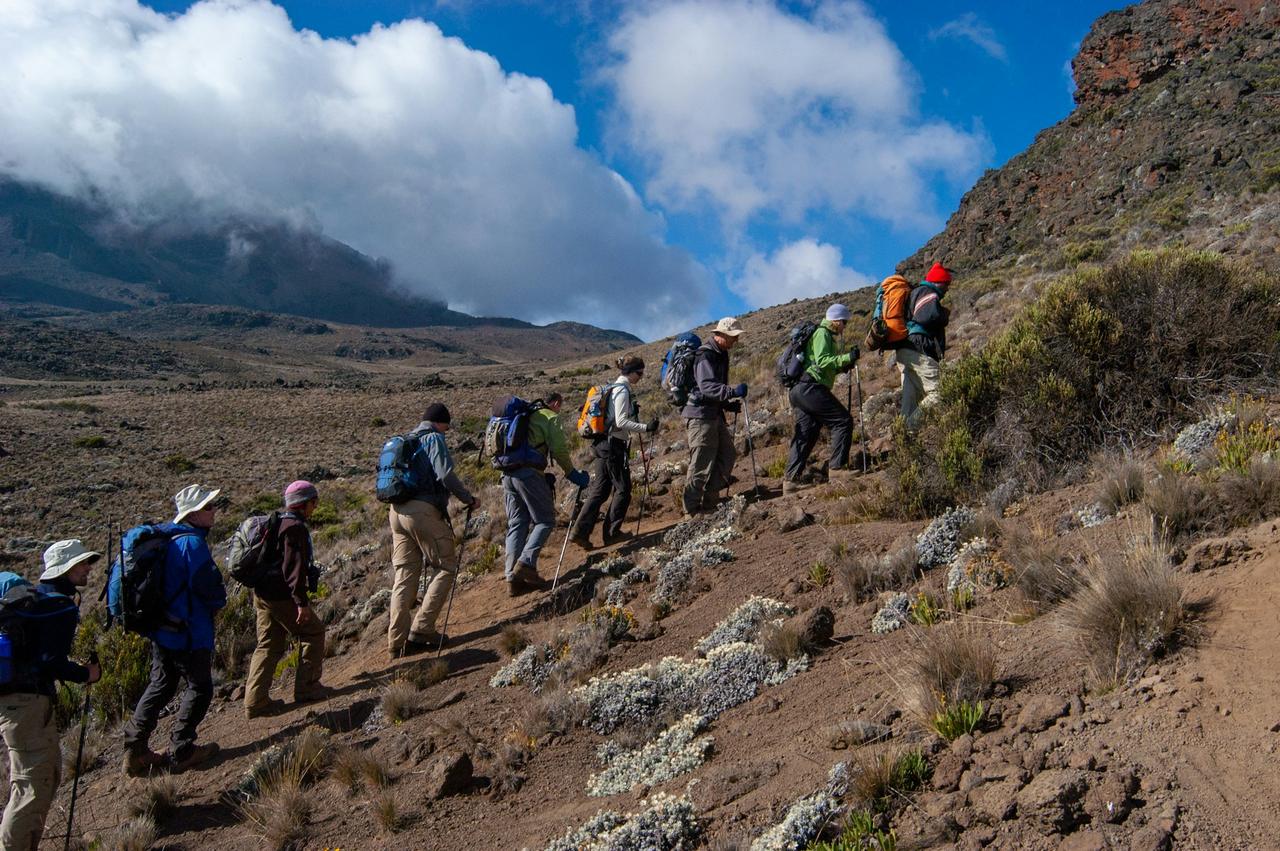
Photo: Crispin Jones / Unsplash
Age is no bar
- 10minimum age above 3,700 m
- 34median age in the study
- 88oldest man, 201789oldest person, 2019
Went with reaching the top
- No severe altitude symptomsodds ×2.51
- Preventive medication prescribed by a doctorodds ×2.06
- Under 50odds ×1.84
- Climbing higher by day than where you sleepodds ×1.76
- Each extra day on the mountainodds ×1.16
Made no measurable difference
- How fit people rated themselves
- Specific training
- Earlier stays above 2,500 m
Altitude illness was common: 63% had mild symptoms, 8.6% severe ones, and 1.1% went to hospital. Of those with mild symptoms, the ones who stopped climbing higher had fewer severe ones.
Talk to a doctor about altitude illness before you go.
Altitude sickness: symptoms and preventionA self-check: Could you do it?
There is no test to pass. Train toward the benchmarks, and check the medical points with your doctor before you book.
Photo: Peter Conlan / Unsplash
See a doctor first if
- you have had severe altitude illness before
- you have heart disease or a chronic lung condition
- you have obstructive sleep apnoea
- you have sickle cell trait
- you are pregnant: you will sleep at up to 4,800 m
What you control
Summit day compared with two well-known day hikes
| Hours on foot | Metres up | Metres down | |
|---|---|---|---|
| Ben Nevis, Mountain Track | 6–8 h | about 1,325 m | about 1,325 m |
| Mount Whitney, as a day hike | 12–18 h | more than 1,859 m | more than 1,859 m |
| Kilimanjaro summit day, starting at 4,673–4,800 m | 15–17 h | 1,095–1,222 m | 2,175–2,795 m |
Questions: What people ask about how hard it is
Is Kilimanjaro hard to climb?
Yes, but not technically. The standard routes are walking trails with no ropes or crampons, and most days take 3–8 h. What makes it hard is the altitude, with about half the oxygen of sea level in each breath at the summit, and one summit day of 15–17 h. That day climbs 1,095–1,222 m from around midnight and then descends 2,175–2,795 m.
Can a beginner with no climbing experience climb Kilimanjaro?
Yes. No climbing skills are needed, and licensed guides lead every group. In a study of 1,237 Kilimanjaro climbers, earlier stays at altitude made no measurable difference to reaching the summit. What helps is being used to several long walking days in a row.
How fit do you need to be to climb Kilimanjaro?
Fit enough to walk 6–8 h on days in a row with a 7–9 kg daypack, and to stay on your feet for one summit day of 15–17 h. Fitness makes the days easier, but it does not lower your risk of altitude sickness.
How many hours a day do you walk on Kilimanjaro?
Most days take 3–8 h at a slow pace, and 27 of the 43 days off the summit on the seven standard itineraries take 5 hours or less. Summit day takes 15–17 h. Over a whole climb you walk for about 34–62 hours, depending on the route.
What is the hardest part of climbing Kilimanjaro?
Summit day. You leave a high camp at 4,673–4,800 m around midnight and climb loose scree in the dark to the crater rim at Stella Point or Gilman’s Point, then walk on to Uhuru Peak (5,895 m). At dawn it is about −10 °C on the summit, −16 to −20 °C in the wind, and the long descent follows the same day.
Do you need ropes, crampons or bottled oxygen on Kilimanjaro?
No ropes, crampons or harness are needed on the standard routes in normal conditions; operators report that ice near the crater rim only occasionally calls for microspikes. Climbers do not normally use bottled oxygen: what helps the body adjust to the height is time, with more days on the mountain.
I am afraid of heights. Is the Barranco Wall a problem?
The Barranco Wall is the only hands-on section on the standard routes: a 257 m scramble on a path where you use your hands for balance, with no ropes or harness. It usually takes 1–2 h. It is on the Machame, Lemosho, Umbwe and Shira routes; Marangu, Rongai and the Northern Circuit do not cross it.
Will I get altitude sickness if I am fit?
Fitness does not change your risk. In the largest study of Kilimanjaro climbers (1,237 people), 63% had mild symptoms, 8.6% severe ones and 1.1% were taken to hospital. More days on the mountain went with reaching the top, and stopping the climb when symptoms grew went with fewer severe ones. See a doctor before you go to talk through your own risk and how to prevent it.
Is Kilimanjaro harder than Everest Base Camp?
Neither needs technical climbing, but Uhuru Peak (5,895 m) is about 530 m higher than Everest Base Camp. The base camp is about 8 days up from Lukla, rest days included; Kilimanjaro’s routes reach the summit on day 5–8, so they climb more height in fewer days.
Is Kilimanjaro harder than the Inca Trail to Machu Picchu?
Kilimanjaro goes much higher. The Inca Trail takes 4–5 days and tops out at 4,215 m at Dead Woman’s Pass, about 1,680 m below Uhuru Peak. Both are treks without technical climbing, but Kilimanjaro adds a summit night and a descent of at least 2,175 m on the same day.
Am I too old to climb Kilimanjaro?
There is no upper age limit; children under 10 may not climb above 3,700 m. Climbers aged 89 and over have reached Uhuru Peak. In a study of 1,237 climbers, those under 50 were somewhat more likely to reach the top, and each extra day on the mountain improved the odds too.
Which is the easiest route up Kilimanjaro?
On our 1 to 5 difficulty rating, the gentlest are Marangu and Rongai (2 of 5), with no scramble and steady gradients. The others rate 3 (Lemosho, the Northern Circuit and Shira), 4 (Machame) and 5 (Umbwe). Every route ends with the same kind of summit day, and more days on the mountain give your body more time to adjust to the height.
Sources
Updated
Days, distances, walking times and heights are the figures the park and operators publish for each route. Air pressure is computed with West’s model atmosphere for high mountains (1996), and with the standard atmosphere for mountains at 45° latitude and above. Health figures come from the studies and guidance below; they are no substitute for a doctor’s advice.
- Grading
- SAC hiking scale (Swiss Alpine Club), as published on the OpenStreetMap wiki
- camptocamp.org: Kilimanjaro routes graded on the SAC scale
- DAV Summit Club: difficulty scale (Technik / Kondition), 2022
- Health guidance
- CDC Yellow Book: high-altitude travel and altitude illness
- CDC Yellow Book: African safaris and climbing expeditions
- Wilderness Medical Society: clinical practice guidelines for acute altitude illness (2024 update)
- NHS: altitude sickness
- NaTHNaC TravelHealthPro: altitude illness
- Studies and measurements
- Croughs et al. (2022), Journal of Travel Medicine 29(5): severe altitude illness and summit success among 1,237 Kilimanjaro hikers
- Rossetti et al. (2017): aerobic fitness and altitude sickness in 44 trekkers
- West (1996), Journal of Applied Physiology 81(4): barometric pressure on high mountains
- Kersten Glacier weather station at 5,873 m (EGU General Assembly 2009)
- Schwameder et al. (1999), Journal of Sports Sciences: knee loading when walking downhill with poles
- US airliner cabin pressure rule (14 CFR 25.841)
- Loads and training
- Kilimanjaro Porters Assistance Project: porter treatment and tipping guidelines
- Alpine Ascents International: Kilimanjaro training
- Jagged Globe: Kilimanjaro training plan
- Kandoo Adventures: what to pack in your daypack
- Other mountains
- Wikipedia: Everest base camps
- Wikipedia: Inca Trail to Machu Picchu
- Wikipedia: Mont Blanc (French edition)
- Wikipedia: Mount Elbrus
- American Alpine Club: Aconcagua, the 2005–06 season
- ben-nevis.com: how long to climb Ben Nevis
- Eryri National Park: the Llanberis Path
- Mount Whitney hikers and altitude sickness (Utah State University)