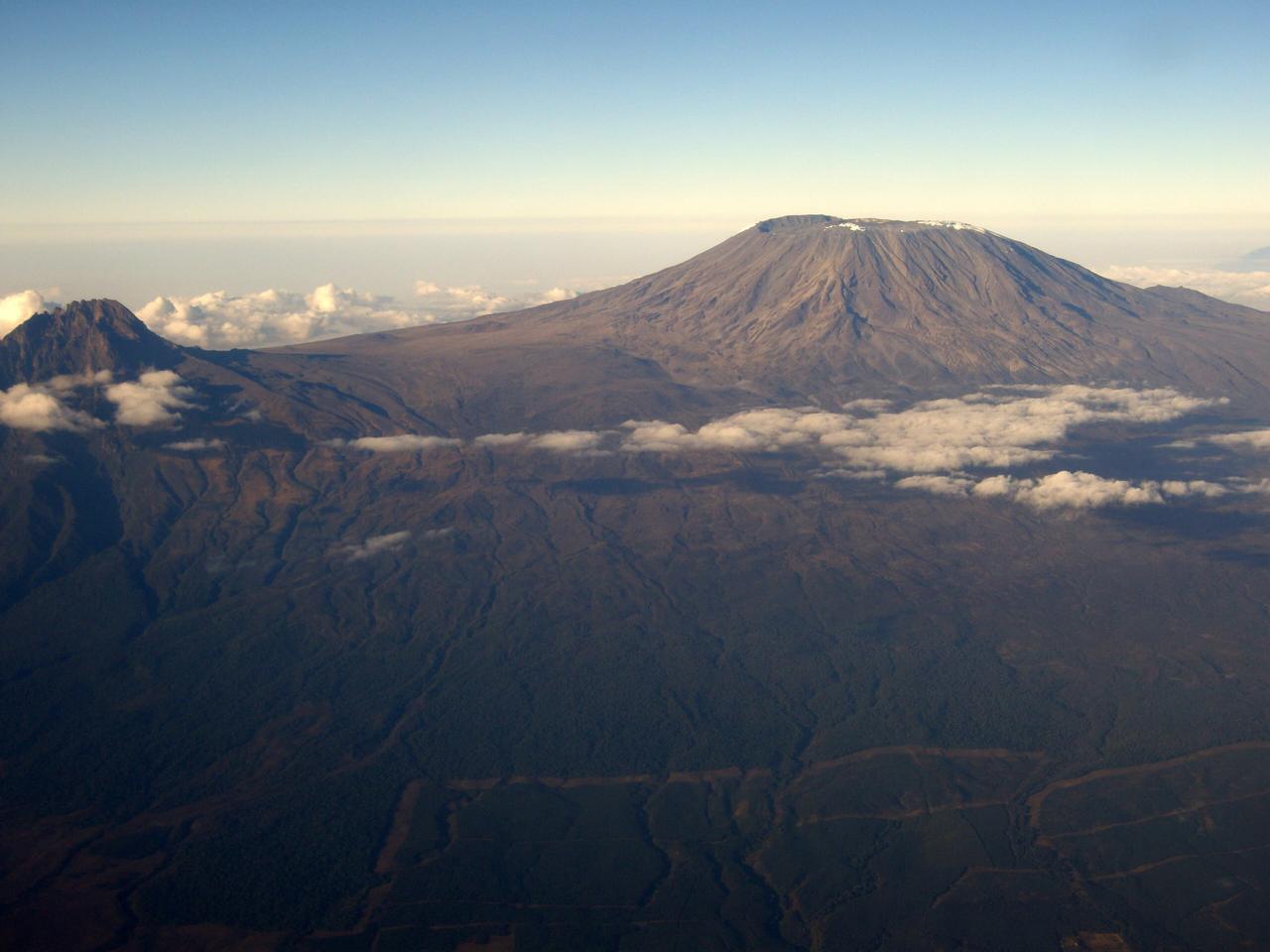
Kilimanjaro’s volcano: Three volcanoes, one sleeping giant
Kilimanjaro is a dormant stratovolcano, built by three volcanoes over 2.5 million years. Shira and Mawenzi are extinct. Kibo, the summit cone, was last active about 150,000 to 200,000 years ago, and gas still rises in its crater, but no eruption is known from human history.
Three volcanoes: Built over 2.5 million years
Kilimanjaro is not one volcano but three, lined up over 25 km from west to east. Shira came first and collapsed. Mawenzi and Kibo then grew side by side, Mawenzi died out, and Kibo kept erupting until it buried the flanks of both under its lava.
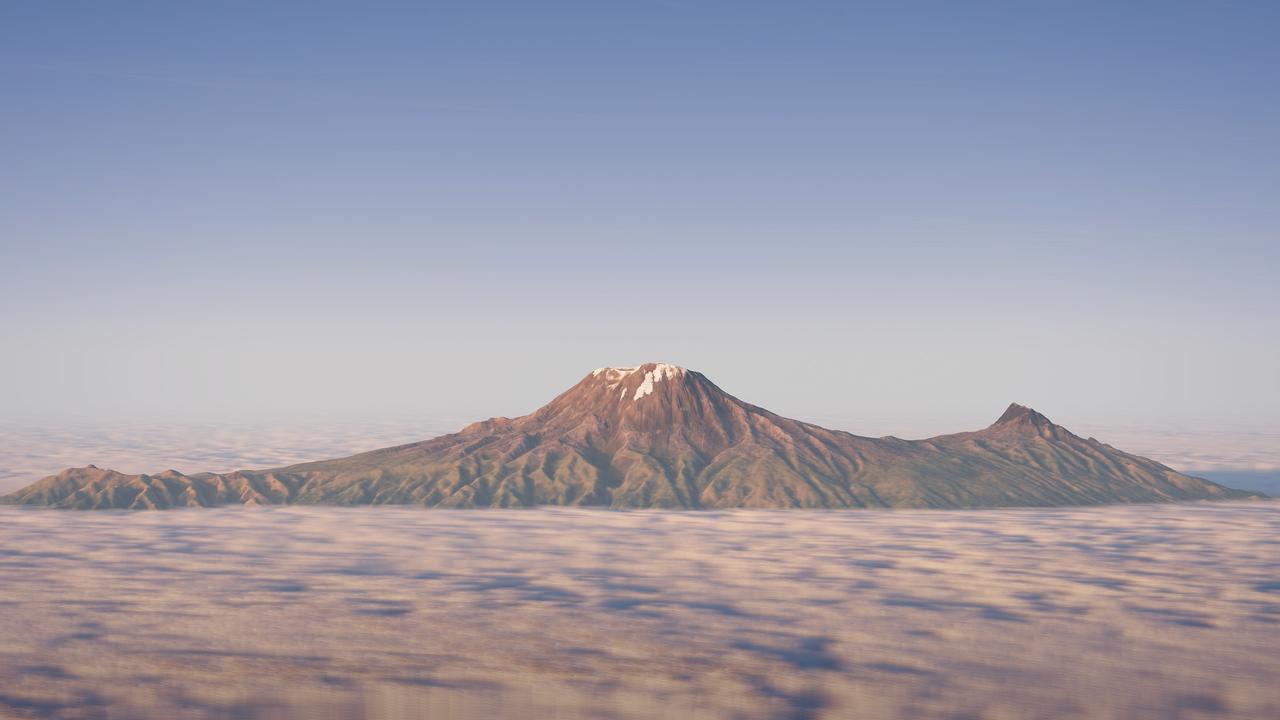
When each volcano was active
- Kibo’s present cone built, about 274,000–170,000 years ago
- Last activity at the summit, about 200,000–150,000 years ago
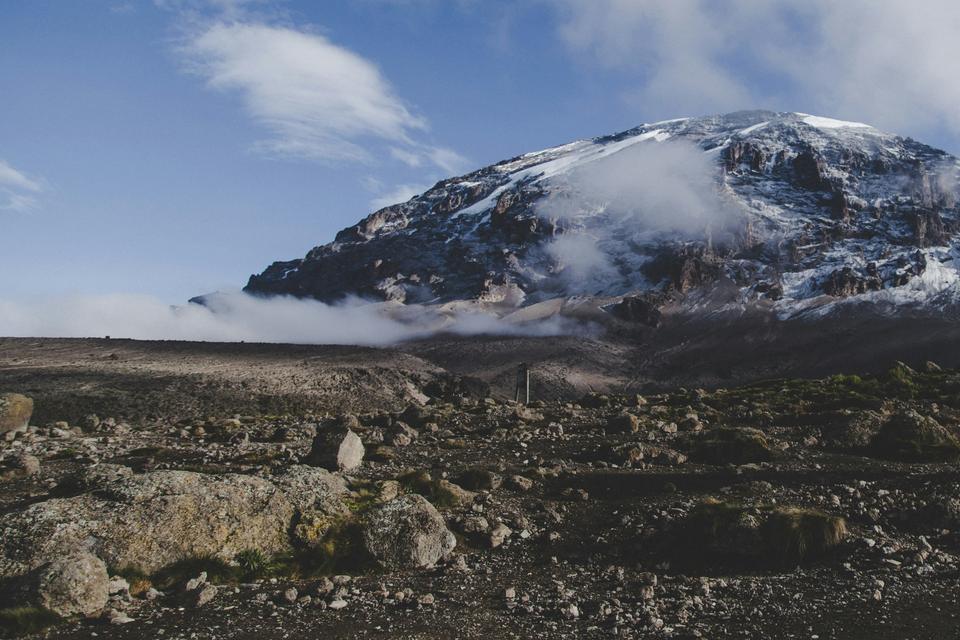
Photo: Peter Conlan / Unsplash
The oldest
Shira 3,962 m
Active About 2.5 to 1.9 million years ago
The first of the three. About 1.9 million years ago its summit collapsed, and lava from Kibo later flowed into the hollow. What is left is the Shira Plateau, a wide upland at about 3,800 m, and the broken ring of its old rim. The Lemosho and Shira routes cross it, past crags such as Shira Cathedral.
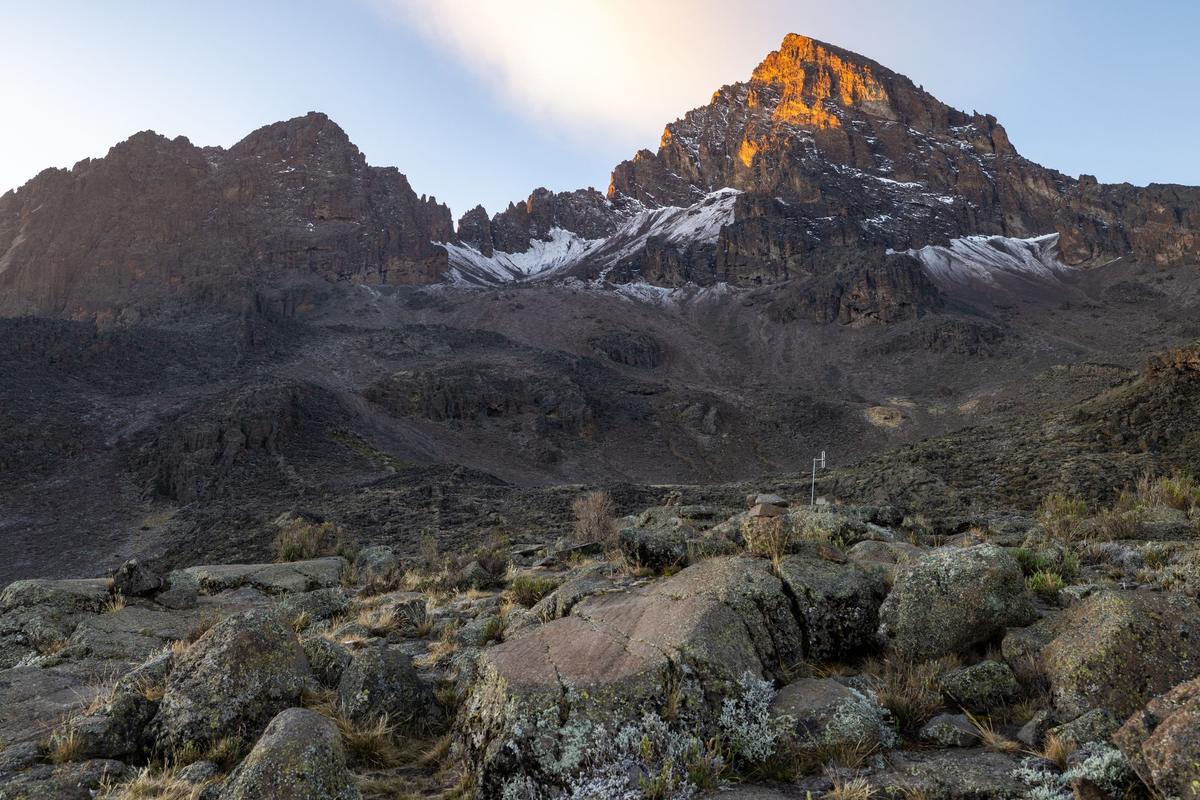
Photo: Balazs Simon / Pexels
The jagged one
Mawenzi 5,149 m
Active About 1 million to 490,000 years ago
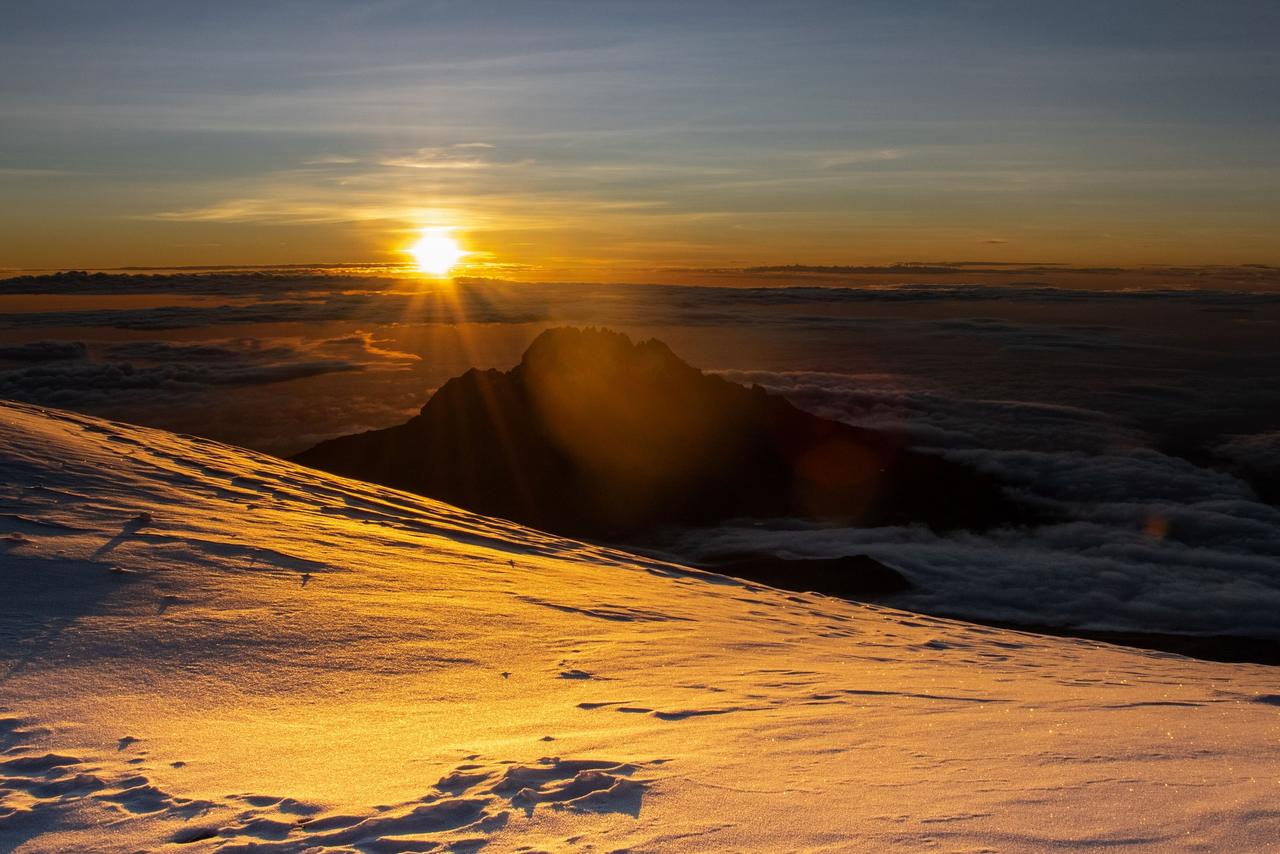
Mawenzi went quiet first of the two younger volcanoes, and erosion has had half a million years to work on it. Its cone is gone; what stands are the hardened channels that once fed it, more than 500 of them, now a crown of towers and spires. Its highest point, Hans Meyer Peak, is the third-highest summit in Africa and is climbed only with a permit and rock-climbing skills.
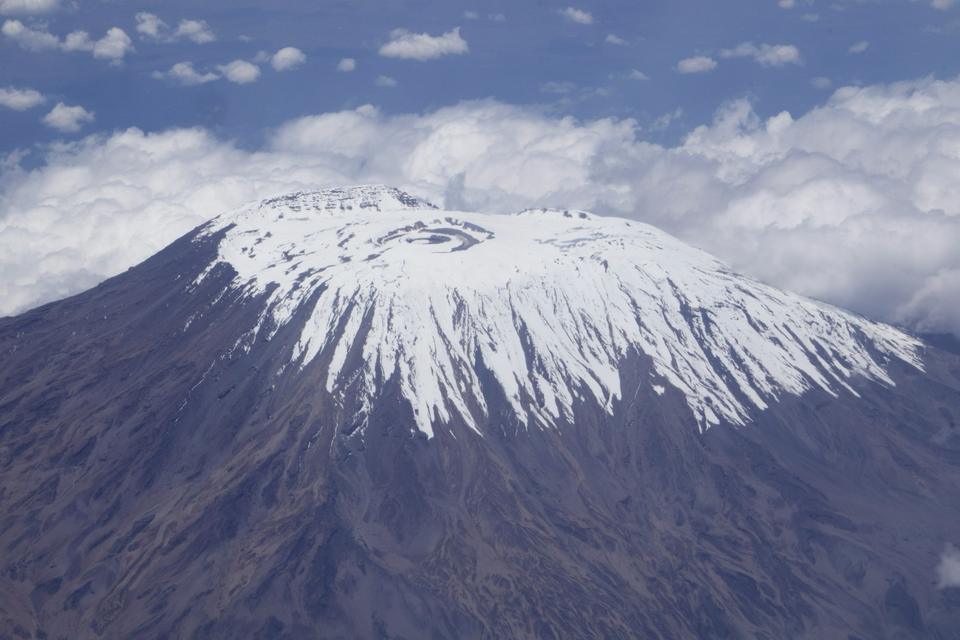
Photo: Ludovico Di Giorgi / Unsplash
The summit
Kibo 5,895 m
Active From about 1 million to 150,000 years ago
The youngest and the highest. The cone you climb today was built in about 100,000 years, between roughly 274,000 and 170,000 years ago, and the crater at its top is younger still. Kibo is dormant, not extinct: steam and sulphur gas still rise in its inner crater.
Why here?
Kilimanjaro stands about 80 km east of the Great Rift Valley, at the point where the rift splits into three arms. Heat rising from deep below East Africa melts rock under the region, and two ancient faults in the crust cross right beneath the mountain. Molten rock found its way up where they meet.
More than 250 small volcanic cones dot the lower slopes, lined up along cracks running north-west and south-east; Lake Chala, a crater lake on the eastern foot, lies in one of the volcanic craters there. Mount Meru, about 70 km to the west, is a younger neighbour. It last erupted in 1910.
Geology you walk through
- Lava Tower
- The plug of a side vent on Kibo’s flank, about 274,000 years old, that fed one of the largest lava flows on the mountain.
- The Barranco valley
- The scar of a huge landslide: part of Kibo’s southern flank collapsed more than 150,000 years ago. Barranco Camp sits in the hollow it left.
- The Shira Plateau
- The collapsed and lava-filled top of the oldest volcano, about 3,800 m high.
- The Saddle
- A high desert plain at about 4,300–4,400 m between Kibo and Mawenzi, dotted with small cinder cones. One of their lava flows is the youngest dated rock on the mountain, about 165,000 years old.
- Black glass and big crystals
- Kibo is built of phonolite, a rare lava. Some flows rest on layers of black volcanic glass (obsidian); others carry diamond-shaped crystals up to 4 cm long.
The summit crater: Dormant, not extinct
Kibo’s summit was last active about 150,000 to 200,000 years ago. The youngest eruption known on the mountain, from a small cone on its flank, was about 134,000 years ago, and none is known from human history. The volcano still breathes, though: steam and sulphur gas rise from vents in its inner crater.
The top of Kibo is a crater about 2.5 km across, ringed by walls up to 200 m high on the south side. Uhuru Peak is the highest point of that rim; Stella Point and Gilman’s Point, where most climbers first reach it, are lower points on the same ring.
Inside stands a younger cone with a crater of its own, Reusch Crater, about 900 m wide. In its centre lies the Ash Pit, 340 m across and 130 m deep, its walls streaked with yellow sulphur.
Hans Meyer saw no sign of heat in 1889; climbers first reported sulphur and steam vents in 1933. Measured in 1976, the ground around the vents was 55–65 °C just below the surface. At this height water boils at about 81 °C.
- 2.5 kmacross the summit crater
- 900 macross Reusch Crater
- 130 mdeep: the Ash Pit
- 1933steam vents first reported
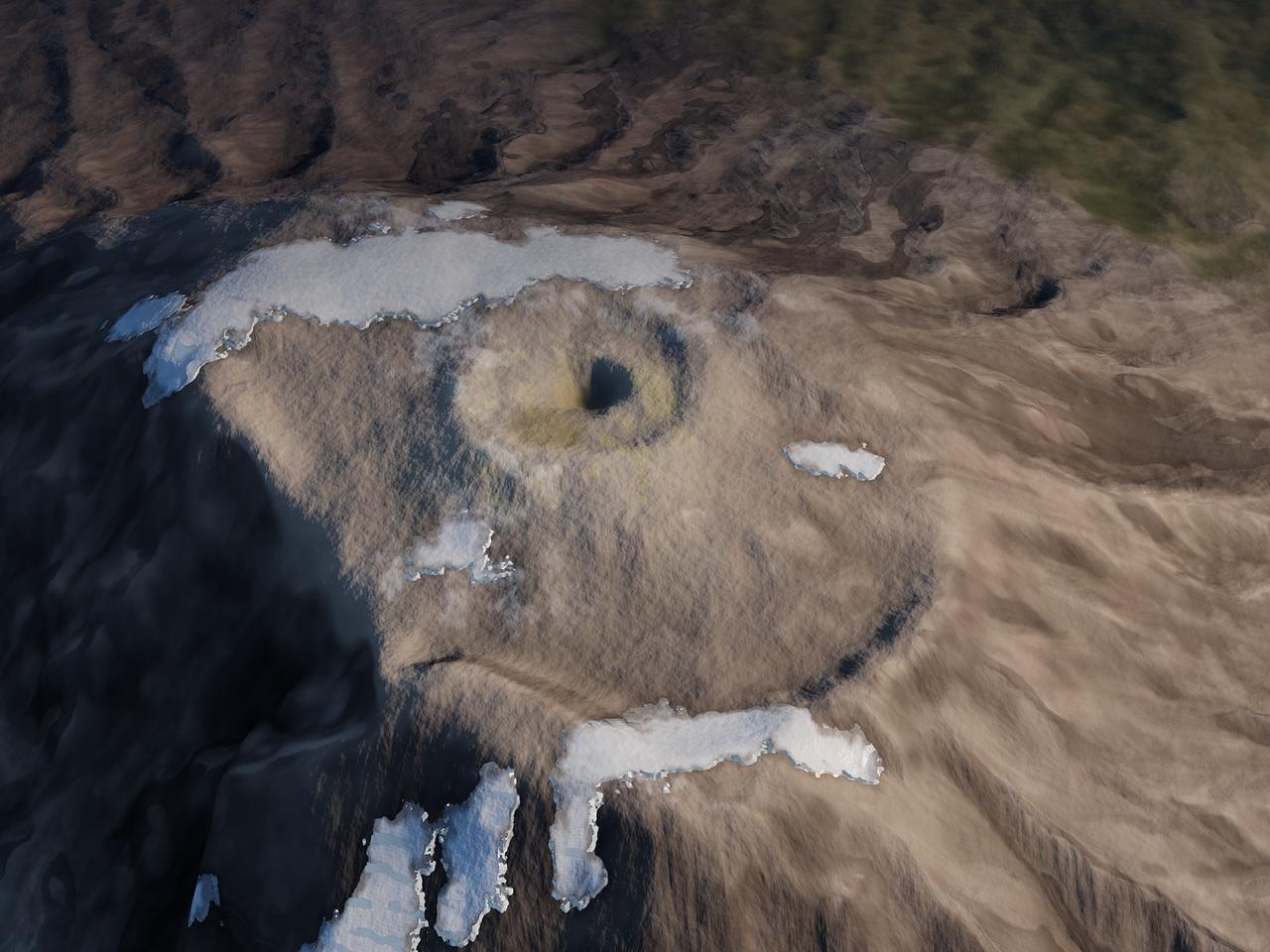
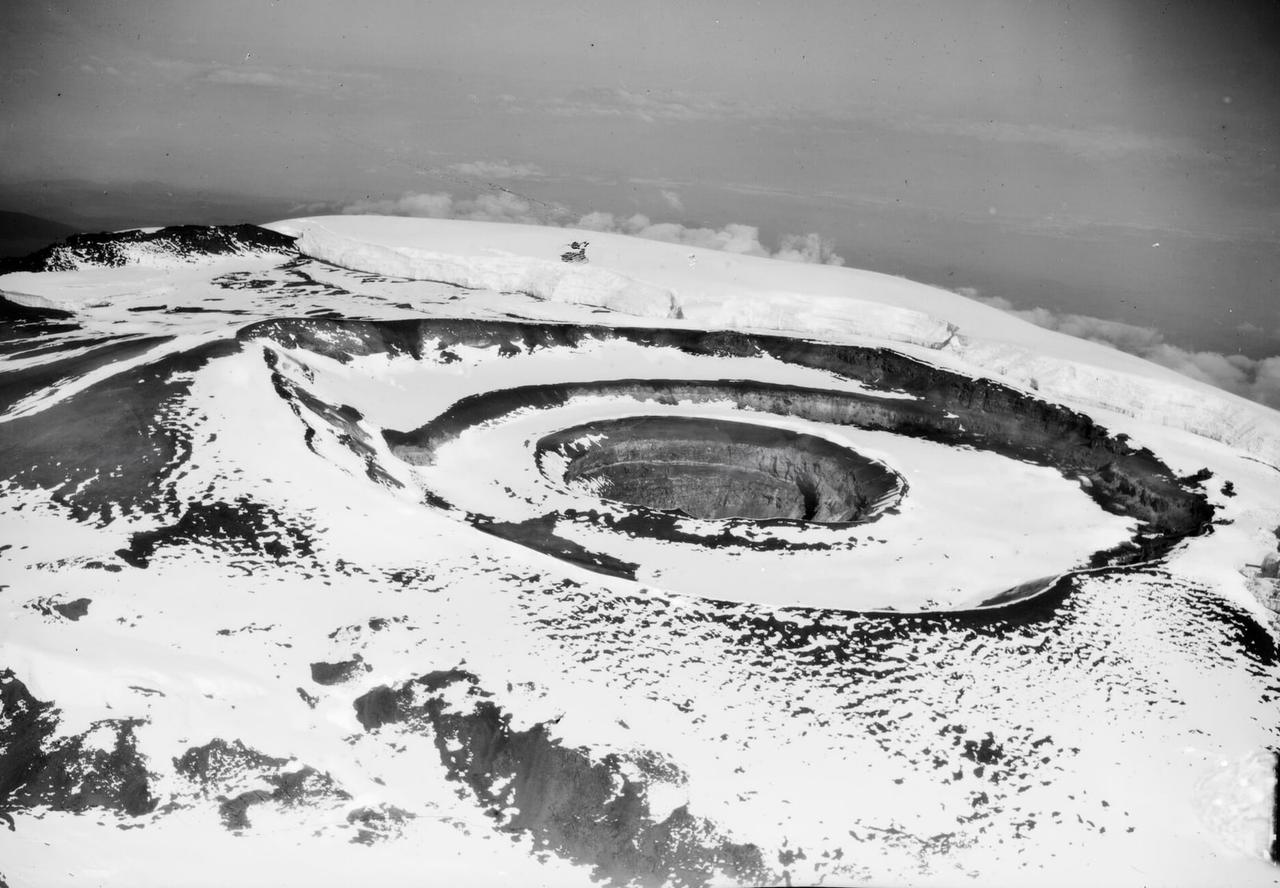
Photo: Walter Mittelholzer (ETH-Bibliothek Zürich) / Wikimedia Commons, public domain
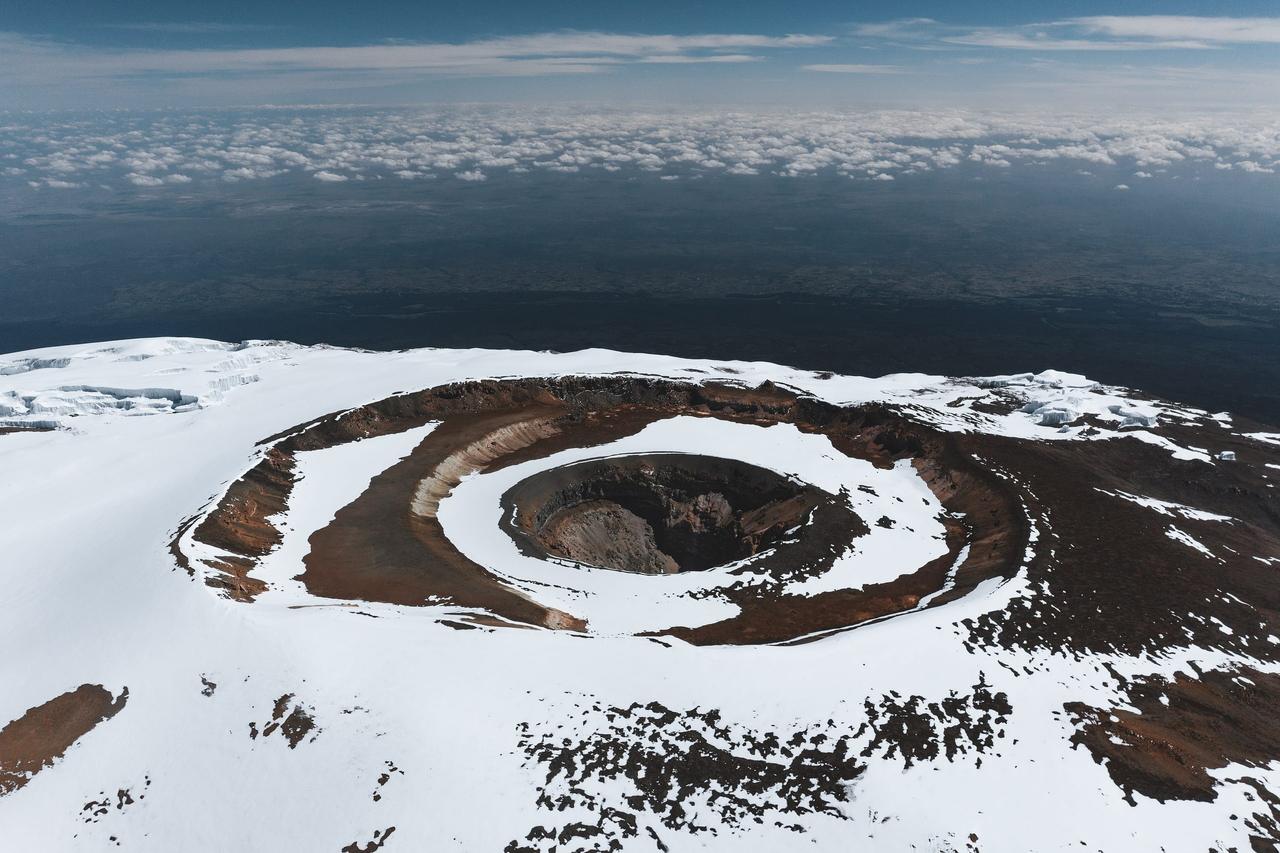
Photo: Altezzatravel / Wikimedia Commons, CC BY-SA 4.0
Questions: The volcano, answered
When did Kilimanjaro last erupt?
Its summit, Kibo, was last active about 150,000 to 200,000 years ago; the youngest lava dated on the mountain is about 165,000 years old. Ash in a crater lake at its foot shows that a small cone on its flank erupted about 134,000 years ago. The often repeated “about 200 years ago” has no evidence behind it.
Could Kilimanjaro erupt again?
Kibo is dormant, not extinct: heat remains below it and gas still vents in its crater, so geologists do not rule it out. But no eruption is known from human history or from the last 100,000 years. The real hazard on the summit today is falling rock.
How was Kilimanjaro formed, and how old is it?
It was built by three volcanoes over about 2.5 million years. Shira erupted first and collapsed about 1.9 million years ago; Mawenzi and Kibo grew side by side from about a million years ago. Mawenzi went quiet about 490,000 years ago, and Kibo kept building the summit cone until about 150,000 years ago.
What is inside Kilimanjaro’s crater?
Kibo’s summit crater is about 2.5 km across. Inside it stands a younger cone with its own crater, Reusch Crater, about 900 m wide, and in the middle of that the Ash Pit, 340 m across and 130 m deep, where steam and sulphur gas rise. Remnants of glacier ice lie on the crater floor, and some climbers spend a night there at Crater Camp.
Why is Kilimanjaro flat on top?
Its summit is a crater about 2.5 km wide. Seen from the plains, the crater rim makes the long, level top that gives Kilimanjaro its famous outline, and Uhuru Peak is only the highest point on that rim.
Are Mawenzi and Shira volcanoes too?
Yes, both extinct. Shira, the oldest, was active about 2.5 to 1.9 million years ago; its top collapsed and is now the Shira Plateau. Mawenzi went quiet about 490,000 years ago, and erosion has left a crown of rock spires; its highest point, Hans Meyer Peak at 5,149 m, is the third-highest summit in Africa.
Sources
Updated
Ages, heights and sizes come from published geological studies and surveys; legends from the earliest written versions we could find; records from Guinness World Records and Fastest Known Time, checked in October 2026.
- Volcano and height
- Nonnotte et al. (2008), Journal of Volcanology and Geothermal Research 173: new K–Ar ages of Kilimanjaro volcano
- Smithsonian Global Volcanism Program: Kilimanjaro (and its Bulletin of April 2013)
- Smithsonian Global Volcanism Program: Meru
- Martin-Jones et al. (2020), Journal of Quaternary Science 35: 250,000 years of eruptions recorded in Lake Chala
- Young & Hastenrath, USGS Professional Paper 1386-G: Glaciers of Africa (Kilimanjaro)
- Cílek (1976): recent volcanological observations on Mt. Kilimanjaro (fumaroles and the Ash Pit)
- IUGS Geological Heritage Sites: the Pleistocene Kilimanjaro volcano
- Sirguey, Cullen & Dos Santos (2014): the new digital elevation model of Kilimanjaro and the height of Uhuru Peak
- Team KILI2008 (2009): precise determination of the orthometric height of Mt. Kilimanjaro
- Cullen et al. (2013), The Cryosphere 7: a century of ice retreat on Kilimanjaro
- Hinzmann et al. (2024), Environmental Research: Climate 3: tropical glacier loss in East Africa
- Tanzania National Parks: Kilimanjaro National Park
- UNESCO World Heritage List: Kilimanjaro National Park
- Photos
- Matt Kieffer / Wikimedia Commons, CC BY-SA 2.0
- Peter Conlan / Unsplash
- Balazs Simon / Pexels
- Ludovico Di Giorgi / Unsplash
- Walter Mittelholzer (ETH-Bibliothek Zürich) / Wikimedia Commons, public domain
- Altezzatravel / Wikimedia Commons, CC BY-SA 4.0
- Paweł Kosmala / Pexels