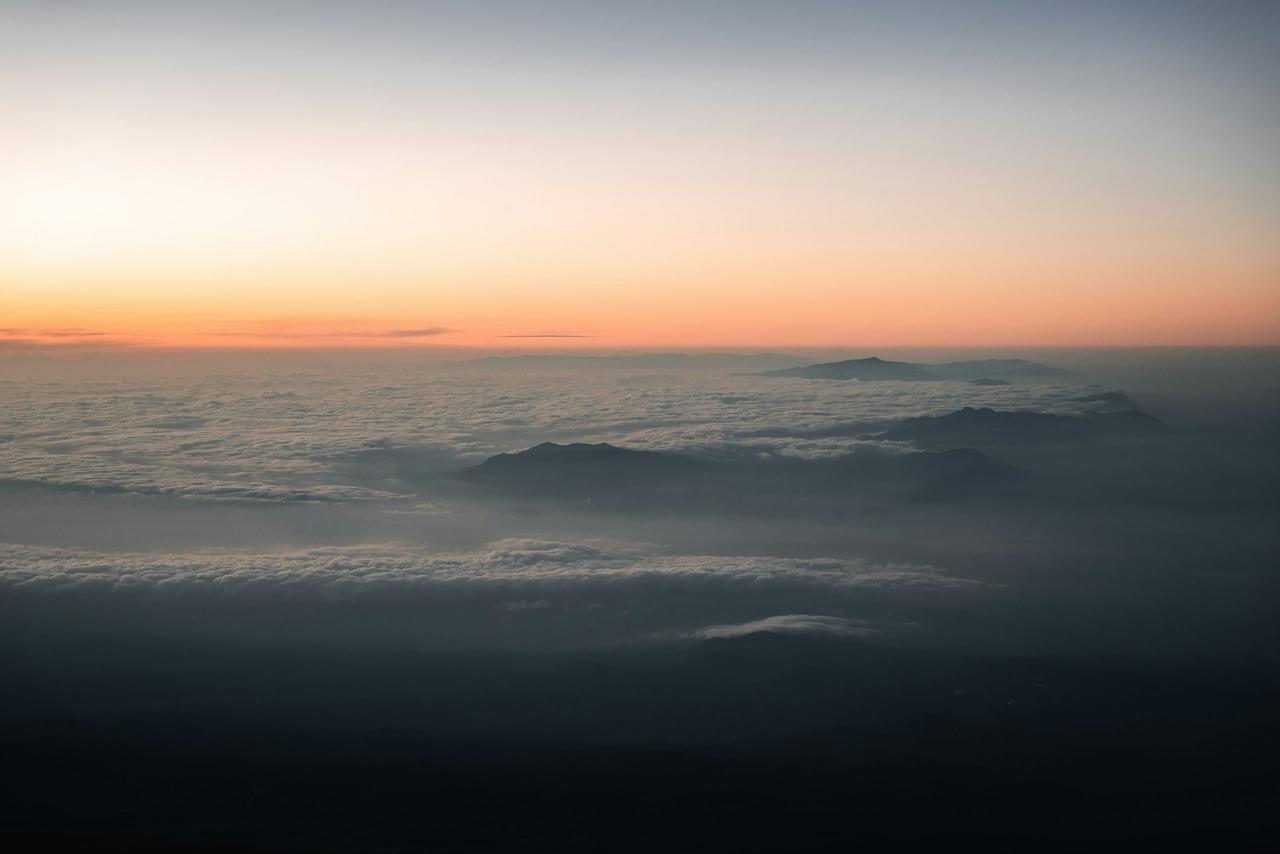
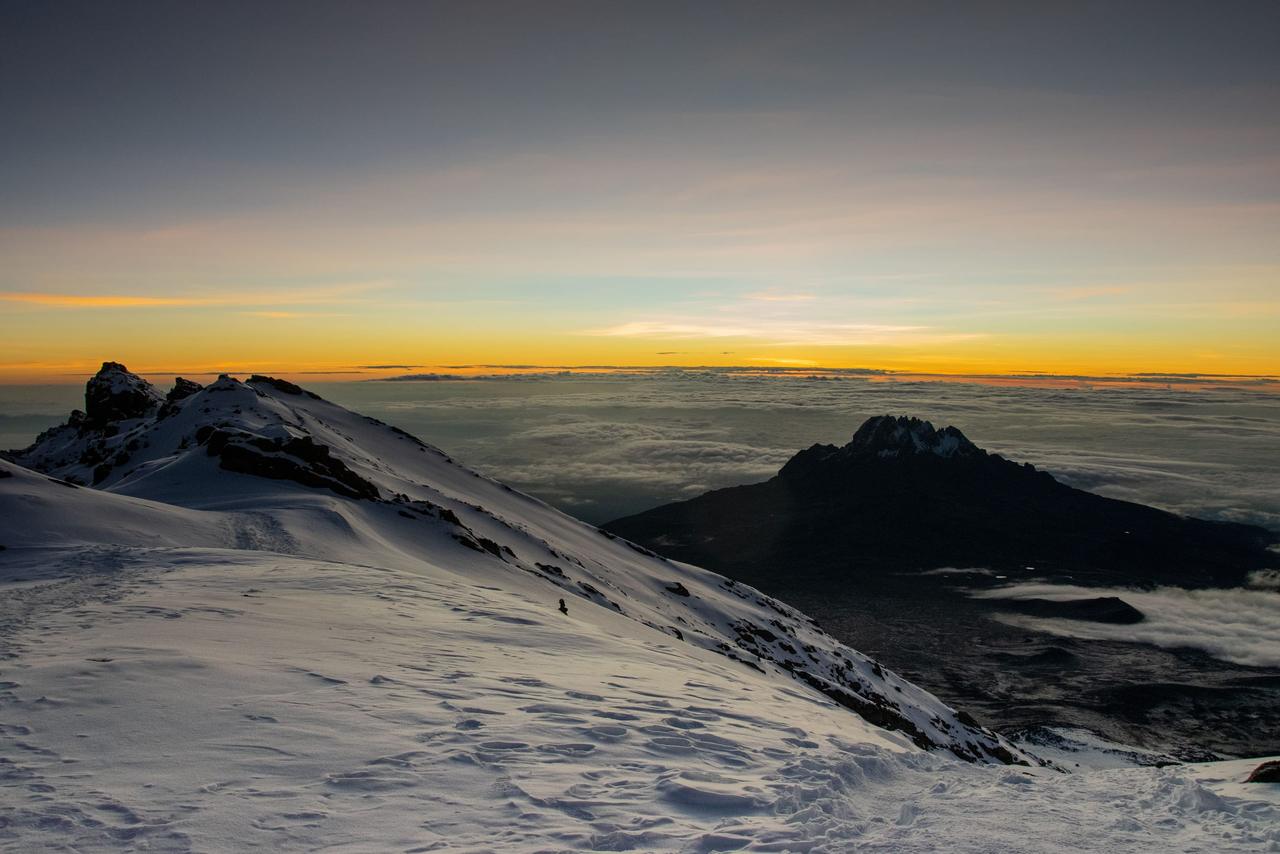
First light over Kilimanjaro’s snowy crater rim, with Mawenzi rising above a sea of clouds

Altitude sickness on Kilimanjaro: Pole pole: slowly, slowly

Almost everyone feels the height on Kilimanjaro. In the largest study on the mountain, 63% of 1,237 climbers had mild symptoms such as a headache or nausea, and 8.6% at least one severe symptom. Being fit does not protect you. Time does: a plan with enough nights, a slow pace, telling your guide early, and going down when it gets worse.

Know the signs: From normal to go down now

Your body notices the thin air from the first day, and much of what you feel is simply adapting. Altitude sickness starts with a headache; the two rare emergencies, in the brain and in the lungs, mean going down at once. Knowing the signs works: on Kilimanjaro, climbers who had clear advice before the climb had half the odds of severe symptoms.

  1. Normal up there

    Your body adapting

    Signs that your body is working to get enough oxygen. Expect some of them on every route.

    • Out of breath on the climbs, fine again when you stop
    • A faster heartbeat
    • Peeing more, also at night
    • Light, broken sleep, and breathing that pauses at night
    • Less appetite
    • Some puffiness in the hands, face or ankles

    What to doWalk slowly, drink enough to keep peeing plenty, eat even when you are not hungry, and keep warm.

  2. Altitude sickness · AMS

    A headache, and more

    Acute mountain sickness is a headache plus at least one of these, after you have gone higher.

    • Nausea, vomiting or no appetite
    • Tiredness or weakness the walking doesn’t explain
    • Dizziness or light-headedness

    What to doTell your guide. Go no higher until it has gone: rest at this height, with a painkiller for the headache. If it gets worse, or isn’t better after a day, go down.

  3. Emergency

    Two illnesses that can kill

    Rare, but they can get worse within hours, and both improve once you go down. On Kilimanjaro HAPE is the more common: it accounts for most hospital admissions for altitude illness, and most deaths.

    In the brain: HACE

    • Confusion or odd behaviour
    • Stumbling; cannot walk heel to toe in a straight line
    • A severe headache with vomiting
    • Drowsy and hard to wake

    In the lungs: HAPE

    • Far more out of breath on the climbs than the others
    • A sudden drop in pace; very tired
    • A dry cough, later wet with frothy or pink phlegm
    • Breathless at rest, a gurgling chest, blue lips

    What to doGo down now, even at night, and never alone: at least 1,000 m for HAPE, carried if possible. Oxygen and medicine buy time; going down is the cure.

Altitude sickness
Within hours of reaching a new height, often in the first night there. On Kilimanjaro it peaks at the high camp and on summit night.
HACE
Usually one to three days after going higher, in someone who already has altitude sickness. Untreated, it can lead to coma within a day.
HAPE
Usually from the second night at a new height. It can come without any headache, so breathlessness needs its own watch.

How common is it?: Most climbers feel it

Figures from 47% to 86% all come from real studies of Kilimanjaro climbers. They differ because of how fast the group climbed, which day was counted and how altitude sickness was measured.

  • Faster plans, higher figures: 75⁠–⁠77% on four- and five-day Marangu climbs.
  • Summit day is the peak: on one six-day Machame climb, 86% had it that day.
  • Serious illness is far rarer: 8.6% of 1,237 climbers had at least one severe symptom, and 1.1% went to hospital.
Altitude sickness and reaching the top in six studies of Kilimanjaro climbers
Route and daysClimbersAltitude sicknessReached the top
Marangu, 4–5 daysDavies et al. 200918177%61%
MaranguKarinen et al. 200811275%53%
Several routesJackson et al. 201018947%at about 4,730 m–
Rongai, 6 daysLawrence & Reid 201617553%88%
Machame, 6 daysMeyer 20122886%on summit day–
All routes, mostly 6–7 daysCroughs et al. 20221,23763%mild symptoms; 8.6% severe88%

Self-check: The four questions your guide asks

The Lake Louise questions are the standard way to count altitude-sickness symptoms, and many crews ask them every morning and every evening: four symptoms, each from 0 to 3. Answer them for how you feel now, at least a few hours after reaching a new height.

Headache

The symptom that counts first.

Appetite and stomach

Nausea, vomiting, or no wish to eat.

Tiredness or weakness

More than the day’s walk explains.

Dizziness or light-headedness

Unsteady, faint, or the world spinning.

Warning signs

Tick any that apply. They count for more than any score.

Time on the mountain: How fast each route climbs

Above 3,000 m, health guidance says sleep no more than 500 m higher each night, with a rest day every three or four days. No standard plan on Kilimanjaro keeps to that every night, so mountain-medicine guidelines count all of them as a high-risk ascent, even an eight-day Lemosho. A longer plan still spreads the height over more nights, and in the largest study on the mountain each extra day went with better odds of reaching the top.

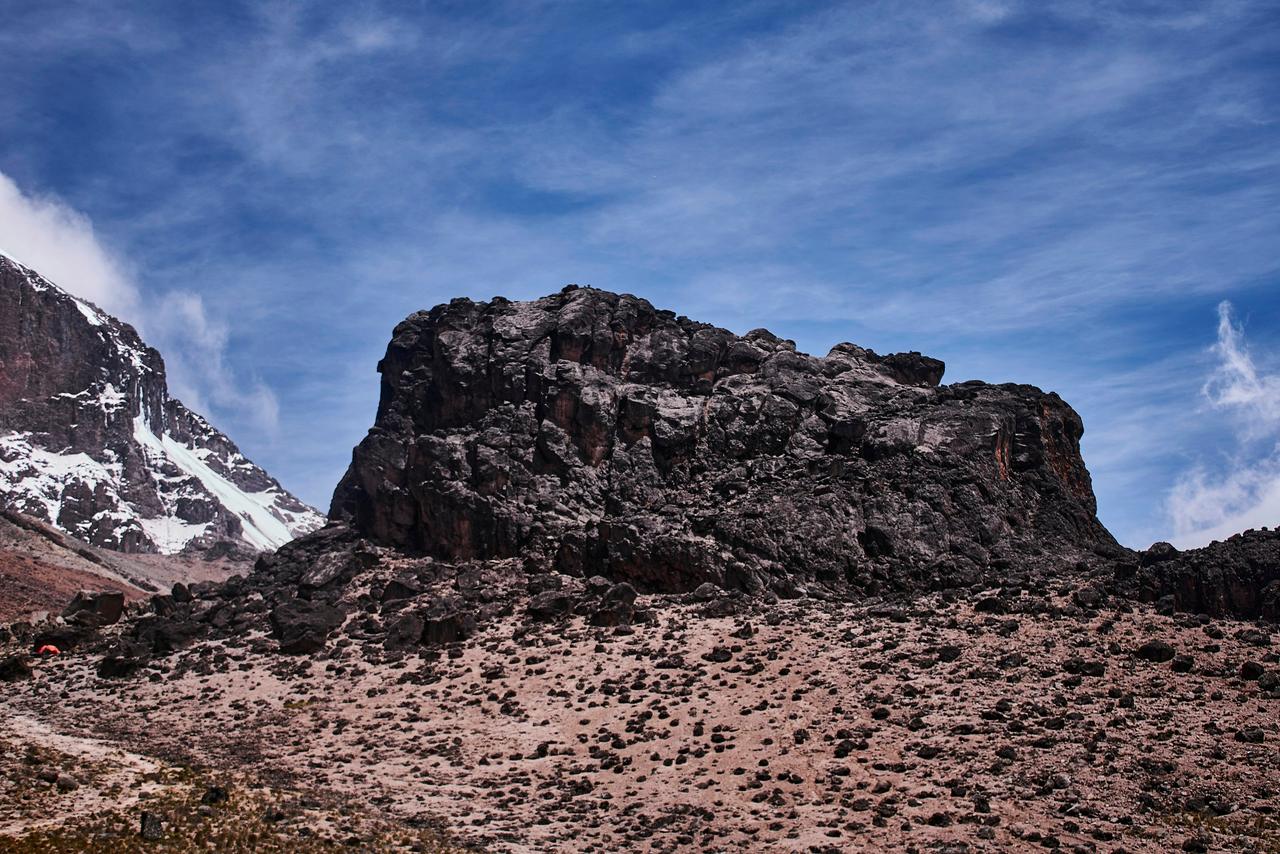
Lava Tower, a dark rock tower in the alpine desert on Kilimanjaro, with climbers on the trail below it

Photo: Oliver kwembe / Unsplash

Lava Tower: up by day, down to sleep

How much higher you sleep, night by night

Machame7 days

+1,210Machame Camp, 3,010 m+840Shira 2 Camp, 3,850 m+110Up to Lava Tower (4,630 m) that day, then down to sleepBarranco Camp, 3,960 m+35Karanga Camp, 3,995 m+678High campBarafu Camp, 4,673 m+1,210Machame Camp, 3,010 m+840Shira 2 Camp, 3,850 m+110Up to Lava Tower (4,630 m) that day, then down to sleepBarranco Camp, 3,960 m+35Karanga Camp, 3,995 m+678High campBarafu Camp, 4,673 m

3 nights over 500 mFirst night at 3,010 m

Machame6 days

+1,210Machame Camp, 3,010 m+840Shira 2 Camp, 3,850 m+110Up to Lava Tower (4,630 m) that day, then down to sleepBarranco Camp, 3,960 m+713High campBarafu Camp, 4,673 m+1,210Machame Camp, 3,010 m+840Shira 2 Camp, 3,850 m+110Up to Lava Tower (4,630 m) that day, then down to sleepBarranco Camp, 3,960 m+713High campBarafu Camp, 4,673 m

3 nights over 500 mFirst night at 3,010 m

Lemosho8 days

+405Mti Mkubwa (Big Tree) Camp, 2,780 m+720Shira 1 Camp, 3,500 m+350Shira 2 Camp, 3,850 m+110Up to Lava Tower (4,630 m) that day, then down to sleepBarranco Camp, 3,960 m+35Karanga Camp, 3,995 m+678High campBarafu Camp, 4,673 m+405Mti Mkubwa (Big Tree) Camp, 2,780 m+720Shira 1 Camp, 3,500 m+350Shira 2 Camp, 3,850 m+110Up to Lava Tower (4,630 m) that day, then down to sleepBarranco Camp, 3,960 m+35Karanga Camp, 3,995 m+678High campBarafu Camp, 4,673 m

2 nights over 500 mFirst night at 2,780 m

Lemosho7 days

+405Mti Mkubwa (Big Tree) Camp, 2,780 m+1,070Shira 2 Camp, 3,850 m+110Up to Lava Tower (4,630 m) that day, then down to sleepBarranco Camp, 3,960 m+35Karanga Camp, 3,995 m+678High campBarafu Camp, 4,673 m+405Mti Mkubwa (Big Tree) Camp, 2,780 m+1,070Shira 2 Camp, 3,850 m+110Up to Lava Tower (4,630 m) that day, then down to sleepBarranco Camp, 3,960 m+35Karanga Camp, 3,995 m+678High campBarafu Camp, 4,673 m

2 nights over 500 mFirst night at 2,780 m

Marangu6 days

+860Mandara Huts, 2,720 m+1,000Horombo Huts, 3,720 mRestUp to Zebra Rocks (4,020 m) that day, then down to sleepHorombo Huts, 3,720 m+1,000High campKibo Hut, 4,720 m+860Mandara Huts, 2,720 m+1,000Horombo Huts, 3,720 mRestUp to Zebra Rocks (4,020 m) that day, then down to sleepHorombo Huts, 3,720 m+1,000High campKibo Hut, 4,720 m

2 nights over 500 mFirst night at 2,720 m

Marangu5 days

+860Mandara Huts, 2,720 m+1,000Horombo Huts, 3,720 m+1,000High campKibo Hut, 4,720 m+860Mandara Huts, 2,720 m+1,000Horombo Huts, 3,720 m+1,000High campKibo Hut, 4,720 m

2 nights over 500 mFirst night at 2,720 m

Rongai7 days

+721Simba Camp, 2,671 m+779Second Cave Camp, 3,450 m+150Kikelewa Camp, 3,600 m+715Mawenzi Tarn Hut, 4,315 m+405High campKibo Hut, 4,720 m+721Simba Camp, 2,671 m+779Second Cave Camp, 3,450 m+150Kikelewa Camp, 3,600 m+715Mawenzi Tarn Hut, 4,315 m+405High campKibo Hut, 4,720 m

2 nights over 500 mFirst night at 2,671 m

Rongai6 days

+721Simba Camp, 2,671 m+929Kikelewa Camp, 3,600 m+715Mawenzi Tarn Hut, 4,315 m+405High campKibo Hut, 4,720 m+721Simba Camp, 2,671 m+929Kikelewa Camp, 3,600 m+715Mawenzi Tarn Hut, 4,315 m+405High campKibo Hut, 4,720 m

2 nights over 500 mFirst night at 2,671 m

Northern Circuit9 days

+405Mti Mkubwa (Big Tree) Camp, 2,780 m+720Shira 1 Camp, 3,500 m+350Shira 2 Camp, 3,850 m+300Up to Lava Tower (4,630 m) that day, then down to sleepMoir Hut, 4,150 m−130Buffalo Camp, 4,020 m−150Third Cave Camp, 3,870 m+930High campSchool Hut, 4,800 m+405Mti Mkubwa (Big Tree) Camp, 2,780 m+720Shira 1 Camp, 3,500 m+350Shira 2 Camp, 3,850 m+300Up to Lava Tower (4,630 m) that day, then down to sleepMoir Hut, 4,150 m−130Buffalo Camp, 4,020 m−150Third Cave Camp, 3,870 m+930High campSchool Hut, 4,800 m

2 nights over 500 mFirst night at 2,780 m

Northern Circuit8 days

+405Mti Mkubwa (Big Tree) Camp, 2,780 m+720Shira 1 Camp, 3,500 m+650Moir Hut, 4,150 m−130Buffalo Camp, 4,020 m−150Third Cave Camp, 3,870 m+930High campSchool Hut, 4,800 m+405Mti Mkubwa (Big Tree) Camp, 2,780 m+720Shira 1 Camp, 3,500 m+650Moir Hut, 4,150 m−130Buffalo Camp, 4,020 m−150Third Cave Camp, 3,870 m+930High campSchool Hut, 4,800 m

3 nights over 500 mFirst night at 2,780 m

Umbwe7 days

+1,250Umbwe Cave Camp, 2,850 m+1,110Barranco Camp, 3,960 mRestBarranco Camp, 3,960 m+35Karanga Camp, 3,995 m+678High campBarafu Camp, 4,673 m+1,250Umbwe Cave Camp, 2,850 m+1,110Barranco Camp, 3,960 mRestBarranco Camp, 3,960 m+35Karanga Camp, 3,995 m+678High campBarafu Camp, 4,673 m

2 nights over 500 mFirst night at 2,850 m

Umbwe6 days

+1,250Umbwe Cave Camp, 2,850 m+1,110Barranco Camp, 3,960 m+35Karanga Camp, 3,995 m+678High campBarafu Camp, 4,673 m+1,250Umbwe Cave Camp, 2,850 m+1,110Barranco Camp, 3,960 m+35Karanga Camp, 3,995 m+678High campBarafu Camp, 4,673 m

2 nights over 500 mFirst night at 2,850 m

Shira7 days

+1,250Shira 1 Camp, 3,500 m+350Shira 2 Camp, 3,850 m+110Up to Lava Tower (4,630 m) that day, then down to sleepBarranco Camp, 3,960 m+35Karanga Camp, 3,995 m+678High campBarafu Camp, 4,673 m+1,250Shira 1 Camp, 3,500 m+350Shira 2 Camp, 3,850 m+110Up to Lava Tower (4,630 m) that day, then down to sleepBarranco Camp, 3,960 m+35Karanga Camp, 3,995 m+678High campBarafu Camp, 4,673 m

2 nights over 500 mFirst night at 3,500 m, by car

Shira6 days

+1,600Shira 2 Camp, 3,850 m+110Up to Lava Tower (4,630 m) that day, then down to sleepBarranco Camp, 3,960 m+35Karanga Camp, 3,995 m+678High campBarafu Camp, 4,673 m+1,600Shira 2 Camp, 3,850 m+110Up to Lava Tower (4,630 m) that day, then down to sleepBarranco Camp, 3,960 m+35Karanga Camp, 3,995 m+678High campBarafu Camp, 4,673 m

2 nights over 500 mFirst night at 3,850 m, by car

  • Choose the longer plan

    One more night spreads the climb. In a study of 1,237 Kilimanjaro climbers, each extra day on the mountain went with better odds of reaching Uhuru Peak.

  • Climb high, sleep low

    Machame, Lemosho, Shira and the Northern Circuit climb to Lava Tower (4,630 m) and come down to sleep; Marangu’s six-day plan walks up to Zebra Rocks (4,020 m) on its rest day. Climbers whose plan did this reached the top more often: 90% against 82%.

  • Arrive acclimatized

    Nights high up shortly before the climb help: two or more above 2,750 m in the fortnight before. Many climbers climb Mount Meru (4,562 m) first. Altitude tents at home are no reliable substitute.

Medicine: Altitude sickness tablets: Diamox and others

Medicine can lower the risk, but it never replaces a slow climb. The medicines here are a decision for you and your doctor. See a travel clinic four to six weeks before you go, and bring your own painkillers.

Prevention, on prescription

Acetazolamide (Diamox)

It makes you breathe a little more, especially at night, so your body adapts faster. In trials it roughly halved the risk of altitude sickness, and mountain-medicine guidelines say it should be strongly considered for a climb as fast as Kilimanjaro.

About half of Kilimanjaro climbers take it. In the largest study on the mountain, those who did reached the top more often; on the fastest plans many still got altitude sickness, so it never replaces time.

Common side effects

  • Tingling in fingers, toes or face
  • Peeing more
  • Fizzy drinks taste flat
  • Sometimes nausea

It doesn’t hide the warning signs: it helps you adapt rather than covering up symptoms. If you feel ill while taking it, you are ill.

It is prescription-only. Ask your doctor whether it suits you (mention any sulfa-drug allergy or a pregnancy), when to start and stop, and whether to try it at home first.

Other medicines you may hear about

Ibuprofen, paracetamol
For the headache. Ibuprofen can also lower the risk somewhat, though less than acetazolamide.
Dexamethasone
An emergency medicine for severe altitude sickness and HACE. It eases symptoms without helping you adapt, so it is never a way to keep climbing.
Nifedipine
An emergency medicine for HAPE when going down or oxygen isn’t possible, and a preventive for people who have had HAPE before.
Oxygen
A treatment that buys time while waiting or going down; not a way to keep climbing.
Sleeping pills
No alcohol or opioid painkillers at night: they slow your breathing. Ask your doctor before any sleeping tablet.

No proven help: ginkgo, coca, garlic soup, beetroot juice, altitude tents at home, or drinking far more than you need.

On the mountain: Three rules that keep you safe

Most altitude sickness on Kilimanjaro stays mild because climbers and guides follow the same few rules. You know your body best, so the most useful thing you can do is say early how you feel.

  1. Feel unwell up high? Assume it’s the altitude

    Until shown otherwise. A headache, nausea or odd tiredness above 3,000 m is altitude sickness until your guide finds a better reason.

  2. Never go higher with symptoms

    Rest at the same height until they have gone. On Kilimanjaro, climbers who carried on with mild symptoms got severe ones twice as often (12% against 6%).

  3. If it gets worse, go down

    Or if it isn’t better after a day. Going down 300 m to 1,000 m usually brings relief, more for HAPE. Never leave someone who is ill alone.

Every day

  • Pole poleWalk slowly enough to talk in full sentences.
  • Drink enoughEnough to keep peeing plenty. Forcing down extra doesn’t prevent altitude sickness and can lower your blood salt.
  • EatEven without appetite: your body needs the energy.
  • Keep warmThe cold makes everything harder.
  • Skip the alcoholIt disturbs breathing at night, and a hangover feels like altitude sickness.
  • Speak up earlyYour guide can only act on what you tell them.

The daily check: The clip on your finger

Most crews check your blood oxygen (SpO₂) and pulse with a pulse oximeter every morning and evening, along with the four questions. Numbers far below what you would see at home are normal up here. What matters is how you feel, and how your numbers change from one check to the next.

Typical oxygen saturation by height
60%70%80%90%100%Sea level1,0002,0003,0004,0005,0006,000Height (m)GatesBarrancoHigh campsUhuru PeakKaranga Camp 83%Stella Point 76%
  • Low is normal

    At the high camps healthy climbers typically read about 79⁠–⁠87%. On Kilimanjaro, climbers averaged 83% at Karanga and 76% at Stella Point on summit day.

  • The number doesn’t decide

    Climbers with and without altitude sickness often read the same, so symptoms decide, not the clip. A very low reading with breathlessness points to HAPE.

  • Measure it well

    Sit still for five minutes first, with a warm finger. Readings drop with cold or movement and swing with the night-time breathing pattern: watch for a steady value over a minute or two.

Going down: Down is the cure

Most climbers who turn back feel better within hours of going down. On Kilimanjaro that usually means walking down with your guide, helped or carried where needed. Serious cases start high: 81% of severe symptoms began before the summit.

  1. Your guide decides, with you

    Turning back is part of the plan, not a failure. Guides give first aid and call the park by radio or phone; good crews carry oxygen for the way down.

  2. On foot, with support

    A guide walks down with you, day or night. If you can’t walk, the crew and rangers take you down on the park’s one-wheeled stretchers; park vehicles reach the Shira Plateau, Horombo and the top of the Mweka track.

  3. By helicopter

    Rescue helicopters from Moshi land at camps up to about 4,600⁠–⁠4,900 m, in daylight and good weather only, so the first part is almost always on foot. Your insurer pays: operators quote $3,000⁠–⁠$10,000 or more.

  4. To hospital

    Kilimanjaro Christian Medical Centre in Moshi is the region’s referral hospital. Arusha has more clinics, and serious cases can fly on to Nairobi.

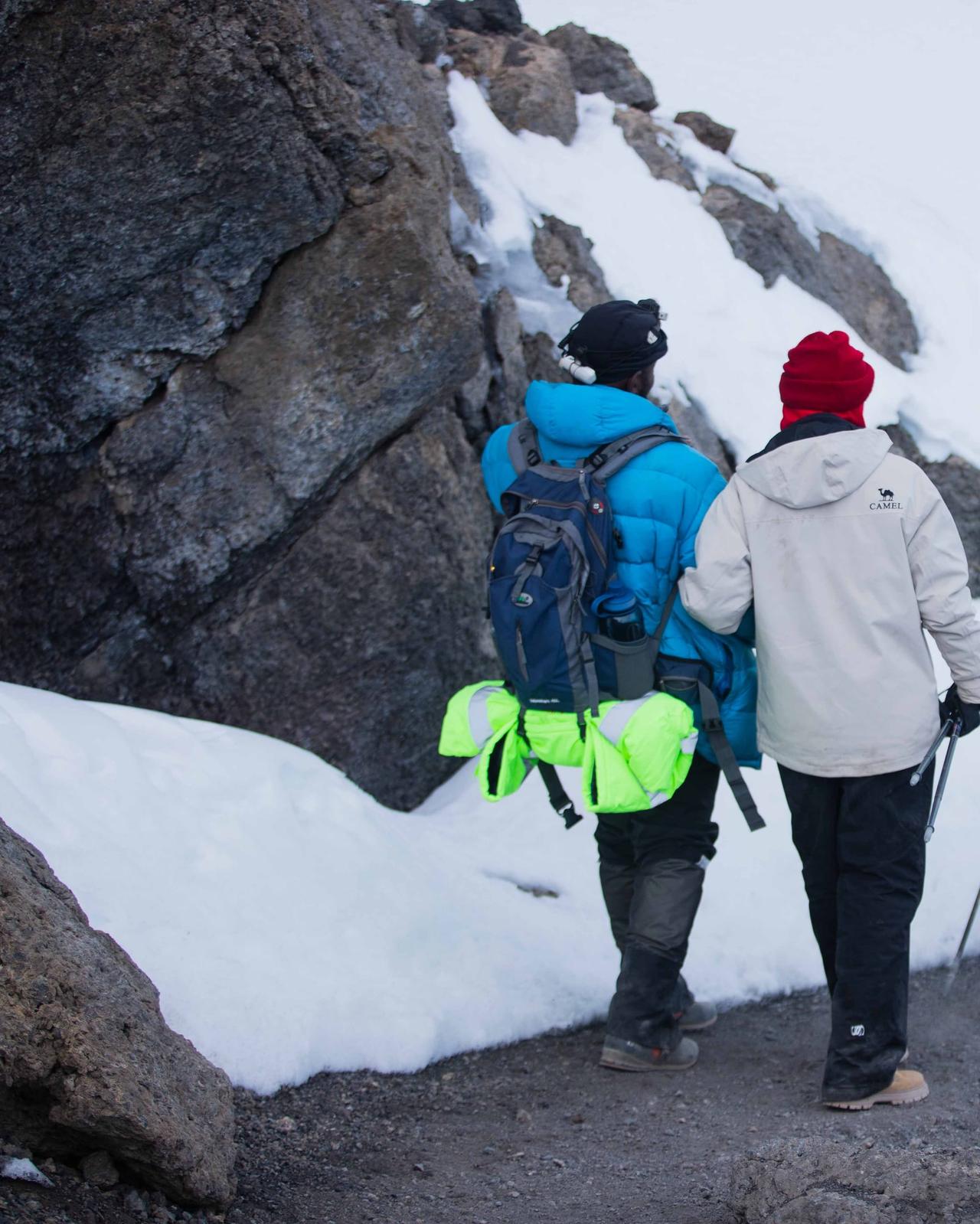
A climber walks arm in arm with a crew member along a snowy path high on Kilimanjaro

Photo: Penfran Tanzania / Pexels

Never alone

Before you book: Who gets it, and how to prepare

Altitude sickness is hard to predict: the strongest hiker in a group can feel worst. Guidelines advise everyone going this high to get advice before booking: take your day-by-day plan to a travel clinic.

Raises your risk

  • Going up fast: a short plan, or a first night above 2,800 m
  • Altitude sickness on an earlier trip, above all HAPE or HACE
  • Living near sea level
  • A history of migraine
  • Hard exertion in the first days high up

Doesn’t protect you

  • How fit you are (fit climbers often go too fast)
  • Being young: younger climbers had more severe symptoms on Kilimanjaro
  • Being a man or a woman: no clear difference either way
  • Having been fine high up before: no guarantee this time

See a doctor first if you

  • Have a heart or lung condition, or high blood pressure that isn’t well controlled
  • Have sickle cell disease or trait
  • Are pregnant: guidelines advise against sleeping above 3,000 m, and every route does
  • Have had HAPE or HACE before
  • Have diabetes, epilepsy or migraine, or take regular medicines
  • Are bringing a child: the park doesn’t allow children under 10 above 3,700 m, and young children can’t describe symptoms well

Ask your operator

  • Do guides check oxygen and the four questions every morning and evening?
  • Do you carry oxygen, and how much?
  • When do you send someone down: which symptoms, which oximeter readings?
  • What first-aid training do the guides have?
  • How many nights does the plan spend above 3,000 m?

Myths

  • Fit people don’t get it.

    Fitness doesn’t change the risk; fit climbers tend to go too fast.

  • Diamox hides the symptoms.

    It helps you adapt. Dexamethasone is the drug that eases symptoms without adapting.

  • Drink five litres and you won’t get it.

    Drinking prevents dehydration, not altitude sickness; far too much water is a risk of its own.

  • I was fine last time, so I’ll be fine.

    A good trip before is no guarantee: this one may be faster or higher.

Questions: What people ask about altitude sickness

How common is altitude sickness on Kilimanjaro?

Very common. Studies of Kilimanjaro climbers found altitude sickness in 47% to 86%, more on fast plans and on summit day. In the largest study, 63% of 1,237 climbers had mild symptoms such as a headache or nausea, 8.6% at least one severe symptom and 1.1% went to hospital.

Can you die from altitude sickness on Kilimanjaro?

Yes, but it is rare. The park publishes no figures. Doctors at the hospital in Moshi examined 21 climbers who died in 2016 and 2017; 19 of them died of HAPE, alone or with HACE, most while still on the mountain. An earlier study there counted about 14 deaths per 100,000 climbers. Going down at the first serious sign is what prevents them.

Should I take Diamox for Kilimanjaro?

Ask a doctor or travel clinic. Mountain-medicine guidelines say acetazolamide (Diamox), the usual altitude sickness tablet, should be strongly considered for a climb as fast as Kilimanjaro: in trials it roughly halved the risk. Many climbers go without it; it is prescription-only, often causes tingling and more peeing, and doesn’t mask the warning signs. It never replaces a slow climb.

What are the first signs, and when should I turn back?

A headache, with nausea or a poor appetite, unusual tiredness or dizziness. It starts within hours of reaching a new height, often in the first night. Go no higher until it has gone, and go down if it gets worse or isn’t better after a day. Confusion, stumbling or being breathless at rest are emergencies: go down at once.

Which Kilimanjaro route is best for acclimatization?

A long plan: Lemosho in eight days or the Northern Circuit in nine spread the height over the most nights, and both climb high and sleep low via Lava Tower. Short plans, and routes that start high (Shira) or climb steeply (Umbwe), give your body the least time. Guidelines still count every standard plan as a high-risk ascent, so the rules apply on any route.

Does being fit protect me from altitude sickness?

No. Fitness makes the walking easier but doesn’t lower the risk of altitude sickness, and fit climbers often walk too fast. What lowers the risk is time: more nights on the mountain and a slow pace.

At what height does altitude sickness start?

It can start from about 2,500 m, and becomes common above 3,000 m. On Kilimanjaro most climbers sleep above 3,000 m from the first or second night, and the risk is highest at the high camp and on summit night.

What oxygen level is normal on Kilimanjaro?

Far lower than at home. At the high camps healthy climbers typically read about 79⁠–⁠87% at rest, and climbers measured on summit day averaged 76% at Stella Point. A number doesn’t decide who is ill: symptoms do, and a very low reading with breathlessness points to HAPE.

Do I need bottled oxygen to climb Kilimanjaro?

No. Climbers don’t use oxygen to climb Kilimanjaro. Good crews carry it for emergencies, to help someone on the way down.

How much water should I drink on Kilimanjaro?

Enough to keep peeing plenty, which for most climbers means several litres a day in the dry, cold air. Drinking more than that doesn’t prevent altitude sickness, and forcing down large amounts can lower your blood salt.

Can children get altitude sickness on Kilimanjaro?

Yes, as easily as adults, and young children can’t describe their symptoms well. The park doesn’t allow children under 10 above 3,700 m. For older children, see a doctor and choose a long plan.

I had altitude sickness before. Will I get it on Kilimanjaro?

Your earlier trip is the best guide you have, but not a certain one. Altitude sickness before, and above all HAPE or HACE, raises the risk; having been fine before is no guarantee either. Tell your doctor and choose a long plan.

What does a helicopter rescue cost on Kilimanjaro?

There is no official price; operators quote $3,000⁠–⁠$10,000 or more, paid by your insurer. Helicopters land at camps up to about 4,600⁠–⁠4,900 m in daylight and good weather, so make sure your policy covers trekking to 6,000 m and helicopter evacuation.
Sources

Updated

Who we are, our data and our sources

This page explains altitude sickness for climbers in plain words; it is not medical advice. The guidance and figures come from the mountain-medicine and travel-health sources below. Camp heights and nightly gains follow the published heights of each route’s standard plans.