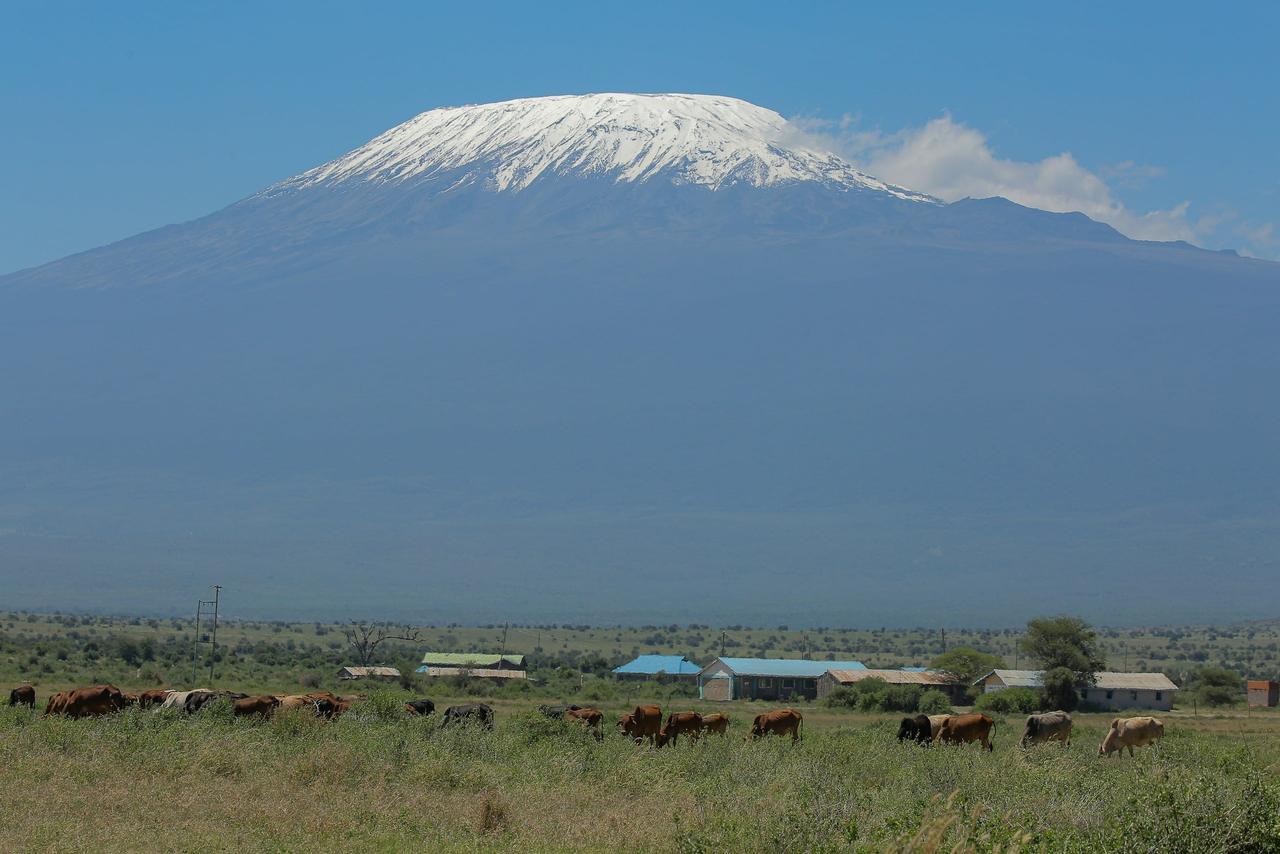
Kibo’s snow-covered dome rising alone above the plains, cattle grazing on the grass in front

Mount Kilimanjaro: Africa’s highest mountain, three volcanoes in one

Kilimanjaro is a dormant volcano in north-eastern Tanzania, just south of the Kenyan border, and at 5,895 m the highest point in Africa. It stands on its own, about 4,900 m above the plains, built over 2.5 million years by three volcanoes: Shira, Mawenzi and Kibo. Uhuru Peak, the summit, is the highest point on the rim of Kibo’s crater.

At a glance: Kilimanjaro in facts

The essentials on one card, for a quick answer or a school project.

Where it is, with distances
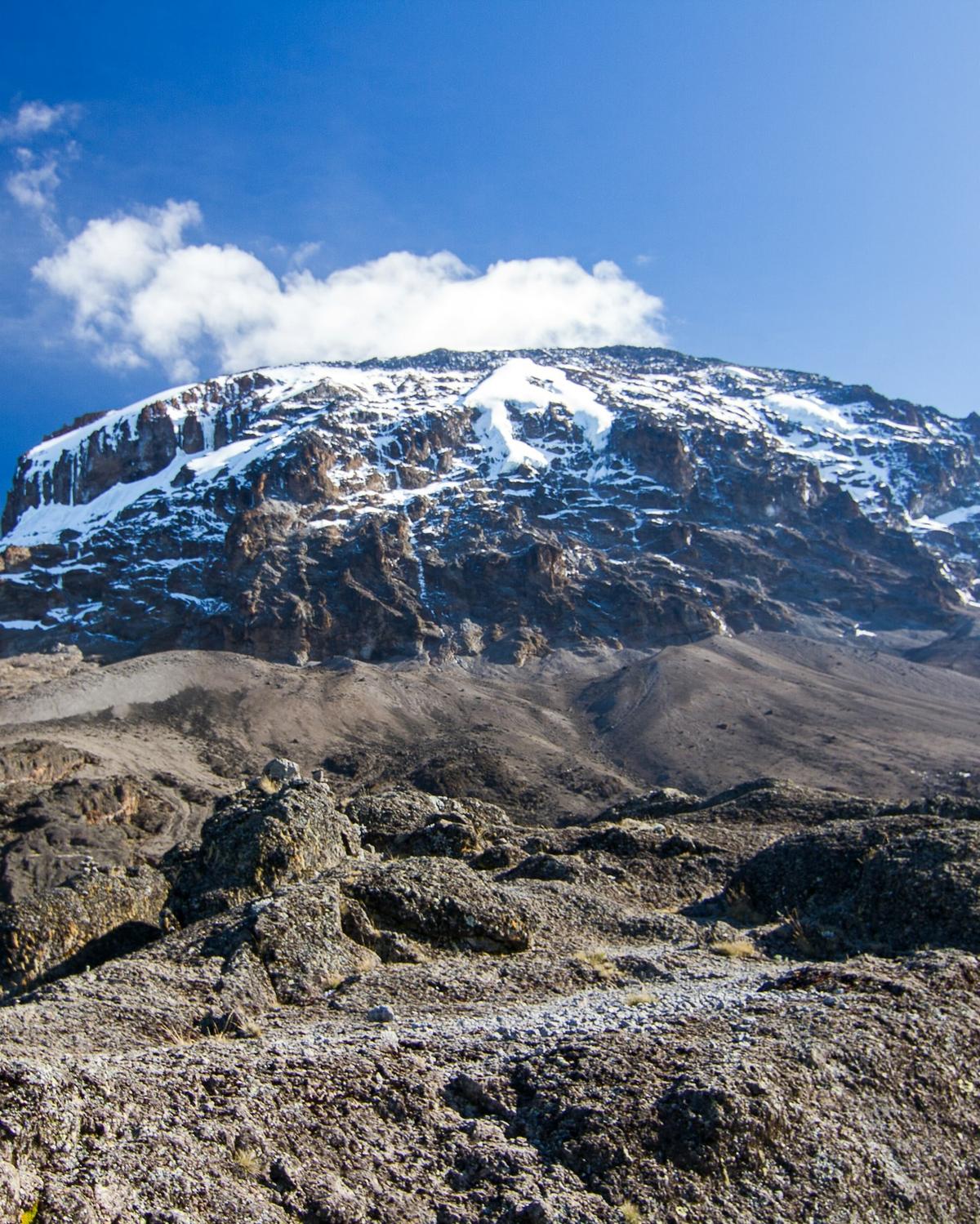
Kibo’s glacier-capped summit dome above a rocky trail in the alpine desert, under a blue sky

Photo: Twende Africa Tours / Unsplash

Mount Kilimanjaro

Height
5,895 m (19,341 ft) at Uhuru Peak, the highest point in Africa
Where
North-eastern Tanzania, about 340 km south of the equator, just south of the Kenyan border
Type
A dormant stratovolcano: three volcanoes joined into one mountain
Peaks
Kibo 5,895 m · Mawenzi 5,149 m · Shira 3,962 m
Size
About 60 by 40 km at its foot, rising about 4,900 m above the plains
Age
About 2.5 million years; the summit was last active about 150,000–200,000 years ago
Summit crater
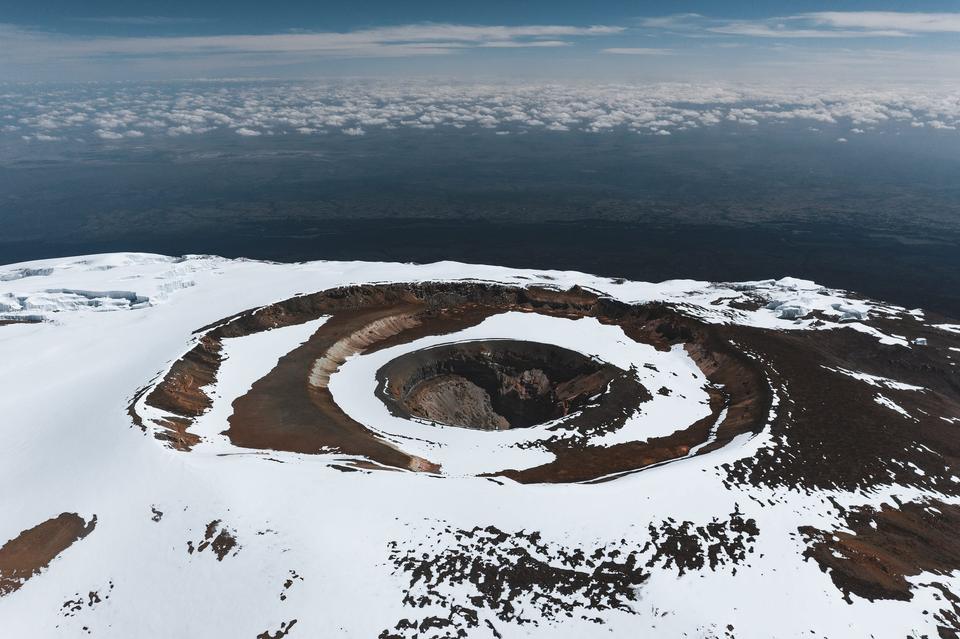
About 2.5 km across, with an inner crater and the Ash Pit at its centre
Ice
0.98 km² in 2021, 91% less than in 1912
First recorded ascent
6 October 1889, by Hans Meyer and Ludwig Purtscheller
Protected
National park since 1973, a UNESCO World Heritage Site since 1987
Climbers
More than 69,000 a year
Rank
Africa’s entry among the Seven Summits, and the highest mountain on Earth that stands alone
Three volcanoes: Built over 2.5 million years

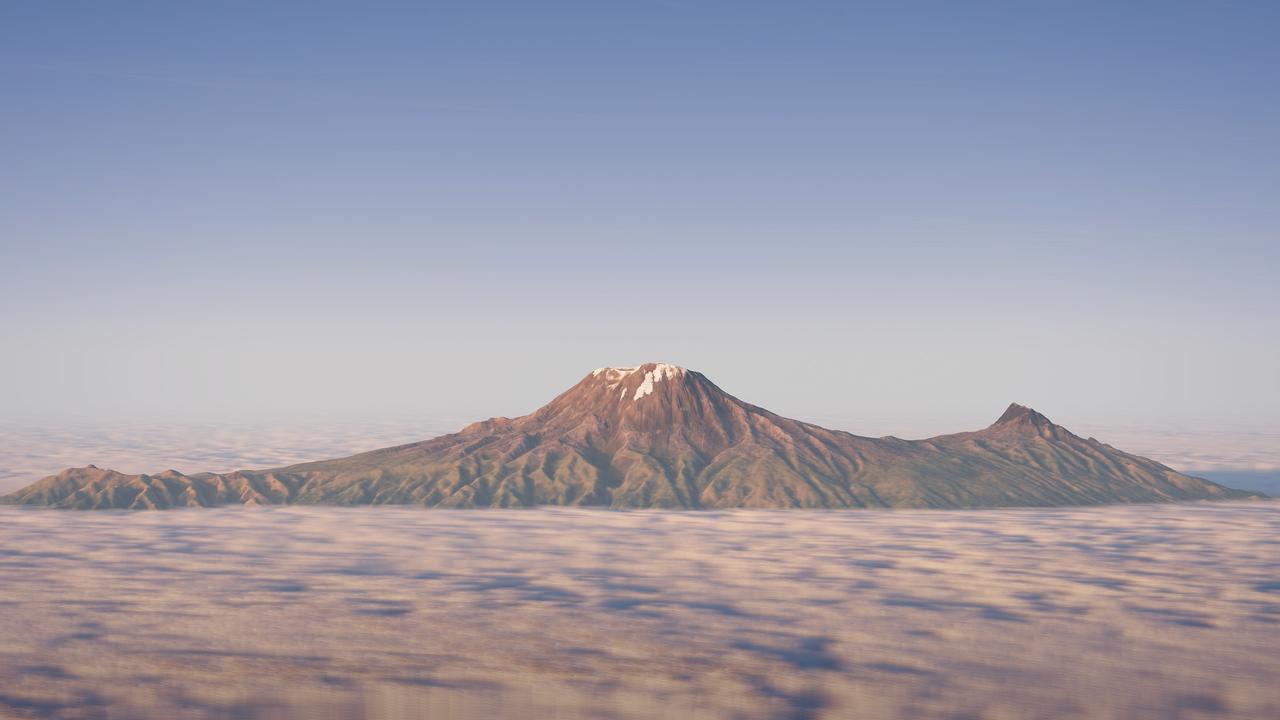
Kilimanjaro is not one volcano but three, lined up over 25 km from west to east. Shira came first and collapsed. Mawenzi and Kibo then grew side by side, Mawenzi died out, and Kibo kept erupting until it buried the flanks of both under its lava.

The Kilimanjaro massif from the south-west above a sea of cloud: the low, broken ridge of Shira on the left, Kibo’s broad snow-capped dome in the middle and Mawenzi’s sharp peak on the right
From the south-west: Shira on the left, Kibo in the middle, Mawenzi on the right.
  • The oldestShira 3,962 mAbout 2.5 to 1.9 million years ago
  • The jagged oneMawenzi 5,149 mAbout 1 million to 490,000 years ago
  • The summitKibo 5,895 mFrom about 1 million to 150,000 years ago
How the mountain was built

The height: 5,895 m, and how we know

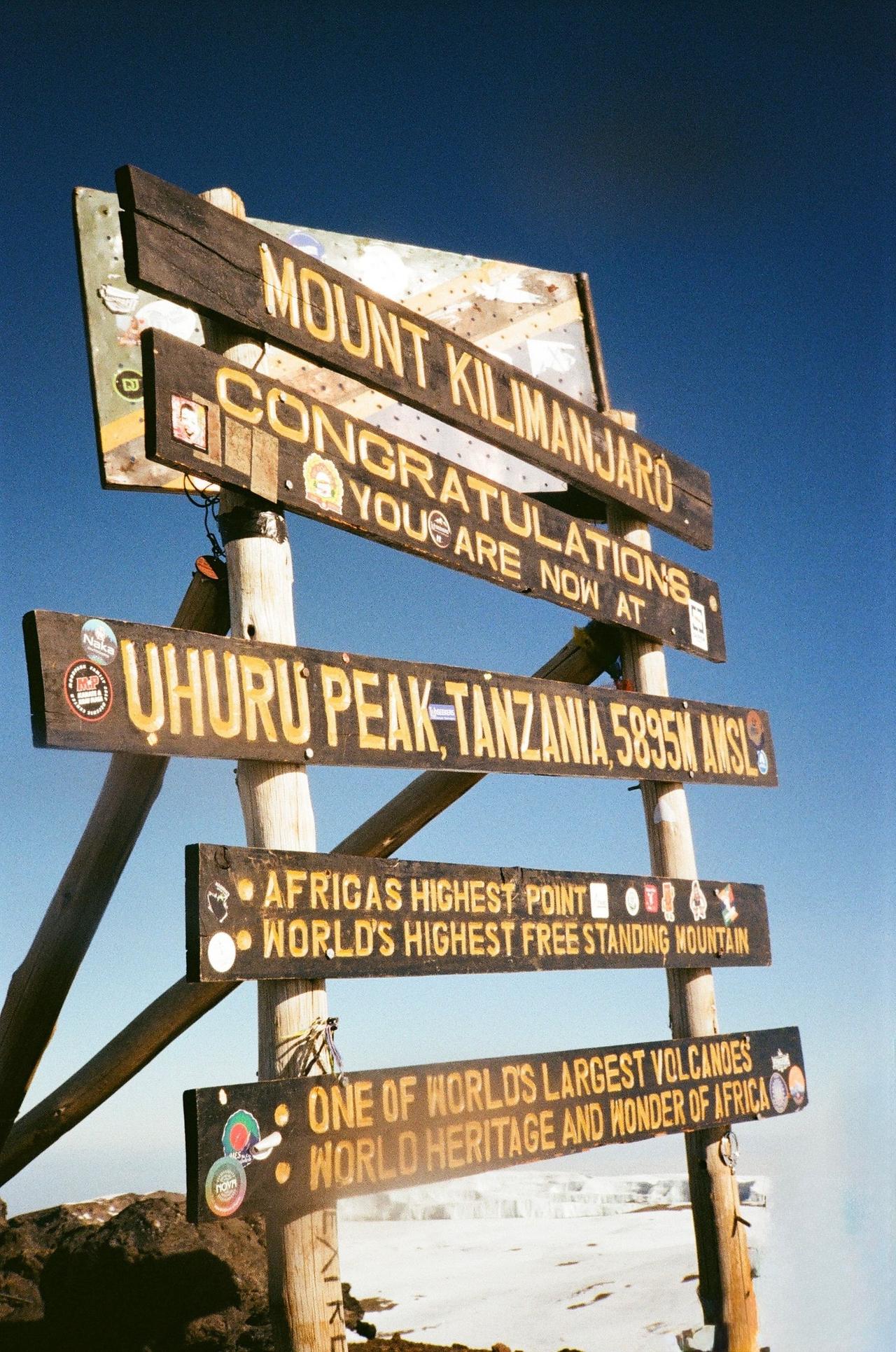
The official height of Uhuru Peak, 5,895 m (19,341 ft), comes from a British survey in 1952. Satellite surveys since 1999 have come within a few metres of it, so the sign on top has never needed changing.

Measured, again and again

  1. 18896,010 mHans Meyer, with a barometer+115 m
  2. 19125,930 mFritz Klute, from photographs+35 m
  3. 19525,895 mBritish survey: the official heightOfficial
  4. 19995,892.55 mSatellite (GPS) survey−2.45 m
  5. 20085,890.79 mGPS and gravity survey−4.21 m
  6. 20145,894.94 mThe same data, a new sea-level model−0.06 m

Most of the difference between the modern figures comes from where “sea level” is taken to lie beneath the mountain.

Among the Seven Summits

The highest mountain on each continent. Kilimanjaro is the fourth highest, and no ropes or climbing skills are needed on any of its routes.

  1. EverestAsia8,849 m
  2. AconcaguaSouth America6,961 m
  3. DenaliNorth America6,190 m
  4. KilimanjaroAfrica5,895 m
  5. ElbrusEurope5,642 m
  6. VinsonAntarctica4,892 m
  7. Puncak JayaOceania4,884 m

Why “free-standing”?

Most high mountains are peaks in a range. Kilimanjaro rises on its own: from the plains at about 1,000 m it climbs some 4,900 m in one sweep, and the nearest higher ground is in Afghanistan, about 5,500 km away. Hawaii’s volcanoes are taller measured from the ocean floor, but no higher mountain on land stands alone.

  • 4,900 mabove the plains around it
  • 5,885 mprominence, the fourth-largest on Earth
  • 5,500 kmto the nearest higher ground

The ice: Snow on the equator, for now

In the ice ages a cap of about 400 km² covered Kibo and Mawenzi. When Hans Meyer crossed the summit in 1889, ice still spilled over the crater rim. In 2021 about 0.98 km² was left: 91% less than in 1912. The ice is disappearing mainly by turning straight to vapour in the dry, sunny air, and scientists expect the last of it to be gone between 2040 and 2060.

The glaciers in detail
036912km² of ice1900192519501975200020252050Expected gone1912: 11.4 km²1962: 7.32 km²1975: 6.05 km²1984: 4.82 km²1993: 3.8 km²2000: 2.92 km²2003: 2.5 km²2011: 1.76 km²2021: 0.98 km²11.4 km² (1912)0.98 km² (2021)

Myths: Myth or fact?

  • Myth

    Queen Victoria gave Kilimanjaro to the German Kaiser as a birthday present.

    Britain and Germany agreed the border in 1886. The Kaiser of the story, her grandson Wilhelm II, only came to the throne in 1888.

  • Myth

    Kibo last erupted about 200 years ago.

    The summit has been quiet for at least 150,000 years. No eruption is known from human history.

  • Fact

    A frozen leopard lay near the summit.

    Its dried body lay on the crater rim from the mid-1920s and was photographed there in 1933. Hemingway opened “The Snows of Kilimanjaro” with it in 1936.

  • Myth

    Hemingway climbed Kilimanjaro.

    His safari of 1933–34 crossed Kenya and Tanganyika and ended with a flight to Nairobi, not a climb.

  • Myth

    “Ngàje Ngài, the House of God” was invented by Hemingway.

    The explorer Joseph Thomson printed it in 1885, fifty years earlier.

  • Nobody knows

    Kilimanjaro means “shining mountain”.

    That is one guess among at least ten. The true origin of the name is unknown.

  • Myth

    Kilimanjaro is in Kenya.

    The whole mountain is in Tanzania. The famous postcard views are taken from Amboseli, across the border in Kenya.

Questions: The mountain, answered

Is Kilimanjaro in Kenya or Tanzania?

Tanzania. The whole mountain lies in north-eastern Tanzania, just south of the Kenyan border, which an Anglo-German agreement of 1886 drew around its northern foot. The best-known views of it are from Amboseli National Park in Kenya.

How tall is Kilimanjaro?

5,895 m (19,341 ft) at Uhuru Peak, the highest point in Africa. The figure comes from a survey in 1952; satellite surveys since 1999 have measured within a few metres of it, and the park and the summit sign keep 5,895 m.

Is Kilimanjaro the highest mountain in the world?

No. Everest, at 8,849 m, is almost 3,000 m higher, and Kilimanjaro is the fourth highest of the Seven Summits, the highest mountains of each continent. It is the highest mountain in Africa and the highest on Earth that stands on its own rather than in a range.

Is Kilimanjaro an active volcano?

No, it is dormant. Its summit, Kibo, was last active about 150,000 to 200,000 years ago, and the youngest eruption known on the mountain, from a small cone on its flank, was about 134,000 years ago. Steam and sulphur gas still rise from vents in the crater, which is why geologists call it dormant rather than extinct. Its other two volcanoes, Mawenzi and Shira, are extinct.

How many peaks does Kilimanjaro have?

Three volcanic summits: Kibo (5,895 m), Mawenzi (5,149 m) and Shira (3,962 m). Uhuru Peak is the highest point on Kibo’s crater rim; Stella Point and Gilman’s Point are lower points on the same rim, where most climbers first reach the top.

Is there still snow on Kilimanjaro?

Yes, but less every year. The summit’s ice covered about 11.4 km² in 1912 and about 0.98 km² in 2021, and scientists expect it to be gone between 2040 and 2060. Fresh snow can fall in any month, most of it in the rainy seasons.

Why is Kilimanjaro famous?

It is the highest mountain in Africa and the highest on Earth that stands alone, with snow almost on the equator, and one of the Seven Summits that walkers can climb without ropes or climbing skills. More than 69,000 people a year set out for the top, and Hemingway’s story made its snows famous long before most of them came.

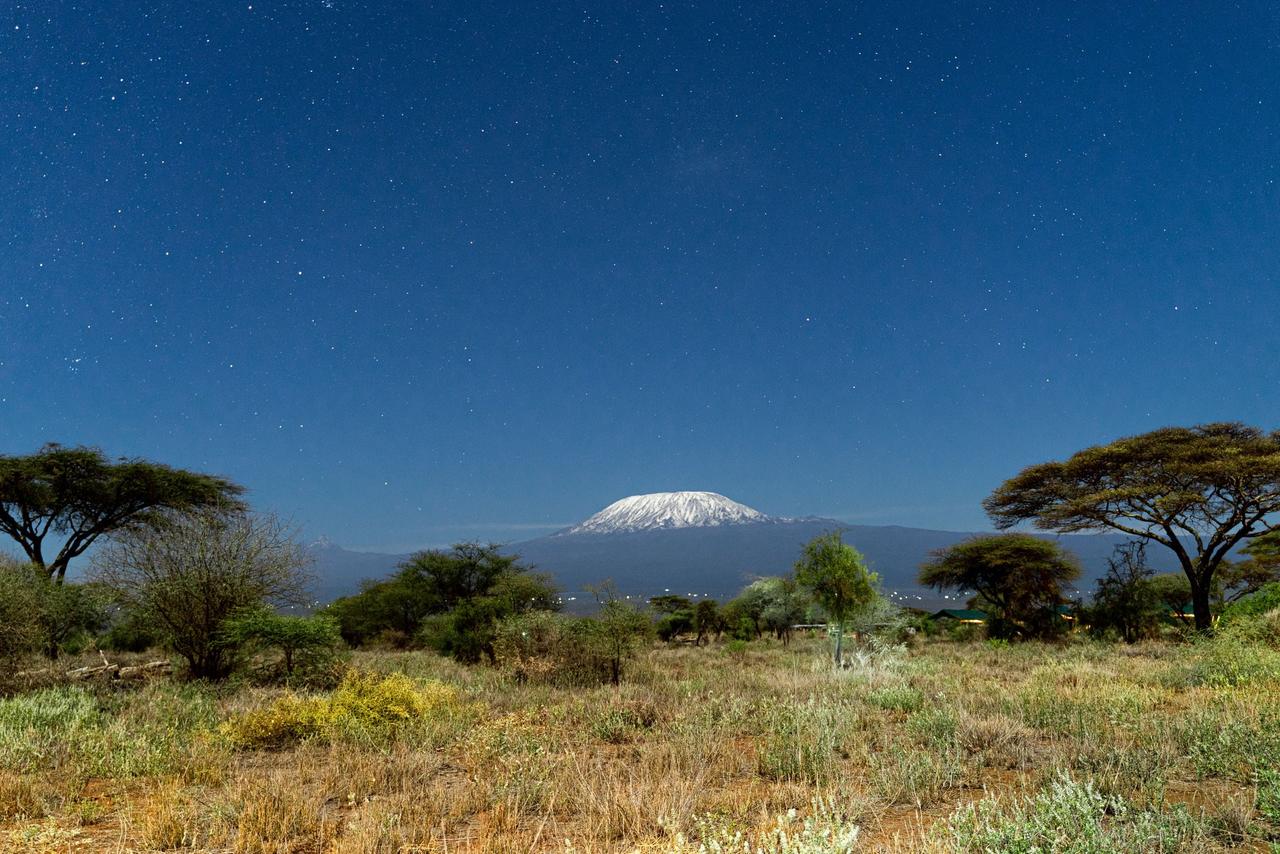
Kibo’s snowcap under a starry sky, seen from the plains behind a row of acacia trees

Stand on the roof of Africa

Photo: Ken Mwaura / Pexels

Sources

Updated

Ages, heights and sizes come from published geological studies and surveys; legends from the earliest written versions we could find; records from Guinness World Records and Fastest Known Time, checked in October 2026.